The Hidden Cost of Dirty Office Carpets in Toronto: How Commercial Carpet Cleaning Can Reduce Employee Sick Days
Posted by lasbella lsabella
Filed in Other 217 views
A workplace does not need to look dirty to make people feel unwell.
In 2026, Times Union reported a real case from Albany, New York, where employees at a state health department office said they were getting headaches, coughing, eye irritation, and breathing trouble while working inside the building. Some workers were even allowed to work remotely because they felt the office environment was affecting their health. The report was not about carpet alone, but it showed something every Toronto business should understand. Indoor workplace conditions can affect how people feel, how they work, and how often they need time away from the office.
Now bring that lesson closer to home.
In Toronto, office carpets deal with snow, road salt, slush, pollen, city dust, food spills, coffee stains, and daily foot traffic. These things do not stay neatly on the surface. They settle into the fibres. Over time, the carpet becomes more than flooring. It becomes a place where dust, allergens, odours, moisture, and fine particles collect.
That matters because employees spend most of their workday indoors. They walk over the same carpets. They breathe the same air. They sit near the same traffic lanes, meeting rooms, entrances, and break areas.
This is why commercial carpet cleaning is not just about making an office look clean. It is part of maintaining a healthier indoor space, especially for employees who already deal with allergies, asthma, sinus issues, or breathing sensitivity.
The Hidden Cost Starts Under Everyone’s Feet
Dirty office carpet is easy to ignore because it gets worse slowly.
At first, the entrance looks a little darker. Then the hallway starts looking flat. After that, the office smells stale when people arrive in the morning. Employees may begin to mention headaches, stuffiness, coughing, or allergy symptoms.
Nobody points to the carpet right away.
Most people blame the weather, stress, lack of sleep, or cold season. Sometimes they are right. But sometimes the office environment is adding to the problem.
The hidden cost is not only the cleaning bill. It can show up as more sick days, lower focus, more complaints, poor first impressions, and faster carpet wear.
A dirty carpet does not only affect the floor. It affects the whole room.
Why Toronto Office Carpets Get Dirty So Quickly
Toronto weather is tough on commercial flooring.
In winter, people track in slush, mud, and road salt from sidewalks, parking lots, TTC stations, underground garages, and building entrances. When road salt dries, it becomes a fine powder. That powder settles deep into carpet fibres and keeps grinding against them every time people walk.
Spring brings pollen. Summer brings dust from traffic, construction, and open doors. Fall brings rain, wet leaves, and more soil.
This is why carpets in Toronto offices usually get dirty fastest near entrances, reception areas, elevator lobbies, hallways, boardrooms, break rooms, and workstation paths.
These areas are not dirty because the office is careless. They are dirty because they carry the most traffic.
A facility manager may vacuum every day, but regular vacuuming cannot always remove deep soil, sticky residue, salt buildup, old stains, moisture, or trapped odours. That deeper buildup is where many carpet problems begin.
What Research Says About Carpet and Indoor Air
Carpets are not automatically unhealthy. A clean carpet can hold particles until they are removed through proper cleaning.
The problem begins when carpet is not maintained well.
The U.S. Environmental Protection Agency says carpet can act as a reservoir for dust, dirt, pollen, mold spores, pesticides, and other materials that come from indoors or are brought inside from outdoors. The EPA also explains that poor maintenance can allow large amounts of dust and debris to build up in carpet.
A research review in the International Journal of Environmental Research and Public Health found that carpets can hold more dust and allergens than non-carpeted floors. The review also reported links between carpeted indoor spaces and poorer perceived indoor air quality, especially for people with asthma and allergies.
This is easy to picture.
Carpet fibres act like thousands of tiny loops. Dust, pollen, salt, and fine soil fall between those loops. Shoes push the particles deeper. Chairs grind them further. Later, movement can disturb some of that buildup again.
So even when the carpet looks acceptable from a distance, it may still be holding irritants below the surface.
How Dirty Carpets Can Affect Employee Comfort
Poor indoor air quality does not always create one obvious illness. Often, it shows up as small symptoms that employees learn to live with.
The Canadian Centre for Occupational Health and Safety says symptoms often linked to poor indoor air quality include dry eyes, nose and throat irritation, headaches, fatigue, shortness of breath, allergies, sinus congestion, coughing, sneezing, dizziness, and nausea.
These symptoms may sound minor, but they can change the workday.
A person with a headache may take longer to finish tasks. Someone with sinus congestion may lose focus in meetings. An employee with asthma may avoid certain areas of the office. Another person may feel tired every afternoon and assume it is just a normal part of work.
Most employees do not say, “The carpet is causing this.”
They say, “The office feels stuffy.”
They say, “My allergies are worse at work.”
They say, “I feel better when I work from home.”
That is why carpet should be part of any indoor air quality conversation. It may not be the only issue, but it can be one of the biggest places where dust and allergens collect.
Sick Days Have a Real Business Cost
Sick days are not only a health issue. They affect scheduling, service, deadlines, and team morale.
Statistics Canada reports work absence data for full-time employees. Its recent table shows Canadian full-time employees lost about 11.7 days per worker in 2024 for personal reasons.
Now imagine a Toronto office with 40 employees.
At 11.7 days per employee, that equals about 468 lost workdays in one year.
Not all of those days are caused by the office. That would not be accurate. People miss work for many reasons, including illness, family needs, stress, and personal matters.
But even a small reduction in discomfort-related absences can help.
If cleaner carpets, better ventilation, good hygiene, and stronger maintenance reduce workplace irritation, the business benefits. Fewer people feel worn down. Fewer tasks get delayed. Managers spend less time covering gaps. Teams work with more stability.
There is also presenteeism. This happens when employees come to work but feel too tired, congested, or uncomfortable to do their best.
A dirty office does not always create empty desks. Sometimes it creates full desks with tired people sitting at them.
Why Respiratory Season Makes Carpet Care More Important
Toronto businesses already face more illness pressure during the respiratory season.
Public Health Ontario reported that the 2025 to 2026 respiratory virus season had an early and intense influenza period. Influenza positivity passed 5% in mid-November and peaked at 35.7% in mid-December.
Carpets do not spread the flu the same way a sick coworker can. Respiratory viruses mainly spread through close contact, droplets, aerosols, and contaminated hands or surfaces.
Still, the full office environment matters more during cold and flu season.
If an employee already has mild congestion, a dusty office can make them feel worse. If someone has allergies or asthma, dirty carpet can add more irritation. If the office smells stale, people notice it more when they already feel run down.
Clean carpets will not stop the flu season. But they can support a cleaner indoor space by reducing dust, odours, allergens, and trapped particles.
That works best alongside good ventilation, clean HVAC filters, hand hygiene, surface cleaning, and fair sick leave policies.
Why Vacuuming Alone Is Not Enough
Vacuuming is important, but it is not deep cleaning.
A vacuum removes loose surface dirt. It does not fully remove sticky residue, old spills, deep soil, road salt, bacteria, or odours trapped inside carpet fibres.
This is why a carpet can look dirty again soon after vacuuming. The top layer was cleaned, but the deeper buildup stayed in place.
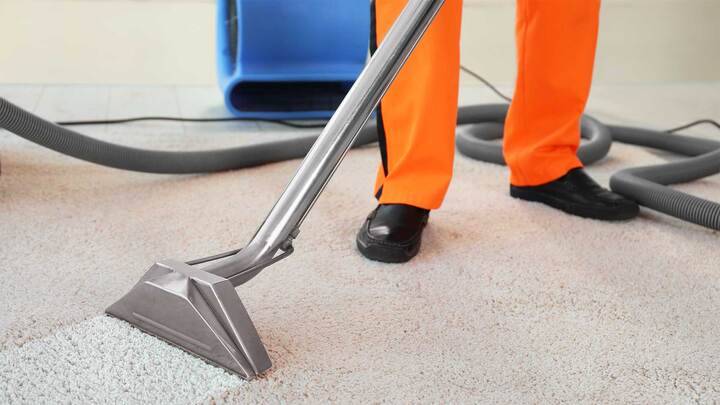
Professional deep cleaning methods, such as hot water extraction, use heated water, cleaning solution, agitation, and strong suction to loosen and remove soil from deeper layers. The goal is not to soak the carpet. The goal is to remove what routine cleaning leaves behind.
This matters in Toronto because salt and moisture can stay hidden long after winter ends. If that salt is not removed, it continues to damage fibres and hold stale odours.
The Carpet Life Problem Most Businesses Notice Too Late
Dirty carpets also cost money because they wear out faster.
Fine soil and salt crystals are abrasive. Every step pushes those particles against the fibres. Over time, this friction makes the carpet look flat, grey, and worn.
This is why the main walkway in an office often looks older than the rest of the room.
Once carpet fibres are damaged, cleaning can improve appearance, but it cannot fully restore the original texture.
Replacing commercial carpet is expensive. It may require moving furniture, removing old flooring, installing new materials, and disrupting work hours.
Regular deep cleaning helps remove the grit that causes wear. That makes carpet cleaning both a health decision and a financial decision.
Where Toronto Offices Usually Need the Most Attention
In most offices, dirt follows traffic.
The entrance collects salt, water, and outdoor soil. The hallway collects constant shoe traffic. The area near printers collects paper dust. The break room collects crumbs and spills. Boardrooms collect coffee stains and food residue. Workstation paths collect daily dust from shoes, chairs, and bags.
A smart maintenance plan does not treat every room the same.
High-traffic zones need more frequent cleaning. Quiet rooms may need less. This helps businesses spend wisely while keeping the most used areas healthier and cleaner.
The most important areas to watch are the spaces employees use every day, not only the spaces clients see.
How Often Should Toronto Offices Deep Clean Carpets?
There is no single schedule for every office.
A small private office with light traffic may need deep cleaning once or twice a year. A busy office with staff, clients, couriers, meetings, and winter salt may need cleaning every 3 to 6 months.
Medical offices, clinics, childcare centres, gyms, retail stores, and shared workspaces may need more frequent cleaning because more people enter the space and hygiene expectations are higher.
Toronto offices should also think seasonally.
A cleaning after winter helps remove salt, moisture, and soil. A cleaning before winter can prepare the carpet before the toughest season begins.
The right schedule depends on foot traffic, carpet age, odours, stains, employee complaints, and the type of business.
Warning Signs Your Office Carpet Is Becoming a Health and Comfort Issue
Some signs are easy to miss because people get used to them.
The office smells stale when people walk in. Walkways are darker than the rest of the carpet. Employees complain about allergies, coughing, headaches, or stuffiness. Stains keep coming back after spot cleaning. The carpet feels sticky, damp, or flat. Vacuuming no longer improves the look.
These signs do not prove that carpet is the only problem.
But they do mean the carpet should be checked.
A musty smell may come from trapped moisture or old spills. Dark traffic lanes may mean deep soil buildup. Recurring stains may mean residue is still below the surface.
The earlier these issues are handled, the easier they are to fix.
How Commercial Carpet Cleaning Can Help Reduce Sick Days
Commercial carpet cleaning cannot promise zero sick days. No honest expert should claim that.
But it can reduce the workplace irritants that may make employees uncomfortable.
It removes deep dust, soil, pollen, salt residue, odours, stains, and allergens from carpet fibres. It supports better indoor air quality when paired with good ventilation and regular cleaning. It can also make the office easier to work in for people with allergies, asthma, sinus issues, or breathing sensitivity.
That comfort matters.
If employees feel less stuffy, less irritated, and less affected by odours, they are more likely to feel comfortable during the workday. Better comfort can support better attendance, better focus, and fewer complaints about the office environment.
This is the realistic link between clean carpets and sick days.
It is not magic. It is maintenance.
What a Strong Carpet Maintenance Plan Looks Like
A good plan starts before the carpet looks dirty.
Use strong entrance mats and clean them often. A dirty mat cannot protect the carpet.
Vacuum high-traffic areas more often than quiet areas. Slow vacuuming works better than quick passes because the machine has more time to lift soil.
Treat spills quickly. Coffee, tea, juice, and food stains become harder to remove once they dry.
Watch moisture near entrances and washrooms. Damp carpet should never be ignored because it can lead to odour and indoor air concerns.
Schedule deep cleaning before the carpet looks ruined. Waiting too long allows soil to grind deeper into the fibres.
Pay attention to employee feedback. If people often mention stuffiness, odours, headaches, or allergy symptoms, include the carpet in the indoor air quality review.
This kind of plan protects employees, visitors, and the flooring investment.
Healthy Offices Start From the Ground Up
Dirty office carpets have a hidden cost.
They can hold dust, pollen, road salt, moisture, odours, stains, and allergens. They can make indoor air feel stale. They can bother employees who already deal with allergies, asthma, sinus issues, or breathing sensitivity. They can damage first impressions and shorten carpet life.
The research supports the concern. The U.S. Environmental Protection Agency says carpet can act as a reservoir for dust and other particles. The Canadian Centre for Occupational Health and Safety links poor indoor air quality with symptoms like headaches, fatigue, coughing, and irritation. Statistics Canada shows that full-time employees in Canada lost about 11.7 days per worker in 2024 for personal reasons.
Carpet cleaning alone will not solve every sick day problem.
But it does remove one major source of dirt, dust, allergens, and odour from the workplace.
For Toronto offices, that matters.
A healthier workplace is built through many small decisions. Better ventilation. Cleaner surfaces. Proper hygiene. Good sick leave policies. Regular maintenance.
And cleaner carpets.
Because when employees spend most of their day inside the office, the floor under their feet matters more than most people think.