Why Aluminum Is Used in Quadruplex Wire
Posted by Electrical Wire & Cable Specialists
Filed in Business 215 views
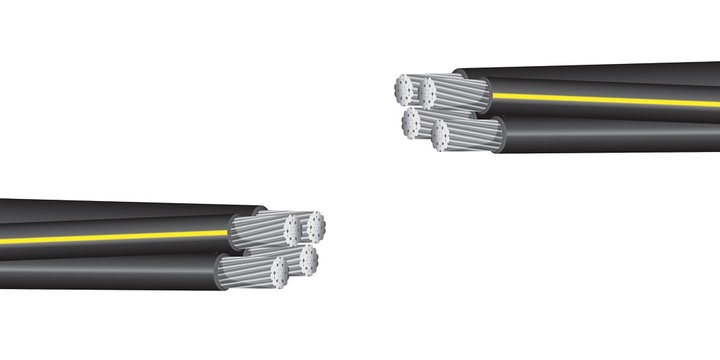
If you’ve ever done even the lightest electrical work, you’re probably familiar with the fact that copper is commonly used to make electrical wire and cable. Everything from marine battery cable to solar panel cable and instrumentation and alarm cable is often made from copper wire of varying gauges.
It is an excellent electrical conductor and can carry a high current at high voltage relative to its mass without overheating or arcing, making it highly suitable for the application.
But, in case you haven’t noticed, the price of copper has gone through the roof over the past few years and it really doesn’t show signs of slowing down, which is one of the reasons that power service entry cable and power transmission cables, such as quadruplex wire, are commonly made from aluminum instead.
Let’s take a closer look at this very topic, why aluminum is used to make triplex and quadruplex wire instead of copper.
Cost
Cost is the main driver behind the reason that aluminum is used to make triplex and quadruplex wire, and it isn’t even close. In the past year alone, the price of copper has increased by approximately 40%, and that is following historic gains compounded over the years prior. Average prices have more than doubled since 2020.
But that’s just the icing on the cake, because aluminum was being used to manufacture triplex and quadruplex wire long before copper’s price went through the roof. It’s just that now, given all of these considerations, the price would be untenable if copper were used for that.
Weight
Price aside, copper weighs nearly 3 times as much as aluminum per unit volume. This makes copper a lot more expensive to transport and much more difficult to work with on the basis of labor. It also means special considerations must be taken with aerial installations.
Which deserves a callout in its own right, since quadruplex wire is often used in aerial installations for residential power distribution. Not only would different support and equipment need to be used with copper, but this makes aluminum wire even more cost-effective.
Conductivity to Weight
While it is the case that copper is strictly speaking a better conductor than aluminum, if you factor in weight, the latter actually takes the edge. Copper may have a better overall conductivity, but aluminum’s conductivity to weight ratio is actually better.
Corrosion Resistance
Both copper and aluminum are subject to oxidation given the presence of corrosive influences, but the good thing about aluminum is that, as soon as it is exposed to oxygen, a thin layer of aluminum oxide forms on that surface that typically halts the progress of corrosion.
With copper, the corrosion often continues to travel, but with aluminum it usually stops. As a result, uninsulated aluminum wires are often used in installations in which copper would not be practical.
Malleability and Ductility
Lastly, aluminum wire, like copper, is very flexible, malleable, and ductile. Copper has a higher tensile strength and can generally survive a higher number of stress cycles, but in terms of softness, flexibility and workability, aluminum really isn’t that bad.
Where to Learn More About Quadruplex Wire
This article covered some of the main reasons that aluminum is the preferred conductor material over copper when the matter is power service entry in the form of quadruplex cable. There are other reasons but the major ones have been covered in cursory fashion here.
If you are still interested in learning more about quadruplex wire or need an electrical wire supplier to throw into rotation, visit EWCS Wire. They run a helpful and informative blog with lots of relevant information on electrical conductors, and sell triplex and quadruplex wire, among many other types of electrical wire and cable, as well.
For more information about Aluminum Wire and Electrical Wire Wholesale Please visit: Electrical Wire & Cable Specialists.