Mandevilla Plant Care Guide for Indian Balconies and Terraces
Posted by Upjau Plant Nursery
Filed in Business 217 views
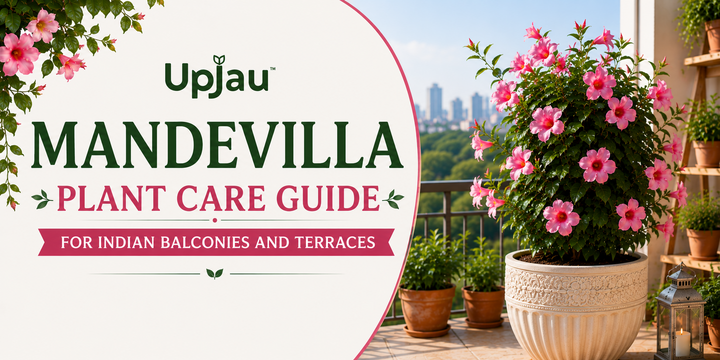
When you've walked by a balcony full of trumpet-shaped pink, red or white flowers clinging to a railing, you've likely been walking past a Mandevilla. The Rock Trumpet plant or Mandevilla remains one of the most popular flowering climbers to have in the homes of Indians and it is for a good reason. It's super fast-growing, long-blooming and demands minimal care in return.
From soil requirements to sunlight, to seasonal flowering, to troubleshooting, this guide explains everything you need to know to have a healthy, flowering Mandevilla in Indian conditions.
What is a Mandevilla plant?
Mandevilla is a genus of tropical flowering vines that grow throughout Central and South America, from the genus Apocynaceae. Quick-growing, dark green, glossy leaves and large, showy, pink, red and white trumpet-shaped flowers. In warm climates like most of India Mandevilla acts as a perennial, a single healthy plant may continue to flower for many years if properly cared for.
Of interest, Mandevilla is sometimes mistaken for Allamanda and Dipladenia, both of which are sometimes referred to together by this name when used in casual conversation because of their similar climbing form and trumpet-shaped flowers. The flowers are commonly pink, red or white, with the bright yellow "trumpet vine" that most people think of generally being Allamanda, a close relative of Mandevilla.
Where to Plant Mandevilla
Mandevilla is best suited for:
-
Balcony railings and grills
-
Trellises and pergolas with terra cotta tiles
-
Fences and walls around the garden
-
Large pots in sunlit window or open courtyard
It is a good climber, and will need something to support it from the beginning, so use a trellis, wire mesh or a railing. If left unpruned, the vine spreads out instead of growing upwards.
Sunlight Requirements
Mandevilla is a plant that requires sun. It requires 4 to 6 hours of direct and bright sunlight daily for good growth and regular flowers. Balconies facing East or south are best suited for Indian conditions.
When Mandevilla is producing a greater number of leaves than flowers, the first thing to look at is the amount of sunlight that it is receiving. It will grow in shade, but will produce fewer flowers.
Soil and Potting Mix
Unlike some plants, drainage is more important than fertility when planting Mandevilla. For Indians, a good DIY mix is:
-
40% garden soil
-
20% cocopeat
-
20% compost
-
15% perlite (or coarse sand)
-
5% neem cake powder
A pot 8-10 inches in diameter or more, with adequate drainage is needed. Terracotta pots are particularly useful as they permit excess water to dry off before it can cause root rot.
Watering Schedule
When watering Mandevilla, the upper layer of soil should be dry to the touch, typically every 2–3 days in summer and more often in winter. Mandevilla plants are prone to struggling due to overwatering, as they don't tolerate waterlogged soil for extended periods of time.
The basic principle: do not water according to a set schedule, but listen to the soil.
Fertilizing for Better Blooms
Mandevilla is a medium feeder in its growth phase. Feed with a balanced NPK fertilizer or a bloom booster containing more phosphorus every 2 to 4 weeks from Spring to early Autumn. Fertilize less or not in winter when the plant does not grow as fast.
Mandevilla Blooming Calendar in India
The flowering period of Mandevilla is relatively long in Indian climates as compared to many other flowering plants that only flower once a year.
-
January–February: New buds begin forming
-
March: Fresh growth picks up pace
-
April–May: Good blooming begins
-
June–September: Peak flowering season
-
October: Blooming gradually slows
-
November–December: Resting period before the next cycle
New Mandevilla plants are best in late winter/early spring (February/March) to allow them time to establish before their hot summer flowering period.
Pruning Tips
After flowering time, light pruning will stimulate bushier growth and produce more flowers during the next flowering period. Prune out long stems and cut off any decaying or broken stems. Don't over-prune in the late flowering season as flowers are produced on new growth.
Common Pests and Problems
Mandevilla is generally low maintenance, but there are some problems that are common:
Aphids and Mealybugs — These are commonly found on new growth and flower buds. They are normally controlled by a neem oil spray every 7-10 days.
Yellowing leaves — Most likely caused by overwatering and/or inadequate drainage. Water less frequently and ensure that the pot is not in a pool of water.
Few or no flowers — Usually associated with inadequate sunlight or excessive fertilization (high N feed), which promotes leaf growth instead of flowers.
Powdery mildew in winter — Cooler, damp morning temperatures can cause winter fungals. Enhance ventilation and not water the leaves directly.
Is Mandevilla a Perennial or Annual Plant?
Mandevilla is a perennial plant. It can be left in the garden in warm Indian climates and will flower for 10 to 15 years if properly cared for, compared with replanting it, as an annual, each season.
Can Mandevilla Be Grown Indoors?
The houseplant should receive 4-6 hours of bright, direct sun each day – usually close to a big, clear south or east facing window. In the majority of homes in India, it works much better outdoors on a balcony or terrace, away from the filtering effect of glass.
Frequently Asked Questions
Where can I buy Mandevilla climber plant online in India?
You can buy healthy, nursery-grown Mandevilla climber saplings online in India through plant nurseries like Upjau, which deliver pan-India and offer beginner-friendly care guidance along with the plant.
Does Mandevilla come back every year?
Yes. Mandevilla is a perennial vine, and under the warm conditions which prevail in India it will generally retain its life in the year, producing fresh flowers in each growing season.
What is the growth rate of Mandevilla?
It's a fast grower. A healthy Mandevilla will produce a few feet of new plant growth with proper sun, water, and fertilizer in one season.
Do Mandevilla require full sunlight?
Yes, for the best flowering, Mandevilla needs at least 6 hours of bright sunlight daily. It can grow in partial shade, but will be less prolific in flower.
Is Mandevilla and Allamanda the same?
No. While both are flowering climbers from the same plant family with a similar growth habit, Mandevilla typically produces pink, red, or white flowers, while the commonly seen yellow trumpet climber is usually Allamanda, a different plant altogether.
Are Mandevilla poisonous to animals?
Yes, Mandevilla does contain compounds that are poisonous if pets and children eat them, as with many plants in the Apocynaceae family. Should be out of reach of curious pets and grazing animals.
Final Thoughts
Mandevilla is one of the most rewarding flowering climbers to grow in an Indian balcony/terrace garden, fast growing and once established, easy to care for and can flower for months on end. With proper sunlight, drainage and watering, it will produce color almost all year long.
For those who wish to grow their own Mandevilla, Upjau has nursery-grown, healthy saplings that can be delivered anywhere across the country — for novice and seasoned gardeners alike, it's a wonderful way of infusing some tropical flair in their garden.