What Happens During Ketamine Infusion Therapy for Depression?
Posted by james thomas
Filed in Health 281 views
Depression can feel like a locked room, especially when standard medications and therapy do not bring enough relief. That is one reason Ketamine Infusion Therapy has become a serious topic in mental health care. It is usually discussed for people with treatment-resistant depression, which means symptoms have continued despite trying traditional treatment options. The need is significant. The National Institute of Mental Health reported that 21 million U.S. adults had at least one major depressive episode in 2021, representing 8.3% of all U.S. adults. The same report found that 14.5 million adults experienced severe impairment from depression.
1. The First Step Is a Clinical Evaluation
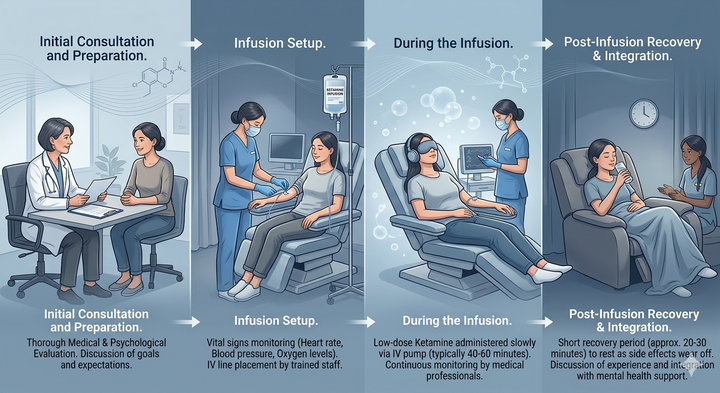
Before an infusion ever starts, a qualified provider usually completes a detailed evaluation. This step matters because ketamine is not appropriate for everyone. The provider may review the patient’s depression history, current medications, physical health, blood pressure, substance use history, and past response to antidepressants.
This is not just paperwork. It is risk management. Depression treatment should be careful, not casual.
During this stage, the provider may ask about:
-
How long depression symptoms have been present.
-
Which antidepressants or therapies were already tried.
-
Any history of bipolar disorder, psychosis, or substance misuse.
-
Current medications and supplements.
-
Heart health, blood pressure, and other medical conditions.
-
Whether the patient has suicidal thoughts or urgent safety concerns.
The goal is simple: decide whether ketamine treatment may be suitable and whether it can be done safely.
2. The Infusion Happens in a Supervised Setting
Ketamine Infusion Therapy is usually given through an IV line in a clinical setting. The dose is typically lower than what is used for anesthesia, and the patient remains monitored throughout the session. Cleveland Clinic notes that ketamine therapy may be given by IV infusion or nasal spray under medical supervision, and multiple sessions may be needed.
A typical session may include:
-
A comfortable chair or treatment room.
-
Placement of an IV line.
-
Monitoring of blood pressure, pulse, and oxygen levels.
-
A slow infusion over a set period.
-
Staff nearby throughout the process.
-
A recovery period before the patient leaves.
Some people feel calm, detached, dreamy, or emotionally open during the infusion. Others may feel strange, light, or disconnected from their surroundings. This dissociation is one reason monitoring is important. It can be part of the experience, but it should not be handled alone at home without clinical support.
3. The Experience Can Feel Unusual, But It Is Monitored
Patients often want to know what the infusion actually feels like. The honest answer: it varies. Some people describe it as peaceful. Some say it feels like floating. Others may feel emotional, reflective, or slightly disoriented.
Common experiences may include:
-
A dreamlike mental state.
-
Temporary changes in perception.
-
Feeling distant from the body or room.
-
Emotional memories coming forward.
-
Mild nausea or dizziness.
-
Temporary tiredness after the session.
A 2020 study in Translational Psychiatry found that during a ketamine infusion phase, common side effects included general malaise, decreased energy, increased blood pressure, headaches, fatigue, nausea or vomiting, anxiety, and poor concentration. The same study also reported that dissociative side effects resolved within the two-hour monitoring period.
That is the key point: the experience may feel intense, but in a responsible clinic, it is not unmanaged.
4. Patients Do Not Usually Drive Home Afterward
After the infusion, patients are usually observed until they are steady enough to leave. Because ketamine can affect alertness, coordination and perception, patients are typically told not to drive themselves home.
Aftercare may include:
-
Resting in the clinic after the infusion.
-
Having a trusted person drive the patient home.
-
Avoiding major decisions for the rest of the day.
-
Drinking water and eating lightly if needed.
-
Tracking mood changes over the next 24 to 72 hours.
-
Reporting side effects to the provider.
This part is not optional fluff. It is part of safe treatment. The FDA has warned that ketamine can carry risks such as sedation, dissociation, blood pressure changes, respiratory depression, misuse and bladder symptoms, especially when used without proper monitoring. The FDA also states that ketamine is not approved for treating any psychiatric disorder, although clinicians may use it off-label in certain situations.
5. Results May Not Happen the Same Way for Everyone
Some patients report mood improvement within hours or days. Others need several sessions before noticing a meaningful difference. Some may not respond at all. That is frustrating, but it is also honest medicine. No depression treatment works for everyone.
Research has shown promising results, especially in treatment-resistant depression. In one randomized clinical study, response rates during repeated ketamine infusions reached 76% after the fifth infusion, compared with 39.3% in the comparison group at the same point.
Still, results can fade without a broader care plan. That is why serious providers often combine Ketamine Infusion Therapy with ongoing depression care, therapy, medication management, lifestyle support, or relapse-prevention planning.
Useful follow-up steps may include:
-
Mood tracking after each session.
-
Therapy to process thoughts and emotions.
-
Sleep and routine support.
-
Medication review with a provider.
-
Booster sessions only when clinically appropriate.
-
Clear discussion of risks, benefits, and expectations.
6. It Is a Treatment Option, Not a Shortcut
Ketamine has gained attention because it works differently from many traditional antidepressants. Many standard medications target serotonin, norepinephrine, or dopamine. Ketamine affects the glutamate system, which is involved in brain communication and neuroplasticity.
That difference is important, but it should not be oversold. Depression is complex. A single infusion is not a magic reset button. Good care still requires structure, follow-up, and honest monitoring.
Patients should ask direct questions before starting:
-
Is this treatment appropriate for my diagnosis?
-
What risks apply to my health history?
-
How many sessions are recommended?
-
What happens if symptoms return?
-
What support is included before and after treatment?
-
Who monitors side effects?
Conclusion
Ketamine Infusion Therapy for depression usually involves screening, IV treatment in a monitored clinical setting, a temporary altered-state experience, recovery time, and follow-up care. It is getting attention because depression affects millions of people, and many do not get enough relief from traditional options.
The strongest approach is not hype. It is careful evaluation, medical supervision, realistic expectations, and a complete care plan. Anyone considering this treatment should speak with a qualified mental health provider and make sure safety, monitoring, and long-term support are built into the process.