Why the Right Beam Lifting Jack Makes or Breaks a Flood Zone Home Raise
Posted by Buckingham Equipment
Filed in Business 233 views
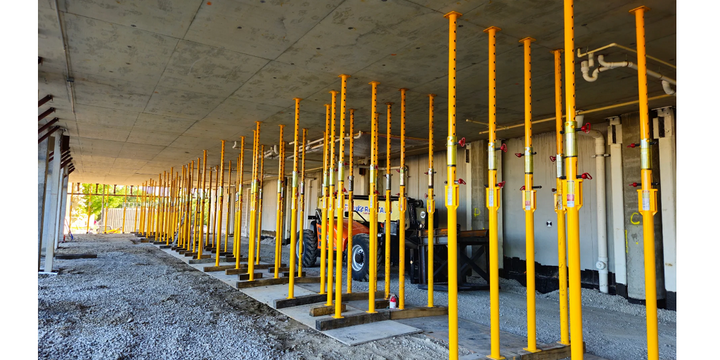
Flood zone homeowners face a decision that often catches them off guard. FEMA elevation requirements push structures to meet a minimum height above base flood elevation, and when an existing house sits too low, the two realistic paths are to rebuild from scratch or raise what's already there. Most choose to raise it, especially when the property has good bones and the owner doesn't want to start over. That choice puts a beam-lifting jack at the center of everything, because the equipment doing the actual lifting determines whether the project succeeds or ends in a cracked frame and a very expensive repair bill.
The Beam Lifting Jack: Why Experienced Crews Don't Cut Corners
Raising a house isn't one smooth motion. Contractors first drive steel I-beams beneath the structure, then set jacks at load-bearing points along those beams. Each jack carries a share of the total weight and has to move in sync with every other jack on the site.
One unit moving faster than its neighbors introduces a twist into the frame. One that underperforms under load can cause the structure to rack. That's why contractors who specialize in house jacking spec out their equipment before they show up on site, and the beam-lifting jack chosen for each position depends on the actual load it's expected to carry. They don't adapt to whatever is available in the shop.
The force requirements alone rule out most standard equipment. A two-story home can weigh 150,000 pounds or more, and that load doesn't distribute evenly across every jack point. Weight concentrations shift depending on framing, beam spans, and site conditions. House lifting jacks rated at 20 or 30 tons aren't overkill. On many jobs, they're the minimum that makes sense.
How a Beam Lifting Jack Handles the Demands of FEMA Elevation Work
FEMA assigns base flood elevations through flood insurance rate maps, and properties below that line pay substantially higher premiums. Many homeowners in coastal areas and floodplains find that the cost of raising the structure pays off over several years through reduced insurance costs alone.
Crews handling these projects use house-raising jacks positioned along cribbing towers or temporary steel frames, lifting in controlled increments, a few inches at a time, until the structure clears the required elevation by a safe margin. Structural elevations vary from 18 inches to several feet. Higher lifts demand increased cribbing, staging, and precise load transfer through beam-lifting jacks and temporary supports at each stage.
Concrete slab homes add another layer of complexity. Concrete slab lifting jacks carry the combined weight of the slab and the structure above without cracking the slab or pulling it apart at expansion joints. Slab foundations typically require more jack points than a pier-and-beam structure, and coordination between operators becomes more demanding across the full lift.
Getting the Beam Lifting Jack Spec Right Before Work Begins
Contractors who work in flood elevation regularly understand that the wrong equipment choice doesn't save money. A failed jack mid-lift can cause structural damage that far exceeds whatever savings the cheaper gear provided. The full range of equipment matters here, from hydraulic bottle jacks used for fine adjustment and positioning to high-tonnage synchronized systems built for full structural raises.
Matching the beam-lifting jack spec to the actual load requirements, rather than loosely estimating, distinguishes a clean lift from one that requires a structural engineer's intervention. Many crews also find that having backup equipment on site pays off, because a mid-job swap is always better than a mid-job failure.
For contractors and crews sourcing jacking equipment for flood elevation projects, Buckingham Structural Moving Equipment carries a full line on its website.
For more information about Shoring Jacks and Skidding System Please visit: Buckingham Structural Moving Equipment, LLC.