7 Sword Misconceptions (See If You Knew Them)
Posted by True Swords
Filed in Business 340 views
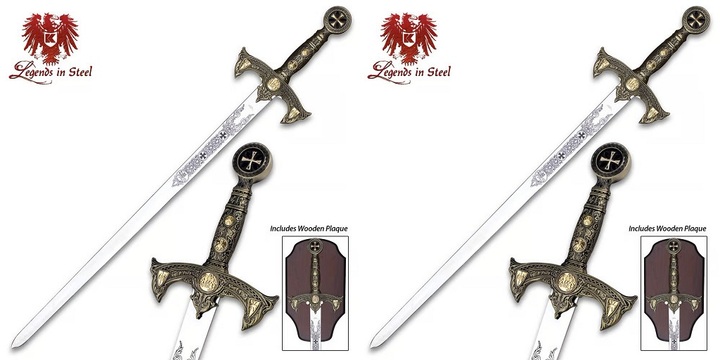
Since swords are now exotic items to most of us, there is a lot of misinformation surrounding them, and plenty of misconceptions that just won’t seem to die.
With that said, here are 7 of the worst of them. Check your knowledge against these 7 sword myths and see if you knew any better.
- A sword can cut another weapon in two. For some reason, there is this pervasive belief that a sword could cut through just about anything, and that includes other weapons. To be true, a sword might be able to hack through the wood haft of a light polearm, but make no bones about it, if you swing a sword at plate armor, the sword will sustain more damage than the plate, even if it does get through. In fact, in the realm of melee weapons, a sword is a relatively fragile design. You’re much more likely to break a sword with a mace or an ax than you are to chop through another weapon with a sword.
- Japanese swords were inherently sharper than Western weapons. There are some who believe that “samurai sword sharpness” is the idyll of a razor’s edge. This is not the case; weapons are sharpened according to the person sharpening them. A katana could be as sharp (or as dull) as the sharpener desires, and that goes for western sword patterns as well.
- Two-handed swords are extremely heavy. Two-handed swords are heavier than most one-handed swords, but as a general rule, they weighed a few pounds, around 7 or 8.
- Swords are sharp enough to slice even with a light touch. Again, swords are only as sharp as the person sharpening them desires them to be. That said, most swords were saber-ground and not much sharper than any knife, if not duller because a finer edge is more fragile. In most cases it definitely takes effort to slice with a sword.
- Some sword patterns are “better” than others. Rapiers are light and offer great control over the point. Sabers are light and adept at slashing. Great swords have long, heavy blades and were well-designed for chopping. The point is there is no single, sword pattern that is inherently better than any other.
- It’s a good idea to parry with the edge of a sword. Movies would have you think that it’s a good idea to parry an opponent’s blade with the edge of a sword. This is a terrible idea and a good way to put a deep notch in the edge of your blade, if not snapping the blade entirely. If the sword is used at all to trap or parry an opponent’s blade, the flat of the blade, not the edge, was used. As the German practitioner of martial arts said, parry “mit der flech,” or “with the flat”, not with the edge.
- The “blood groove” is there to let blood drain. This is one of the most offensive of all sword misconceptions, and in truth, those familiar with swords don’t even like the term “blood groove.” The proper term is fuller, and it’s there to lighten and strengthen the blade. It is certainly not there to let the blood drain from an opponent.
Shop Battle-Ready Swords at True Swords
Hopefully you learned a thing or two from this article, but if you’re looking for a place where you can get real, battle-ready swords, visit True Swords. They carry a wide range of battle-ready swords and weapons, including axes, spears and more; visit their website or get in touch with them directly for more information.
For more information about Aragons Sword and Sword Modern Please visit: True Swords.