Realistic Katanas: What Makes Them Expensive?
Posted by True Swords
Filed in Business 284 views
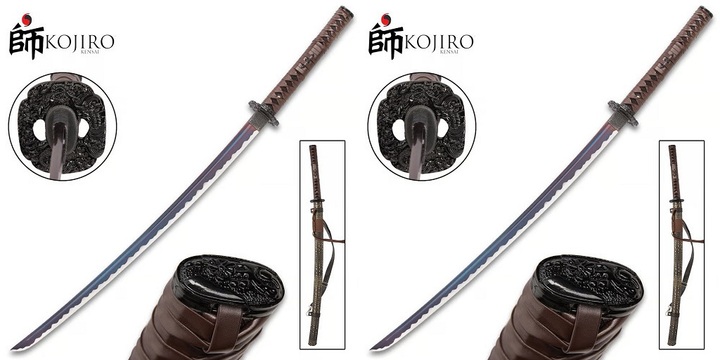
Japanese swords are legendary not only for the skill needed by those who carry them, but also for the intricate craftsmanship that is required in their creation. Creating a realistic katana is one of the most demanding forms of craftsmanship. It is not a process you can rush or simplify. Every traditional blade is shaped through repetition, heat, pressure, and the trained judgment of a smith who has spent years learning how steel behaves.
That level of training is rare, and modern makers follow methods that originated centuries ago. And even today, the work takes months. A genuine katana is more than a sharpened piece of metal. It is a controlled layering of steels, a refined heat treatment, and a final polish that reveals patterns hidden deep inside the blade.
So, creating a realistic katana means factoring in the time, the labor, and the specialized knowledge; all of these make it easier to understand why such Japanese swords are so expensive. But is there an easier way to get a realistic katana without spending too much?
The Right Materials
A realistic katana needs the right materials. You cannot fake the mix of hardness and flexibility that makes the blade work. If the steel is inconsistent, the edge can chip. And if the tempering is off, the blade could bend and stay bent. This is why traditional smiths fold and weld the steel many times. The goal is not just strength but an internal pattern that collectors prize. Each fold blends impurities and creates a unique visual texture. None of this can be done quickly.
Even a small flaw can send a smith back several steps. The finishing process is equally slow. Polishing a real katana takes days of careful work with multiple stones, each finer than the last, until the surface reflects light cleanly and the lines of the blade emerge with clarity.
The Skill of the Smith
The scarcity of skilled smiths pushes the price higher. There are few artisans capable of producing a blade to traditional standards, and they often spend more than a year on a single sword.
While they work, they earn nothing until the blade is complete and inspected. That cost rolls into the final price, which is why collectors expect to pay thousands for a fully authentic katana. Buyers are not just paying for the metal. They are paying for the time, the history, and the skill of someone who may have trained for decades.
An Affordable Realistic Katana
Because of this, collectors often split their interests into two categories. On one side are the high end, traditionally made blades. On the other side are affordable replicas that offer the look and feel without the cost.
Shops like True Swords sell katanas that capture the lines, curve, and style that fans want, but at a price that makes sense for display or casual collection. These pieces do not pretend to be museum grade, yet they give buyers the pleasure of owning something shaped like a katana, balanced like a katana, and styled after well known themes.
Collectors look at replicas for practical reasons. Not everyone needs a blade forged with historical methods. Some want a decorative piece for a shelf. Some need a prop for a costume. Others want to start a collection without committing to the heavy investment of a handmade sword.
Production blades still require skill to manufacture, but they benefit from modern tools, streamlined processes, and consistent materials. This keeps the cost accessible while offering designs that range from traditional to bold.
True Swords give you a taste of what a realistic katana can feel in your hands, without spending too much of your money on a genuine katana made by a skilled Japanese smith. If you are intrigued by the intricate craftsmanship of a katana, get yours at True Swords at reasonable prices.
For more information about Sword Modern and Replica Blade Sword Please visit: True Swords.