Why Zhanghua Agitated Nutsche Filter Dryer Is Essential in Pharmaceutical Manufacturing
Posted by rockyj rockyj
Filed in Other 188 views
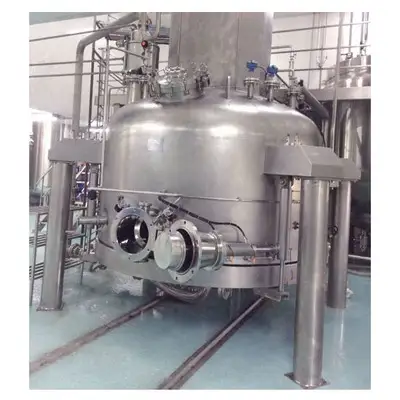
Pharmaceutical manufacturing operates under some of the strictest regulatory and quality standards of any industry, where even small deviations in purity, contamination control, or process consistency can affect patient safety and product approval. An agitated nutsche filter dryer has become essential equipment across much of this industry because it directly addresses the containment, purity, and process control challenges that pharmaceutical manufacturers face at nearly every stage of active ingredient and intermediate production.
Meeting Strict Contamination Control Requirements
Good manufacturing practice regulations demand that pharmaceutical products remain free from cross-contamination throughout every stage of processing, and a sealed filtration and drying vessel supports this requirement far better than older, open processing methods that expose the product to the surrounding environment at multiple points. Because filtration, washing, and drying all happen within the same enclosed vessel, there's no need to transfer a wet cake between separate pieces of equipment, which eliminates several potential contamination points that would otherwise need careful cleaning and validation between every single batch. This closed processing approach has become particularly important as regulatory scrutiny around contamination control has tightened significantly across major pharmaceutical markets in recent years.
Protecting Potent and Hazardous Active Ingredients
Many active pharmaceutical ingredients are potent enough that even minimal operator exposure poses a genuine health risk, requiring specialized containment measures throughout manufacturing to keep workers safe while still allowing efficient, large-scale production to continue. The agitated nutsche filter dryer allows these potent compounds to be filtered, washed, and dried without direct operator contact, since the entire process happens within a sealed vessel that only opens for cleaning or maintenance between production runs. This containment capability has made the equipment a standard choice for facilities producing hormones, cytotoxic compounds, and other highly potent active ingredients where exposure limits are measured in extremely small quantities.
Supporting Consistent Batch-to-Batch Quality
Regulatory approval for pharmaceutical products depends heavily on demonstrating consistent quality across every batch produced, and equipment that introduces variability into the process, whether through inconsistent drying, incomplete washing, or contamination risk, can jeopardize that consistency in ways that are costly and time-consuming to correct after the fact. The controlled environment inside a sealed filtration and drying vessel, combined with precise temperature and agitation control, helps ensure that each batch experiences essentially the same processing conditions regardless of when it was produced or which operator ran the equipment that day. This consistency matters enormously during regulatory audits and inspections, where manufacturers need to demonstrate reliable, repeatable processes across their entire production history.
Reducing Solvent Exposure and Environmental Impact
Pharmaceutical manufacturing often relies heavily on organic solvents for crystallization, washing, and purification steps, and these solvents need to be handled carefully both for worker safety and to meet increasingly strict environmental regulations around volatile organic compound emissions. Because the vessel remains sealed throughout drying, solvent vapors are captured and can be routed to recovery systems rather than escaping into the plant atmosphere, supporting both regulatory compliance and meaningful cost savings through solvent recovery and reuse across the production cycle. This capability has become increasingly valuable as environmental regulations around solvent emissions have tightened across major manufacturing regions, making closed-system processing a practical necessity rather than simply a best practice for forward-thinking manufacturers.
Supporting Scale-Up From Development to Production
Pharmaceutical development often moves through several scales of production, from small laboratory batches through pilot-scale testing and finally to full commercial manufacturing, and maintaining consistent process performance across these different scales presents a genuine engineering challenge for process development teams. Because this equipment is available in a range of vessel sizes built around the same fundamental design principles, process parameters developed at a smaller scale often translate reasonably well when scaling up to commercial production volumes, reducing the amount of rework needed during technology transfer between development and manufacturing teams. This scalability has made the equipment particularly valuable for pharmaceutical companies managing the transition from clinical trial material production through to full commercial-scale manufacturing of an approved product.