Is Higher Education Still Worth It for Working Professionals? MBA, B.tech
Posted by maya devi university
Filed in Other 197 views
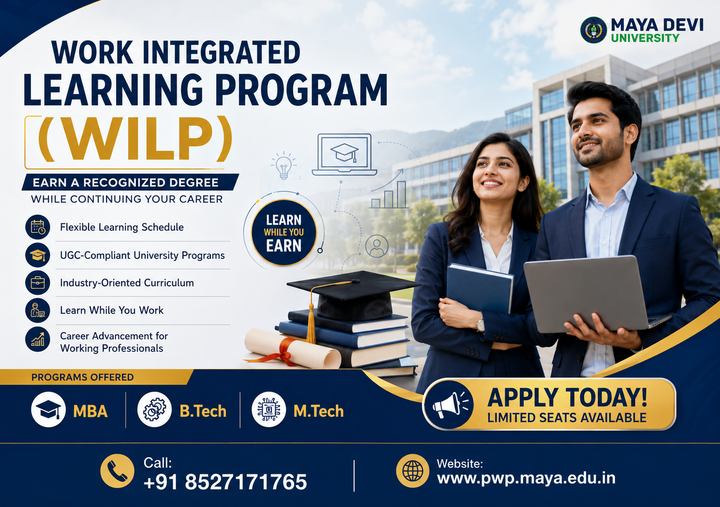
Skills expire faster than they used to. New tools, automation, and shifting industry standards mean the qualification that got you hired may not be enough to move you forward. That is why so many employees are searching for programs for working professionals that fit around a full-time job.
The good news? You no longer have to choose between a paycheck and a degree. Flexible learning options now let you study evenings, weekends, and online while staying employed.
Why Upskilling Matters More Than Ever
Industries change fast, and so do the skills employers expect. What was cutting-edge five years ago is often standard today.
Here is why professional upskilling has become essential:
-
Changing industry requirements: Roles now demand new certifications, tools, and technical knowledge.
-
Technology-driven workplaces: AI, data analytics, and automation reward people who keep learning.
-
Career progression: Promotions often go to candidates with updated, relevant qualifications.
-
Salary growth opportunities: Advanced skills strengthen your case during appraisals and job switches.
-
Professional confidence: Fresh knowledge helps you speak up, lead projects, and take on bigger roles.
-
Lifelong learning: A learning mindset keeps you adaptable through every economic shift.
The takeaway is simple. Continuous learning protects your career and opens new doors at the same time.
What Should You Look for in Programs for Working Professionals?
Not every course fits a busy schedule. The right program should support your job, not compete with it.
Focus on these factors when comparing options:
-
Flexible learning schedule: Evening classes, weekend sessions, and online access matter most.
-
Industry-relevant curriculum: Content should match current market demands and real job roles.
-
Practical application of knowledge: Look for projects, case studies, and workplace-based learning.
-
Career-focused specialization: Choose subjects that align with your target role or industry.
-
Recognition and credibility: Pick recognized flexible degree programs that employers value.
-
Balance between work and study: The structure should let you manage both without burning out.
Quick takeaway: If a program checks flexibility, relevance, and credibility, it deserves a spot on your shortlist.
Best Programs for Working Professionals
Several strong options exist, each suited to different backgrounds and goals. Here are three of the most popular career advancement programs.
MBA for Working Professionals
An MBA for working professionals suits those aiming for management, leadership, or entrepreneurship roles.
-
Who should choose it: Team leads, managers, and graduates from any stream wanting business skills.
-
Skills gained: Strategy, finance, marketing, operations, and people management.
-
Career opportunities: Managerial roles, business development, consulting, and startup leadership.
-
Ideal candidates: Professionals ready to move from execution into decision-making positions.
If your growth depends on leading people and projects, an MBA is a strong fit.
B.Tech for Working Professionals
A B.Tech for working professionals helps diploma holders and technical staff formalize their expertise with a full degree.
-
Suitable professionals: Diploma holders, technicians, and junior engineers seeking a recognized qualification.
-
Technical skill enhancement: Core engineering concepts, updated tools, and applied problem-solving.
-
Career advancement: Eligibility for senior technical roles that require a degree.
-
Industries that benefit: Manufacturing, IT, construction, automotive, and energy sectors.
This route turns hands-on experience into a formal credential that employers recognize.
read more: Top 10 WILP Program Colleges in India for Working Professionals (2026)
M.Tech for Working Professionals
An M.Tech for working professionals is built for engineers who want deeper specialization and research exposure.
-
Advanced technical knowledge: Specialized subjects that sharpen expertise in a chosen field.
-
Leadership opportunities: Preparation for senior engineering and technical lead roles.
-
Research and innovation: Skills in analysis, design, and applied research.
-
Career growth: Access to R&D, academia, and high-level technical positions.
For engineers targeting expert-level roles, an M.Tech adds serious depth.
Benefits of Work Integrated Learning Programs
Work integrated learning programs, often called WILP, connect classroom study directly to your job. This makes them ideal for people who cannot pause their careers.
Here is what WILP courses offer:
-
Learn while working: Continue earning without taking a study break.
-
Practical workplace application: Apply new concepts to real projects immediately.
-
Better time management: Structured schedules train you to plan efficiently.
-
Skill development: Build technical and soft skills at the same time.
-
Career advancement: Strengthen your profile for promotions and new roles.
-
Professional networking: Connect with peers, mentors, and industry experts.
-
Continuous learning mindset: Stay curious and adaptable long term.
Because industry-integrated programs blend theory with daily work, the learning tends to stick. That is the core advantage of well-designed WILP programs.
Tips for Balancing Work and Higher Education
Managing a job and a degree takes planning, not luck. A few habits make the difference.
-
Create a weekly study schedule: Block fixed hours and treat them as non-negotiable.
-
Set achievable learning goals: Break big topics into small, weekly targets.
-
Use weekends effectively: Reserve longer study blocks for assignments and revision.
-
Stay consistent: Short, regular sessions beat occasional long ones.
-
Communicate with family and employer: Share your schedule so they can support you.
-
Prioritize important tasks: Focus on deadlines first, then optional reading.
Micro-conclusion: Consistency and clear priorities matter far more than long, exhausting study marathons.
How to Choose the Right Program
The best choice depends on your goals, not on what is trending. Ask yourself a few honest questions before enrolling.
-
Career objectives: Do you want a technical, managerial, or specialized path?
-
Current qualification: Match the program to your existing degree or diploma.
-
Industry demand: Pick skills your sector is actively hiring for.
-
Long-term growth: Consider where you want to be in five to ten years.
-
Learning flexibility: Confirm the schedule fits your job and personal life.
-
Future specialization: Leave room to grow into advanced roles later.
If you are unsure, list your top career goal first. Then choose the program that moves you closest to it.
Conclusion
Investing in your skills is one of the smartest career moves you can make. The right programs for working professionals help you grow your qualifications, confidence, and earning potential without leaving your job. Whether you choose an MBA, a B.Tech, or an M.Tech, the key is matching the program to your goals, industry, and schedule.
Flexible, industry-integrated learning has made higher education more accessible than ever. You can study, work, and progress at the same time.
Maya Devi University PWP offers flexible Work Integrated Learning Programs designed for working professionals who want to continue their careers while pursuing higher education. Review your goals, compare your options, and take the first step toward a stronger, future-ready career today.
Frequently Asked Questions
1. Which are the best programs for working professionals?
Popular options include MBA, B.Tech, and M.Tech programs delivered through flexible or work integrated formats. The best choice depends on your career goals, current qualification, and industry.
2. Can I pursue higher education while working full-time?
Yes. Flexible degree programs and WILP courses use evening, weekend, and online sessions so you can study without leaving your job.
3. What is a Work Integrated Learning Program (WILP)?
A WILP is a work integrated learning program that combines academic study with real workplace application. It lets you learn while working and apply concepts directly on the job.
4. Which program is better for career growth: MBA, B.Tech, or M.Tech?
It depends on your path. Choose an MBA for management roles, a B.Tech to formalize technical skills, and an M.Tech for advanced engineering specialization.
5. How do flexible learning programs benefit working professionals?
They offer schedule flexibility, practical skills, career advancement, and networking, all while you keep earning a full-time income.
6. How do I choose the right program while continuing my job?
Start with your career objective, then check curriculum relevance, flexibility, credibility, and long-term growth potential before enrolling.