Early Signs of Head and Neck Cancer You Should Never Ignore
Posted by Dushyant Mandlik
385 views
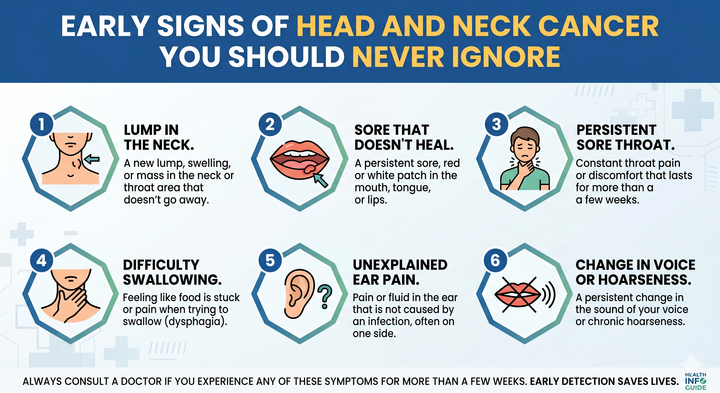
Head and neck cancer is a broad term encompassing malignancies that develop in the mouth, throat, voice box, salivary glands, nasal cavity, sinuses, and thyroid. Together, these cancers account for a significant proportion of all cancer diagnoses in India — largely driven by widespread tobacco and betel nut use. Despite their prevalence, many cases are diagnosed at an advanced stage simply because early symptoms are mistaken for common, minor ailments.
The reality is that head and neck cancers, when detected early, have substantially higher cure rates. Recognising the subtle warning signs and acting on them promptly can mean the difference between a straightforward, organ-preserving treatment and a complex, life-altering intervention. This guide outlines the early signs of head and neck cancer that should never be dismissed or delayed.
Understanding Head and Neck Cancer
Before exploring symptoms, it helps to understand the range of cancers grouped under this category:
- Oral cavity cancers — lips, tongue, gums, floor of the mouth, hard palate, and inner cheeks
- Oropharyngeal cancers — tonsils, soft palate, base of the tongue, and back wall of the throat
- Laryngeal cancers — the voice box
- Hypopharyngeal cancers — the lower part of the throat near the oesophagus
- Nasopharyngeal cancers — the upper throat behind the nose
- Salivary gland cancers — parotid, submandibular, and sublingual glands
- Thyroid and parathyroid cancers
- Nasal cavity and paranasal sinus cancers
The vast majority of head and neck cancers are squamous cell carcinomas, arising in the moist, mucous-membrane-lined surfaces of the head and neck. Each subtype carries its own set of early warning signs — making awareness across all of them essential.
Why Early Detection Matters
When head and neck cancers are caught at Stage I or Stage II, survival rates are dramatically better compared to late-stage diagnoses. For instance, early-stage oral cancer has a five-year survival rate exceeding 80%, whereas advanced-stage disease drops this figure considerably. Yet surveys consistently show that a large proportion of patients in India present to specialists only after symptoms have persisted for six months or more — often because early signs were attributed to infections, dental problems, or acid reflux.
Early Warning Signs You Should Never Ignore
1. A Non-Healing Ulcer or Sore in the Mouth
A mouth ulcer that does not heal within two to three weeks is one of the most important early warning signs of oral cancer. While most ulcers result from minor trauma, nutritional deficiencies, or viral infections and resolve on their own, a persistent sore — particularly one that is painless in the early stages — demands professional evaluation. These lesions most commonly appear on the tongue, the inner cheek, the floor of the mouth, or the gums.
2. White or Red Patches Inside the Mouth
Two pre-cancerous conditions commonly precede oral cancer:
- Leukoplakia — white or grayish patches that cannot be wiped off
- Erythroplakia — red, velvety patches that bleed easily
Both conditions are associated with tobacco use, betel nut chewing, and alcohol consumption. While not all such patches become cancerous, studies show that erythroplakia carries a particularly high rate of malignant transformation. Any unexplained white or red patch in the mouth lasting more than two weeks should be assessed by a specialist.
3. Persistent Hoarseness or Voice Change
A change in voice quality — roughness, breathiness, or a lowered pitch — that lasts more than two to three weeks is an early hallmark of laryngeal (voice box) cancer. This symptom is especially significant in smokers. Many people dismiss hoarseness as a consequence of a cold or overusing their voice, but when it persists beyond the duration of a typical infection, laryngeal evaluation with an endoscope is warranted.
4. A Lump in the Neck
A painless, persistent lump in the neck is one of the most common ways head and neck cancers first present. This lump is typically an enlarged lymph node that has become involved by cancer spreading from a nearby primary tumour — in the throat, tongue, tonsil, or thyroid. The painless nature of such lumps is precisely what leads people to ignore them.
5. Difficulty or Pain While Swallowing
Dysphagia — difficulty swallowing — or odynophagia — pain on swallowing — can indicate cancer in the pharynx (throat), oesophagus, or base of the tongue. Patients often describe a sensation of food sticking in the throat or a feeling that something is lodged even when not eating. This symptom tends to appear slightly later in the disease course but can still represent relatively early-stage cancer when investigated promptly.
6. Persistent Sore Throat
Most sore throats clear within a week to ten days. A sore throat that persists for more than two to three weeks — particularly without fever or other signs of infection — may indicate cancer of the pharynx or tonsils. HPV-related oropharyngeal cancers, increasingly common among non-smokers, often present with a persistent sore throat alongside a neck lump.
7. Unexplained Ear Pain (Referred Otalgia)
Pain felt in the ear — particularly in one ear only, without any visible ear infection — is a phenomenon called referred otalgia and can be an early sign of throat or tongue base cancer. The ear and throat share nerve pathways, which is why pain originating in the throat is sometimes perceived in the ear. Persistent, unexplained unilateral ear pain in the absence of ear disease should always prompt investigation of the throat and tongue base.
8. Nasal Obstruction, Bleeding, or Facial Pain
Cancers of the nasal cavity and paranasal sinuses often mimic chronic sinusitis in their early stages. Symptoms to watch for include:
- Persistent nasal blockage on one side
- Recurrent nosebleeds (epistaxis) without an obvious cause
Who Is at Greatest Risk?
While head and neck cancer can affect anyone, the following factors significantly elevate risk:
- Tobacco use in any form — smoking, bidis, chewing tobacco, gutka, or pan masala
- Alcohol consumption, especially combined with tobacco use
- HPV infection (Human Papillomavirus), particularly HPV-16, linked to oropharyngeal cancer
When Should You See a Specialist?
The general rule of thumb is straightforward: any symptom in the head and neck region that persists for more than two to three weeks without a clear benign explanation should be evaluated by a specialist. This is especially important if you have any of the risk factors listed above.
A qualified head and neck cancer surgeon in Ahmedabad or in your nearest cancer centre can conduct a thorough clinical examination, arrange appropriate endoscopic assessment, and guide biopsy and imaging as needed. Early evaluation does not necessarily mean a cancer diagnosis — but it does ensure that if cancer is present, it is found at its most treatable stage.
The Importance of Not Waiting
One of the most consistent findings in head and neck oncology is that delayed presentation worsens outcomes. Patients who seek medical attention early — even when symptoms seem mild — consistently fare better in terms of survival, quality of life, and the extent of treatment required. Organ preservation, normal speech, and near-normal swallowing are far more achievable when cancer is caught at an early stage.
Conclusion
Head and neck cancers are largely preventable and highly treatable when caught early. The body often sends signals long before a cancer reaches an advanced stage — the key is knowing how to read them. Whether it is a sore that will not heal, a voice that has changed, a lump in the neck, or a blocked nostril that will not clear, these signs are worth taking seriously.
Original Source: https://ecomotion.ae/early-signs-of-head-and-neck-cancer-you-should-never-ignore/