Winning Corporate Climate Buyers: A Growth Blueprint for Carbon Capture Companies
Posted by Thomas Shellby
Filed in Other 251 views
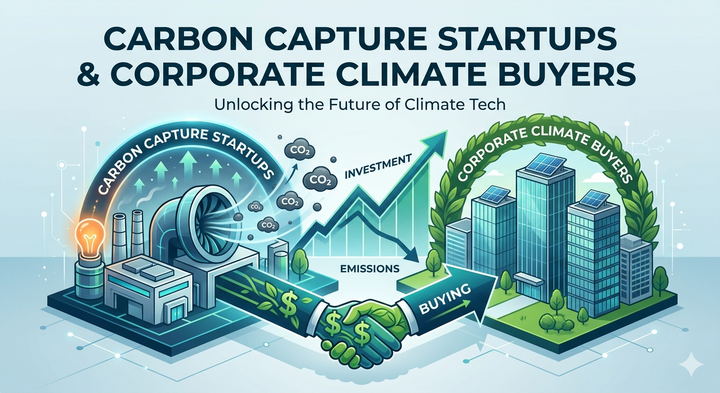
The field of carbon removal is quickly evolving into a key part of climate policies from its position as an up-and-coming industry. With firms taking greater action toward net zero goals, the need for carbon removal services has become greater than ever. This trend is leading to many opportunities for carbon removal companies ready to fulfill the needs of enterprise clients.
Innovation is vital, but simply having innovative technologies may not be sufficient for ensuring a successful venture. Enterprises are now looking for companies that have what it takes in terms of maturity and effectiveness. According to SEO Circular, enterprise buyers are looking for commercial viability in carbon removal services along with their other attributes.
For Carbon Capture Startups, this changing landscape presents a unique opportunity to establish themselves as trusted partners for some of the world's largest climate-focused organizations.
Corporate Demand Is Driving a New Carbon Removal Economy
Sustainability is a key focus area for companies from several different industries. While they have established their emissions reduction projects, they are now looking into solutions that will help reduce the emissions that cannot be avoided.
This, of course, means that there is an increasing demand for carbon removal within enterprises.
The difference between companies and traditional consumers is that companies look for stable partnerships in the long term. Companies want to be sure that the carbon removal services provided to them by their partner will keep providing value in the future.
It’s therefore important to understand this change when trying to secure a corporate partnership.
Enterprise Buyers Want More Than Innovative Technology
One common mistake among carbon removal providers is assuming that technical innovation alone will attract buyers.
In reality, enterprise procurement teams evaluate suppliers through multiple lenses. Sustainability teams may focus on environmental impact, while finance departments assess costs and risks. Legal teams review compliance requirements, and executives evaluate long-term business value.
Because of this, buyers typically examine factors such as:
-
Carbon removal permanence
-
Verification standards
-
Financial stability
-
Reporting practices
-
Regulatory compliance
-
Scalability potential
-
Operational readiness
Companies that address these concerns early often create a stronger impression during procurement discussions.
Establishing Credibility Through Measurable Results
Trust is one of the most valuable assets in the carbon removal industry.
Organizations investing in carbon removal solutions need confidence that the environmental outcomes being promised can actually be achieved. This requires a commitment to transparency and evidence-based reporting.
Carbon capture companies should prioritize monitoring, reporting, and verification systems that provide buyers with clear visibility into project performance.
Strong verification frameworks typically include:
-
Independent audits
-
Detailed reporting
-
Data-driven methodologies
-
Third-party assessments
-
Ongoing performance monitoring
When buyers can easily validate results, they are more likely to view a supplier as a credible long-term partner.
Preparing for Enterprise-Scale Growth
Many carbon removal projects begin with small-scale demonstrations or pilot programs. However, enterprise buyers are often planning climate strategies that extend far beyond initial purchases.
Before committing to long-term agreements, buyers want assurance that suppliers can expand operations as demand increases.
To demonstrate readiness, companies should communicate:
-
Existing production capacity
-
Future expansion plans
-
Infrastructure development strategies
-
Technology deployment timelines
-
Geographic growth opportunities
-
Supply chain resilience
A realistic and well-supported growth plan often carries more weight than ambitious projections without operational backing.
Scalability remains one of the most important factors influencing enterprise purchasing decisions.
Aligning Carbon Removal Solutions With Business Objectives
Sustainability is a major driver of demand, but enterprise buyers also consider broader business outcomes.
Decision-makers want to understand how carbon removal investments contribute to organizational priorities such as risk management, compliance, brand reputation, and long-term strategy.
Suppliers should clearly communicate:
-
Environmental benefits
-
Business value
-
Regulatory advantages
-
Reputation enhancement
-
Long-term climate impact
-
Stakeholder alignment
Companies that connect their solutions to both sustainability and business goals often create stronger value propositions.
Simplifying Enterprise Procurement
The procurement process for enterprise climate solutions can be complex. Long approval cycles, legal reviews, and risk assessments often create delays.
Companies that simplify these processes can gain a competitive advantage.
Effective agreements generally feature:
-
Clear pricing models
-
Defined delivery schedules
-
Verification requirements
-
Reporting obligations
-
Performance expectations
-
Risk allocation terms
Offering flexible purchasing structures may also help buyers navigate internal approval procedures more efficiently.
Reducing complexity makes it easier for organizations to move forward with confidence.
Building Market Authority Before Buyers Begin Searching
Many enterprise purchasing decisions begin with research rather than direct outreach.
Before contacting suppliers, buyers often explore industry publications, reports, educational resources, and thought leadership content. Companies that consistently contribute valuable insights can establish themselves as trusted authorities.
Effective thought leadership may include:
-
Research reports
-
Industry analysis
-
Market forecasts
-
Case studies
-
Sustainability insights
-
Regulatory updates
Many organizations strengthen their visibility through content strategies recommended by SEO Circular, helping them engage enterprise buyers earlier in the decision-making process.
Authority built through education often translates into increased trust during procurement discussions.
Leveraging Partnerships to Strengthen Market Position
Strategic partnerships can significantly improve a company's credibility and reach.
Enterprise buyers frequently view industry collaborations as evidence of operational maturity. Partnerships with verification providers, research organizations, technology companies, and infrastructure partners can strengthen market positioning.
Additionally, many corporations work closely with Carbon Credit Consulting Services when evaluating carbon removal opportunities. Building relationships with these advisors can help suppliers gain access to qualified buyers and improve their reputation within the industry.
Partnerships can also support:
-
Technical validation
-
Operational efficiency
-
Market expansion
-
Risk reduction
-
Brand recognition
A strong ecosystem often signals long-term stability and reliability.
Why Transparency Creates Competitive Advantages
Transparency has become a defining characteristic of successful carbon removal organizations.
Buyers increasingly expect detailed information regarding methodologies, project performance, and operational risks. Suppliers that openly share this information are often viewed as more trustworthy.
Important information to communicate includes:
-
Project updates
-
Verification outcomes
-
Performance metrics
-
Risk assessments
-
Methodologies
-
Continuous improvement efforts
Transparency reduces uncertainty and helps create stronger relationships between buyers and suppliers.
In many cases, openness can become a significant differentiator within a crowded market.
Increasing Visibility Among Enterprise Decision-Makers
Even highly capable carbon capture companies may struggle to secure contracts if potential buyers cannot find them.
Enterprise procurement teams frequently begin their search online, making digital visibility a critical component of business development.
A strong visibility strategy should include:
-
Search engine optimization
-
Educational content
-
Industry publications
-
Expert commentary
-
Research resources
-
Webinar participation
Organizations often work with specialists such as SEO Circular to improve search performance and attract enterprise audiences actively seeking carbon removal partners.
Visibility helps ensure that suppliers are considered during the earliest stages of the procurement journey.
Conclusion
Offtake agreements are one of the biggest potential areas for growth for companies specializing in carbon capture. Nevertheless, such agreements are not just dependent on technology innovation.
Companies that focus on being verified, transparent, scalable, partnership-oriented, and educated buyers will have a much easier time gaining trust and signing long-term agreements. In light of the increasing demand for carbon removal, aligning your company's strategy with that of enterprises is crucial.