How Wafer Handling Upgrades Can Extend the Life of Legacy Semiconductor Equipment
Posted by Kensington Laboratories
Filed in Business 35 views
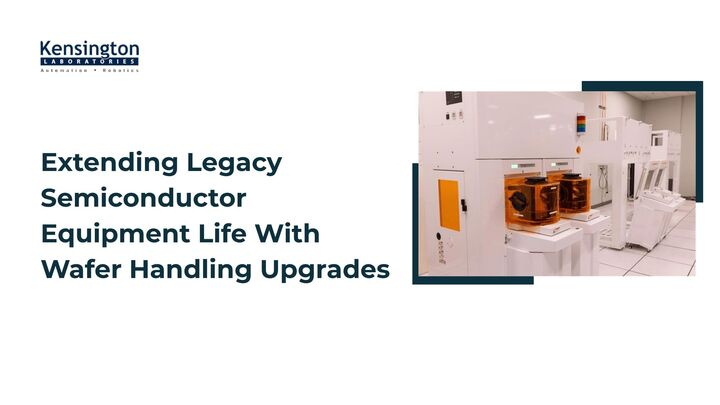
Mature semiconductor fabs operate under unprecedented manufacturing pressure. Surging global demand for power electronics, Internet of Things (IoT) devices, and specialized automotive chips has pushed older production lines to their absolute physical limits. Instead of abandoning perfectly functional processing chambers, facility managers prioritize semiconductor equipment modernization.
-
Cost Avoidance- Retrofitting existing tools bypasses the staggering capital expenditure of constructing new greenfield facilities.
-
Throughput Boost- Replacing outdated front-end robotics immediately breathes new life into legacy mechanical assets, improving overall wafer output.
Bridging the Node Gap with Advanced EFEMs
One of the most effective strategies for preserving older tools involves deploying a 200mm to 300mm Bridge EFEM (Equipment Front End Module). This specific hardware acts as an adaptable gateway, allowing a single process tool to handle both standard open cassettes and modern FOUPs (Front Opening Unified Pods).
-
Operational Flexibility- Implementing legacy equipment upgrades gives foundries the agility to transition between various node sizes without replacing core tools.
-
Capacity Imperative- With global 200mm fab capacity reaching record levels of over 7 million wafers per month to keep pace with demand, keeping older infrastructure adaptable remains a vital operational focus.
Enhancing Yield Through Automated Wafer Handling
Precision is everything when extending operational tool longevity. Executing a targeted EFEM retrofit removes manual handling errors from critical transfer steps, drastically slashing particulate contamination risks.
-
Contamination Control: Modern wafer automation incorporates high-speed, dual-arm robots and advanced pre-aligners that handle substrates with extreme accuracy.
-
Breakage Reduction- Upgraded handling systems experience far fewer mechanical faults, protecting fragile substrates and ensuring aging process chambers remain consistently fed to maximize overall equipment effectiveness (OEE).
Connecting Legacy Tools to Modern Smart Fabs
Hardware upgrades only solve half the production puzzle; software connectivity completes it. True semiconductor equipment integration means connecting retrofitted modules directly into modern factory Manufacturing Execution Systems (MES).
-
Real-Time Data Visibility- Upgraded handling interfaces enable legacy tools to track lot IDs, monitor equipment health parameters, and communicate with automated guided vehicles (AGVs).
-
Enterprise Connectivity- Intelligent semiconductor equipment modernization transforms isolated legacy machines into fully networked, high-yield enterprise assets.
Concluding Thoughts
Operators cannot afford to leave functional processing capabilities stranded behind obsolete material handling interfaces. Smart retrofits permanently unlock hidden capacity while protecting substantial past capital investments. By upgrading to advanced bridging modules alongside automated front-ends, foundries maintain a sharp competitive edge, confidently meeting the relentless global manufacturing demand for mature-node silicon.