How Modern Farm Equipment Improves Soil Preparation and Crop Consistency
Posted by Sam Seeder
Filed in Business 1K views
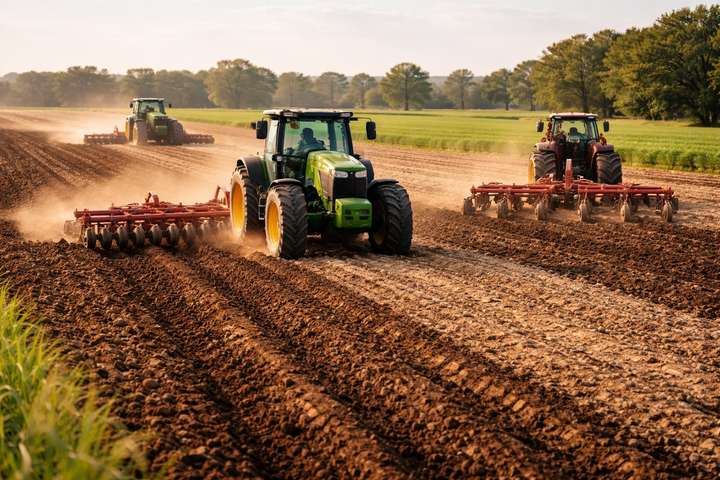
Successful farming begins long before planting. Soil preparation plays a crucial role in determining crop health, water retention, and long-term yield stability. With advancements in agricultural machinery, farmers today have access to specialized equipment designed to improve efficiency while preserving soil structure. Understanding how different tools contribute to this process can help operators make more informed decisions for both short-term productivity and long-term sustainability.
Digital equipment marketplaces such as AllMachines have made it easier for growers to research machinery types, compare specifications, and understand how various implements fit into modern farming systems. Rather than relying on a one-size-fits-all approach, many producers now build machinery lineups based on soil type, crop rotation, and conservation practices.
The role of tillage in soil management
Primary tillage remains an important step in many farming operations, particularly where compaction or residue buildup is a concern. Equipment such as plows is commonly used to turn over soil layers, helping to incorporate organic matter and manage weeds. While plowing is not required in all systems, it continues to play a role in fields transitioning from pasture or heavily compacted land.
In reduced-tillage systems, farmers often focus on targeted soil disturbance rather than full inversion. This is where implements like subsoilers become valuable. Designed to break up deep compaction without disturbing surface residue, subsoilers help improve root penetration and water infiltration, especially in high-traffic areas of the field.
Refining the seedbed for planting
Once deeper soil layers are addressed, secondary tillage tools are used to refine the seedbed. Implements such as harrows help level the soil surface, break down clods, and create uniform conditions for seed placement. A consistent seedbed supports even germination, which is critical for maximizing yield potential across the field.
The selection of finishing equipment depends heavily on crop type and soil conditions. In lighter soils, minimal passes may be sufficient, while heavier soils may require additional refinement to achieve optimal structure.
Balancing productivity and sustainability
Modern farming increasingly focuses on balancing productivity with soil conservation. Over-tillage can lead to erosion and moisture loss, while under-tillage may result in compaction or uneven stands. By understanding how each piece of equipment fits into the broader soil management strategy, farmers can reduce unnecessary passes and protect long-term soil health.
Access to detailed equipment information through platforms like AllMachines allows operators to plan smarter machinery investments, ensuring that each tool contributes meaningfully to soil preparation goals rather than adding redundant operations.