How Current Transformer Innovation Is Redefining Power System Monitoring
Posted by scott bang
Filed in Business 780 views
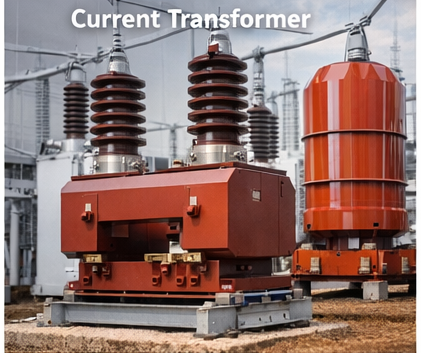
Evolving Role of Current Transformers in Modern Power Systems
As power networks become more complex and digitized, the current transformer remains a foundational component for measurement, monitoring, and protection. Traditionally used to step down high currents to measurable levels, current transformers are now being redesigned to meet the needs of smart grids, renewable energy integration, and advanced automation. Utilities and industrial operators are increasingly focused on accuracy, safety, and interoperability, which is driving innovation across both design and application.
One of the most visible trends is the shift toward compact, lightweight designs that simplify installation without compromising performance. Modern substations and industrial facilities often face space constraints, making low-profile current transformers especially attractive. At the same time, materials engineering has improved thermal stability and insulation performance, extending operational life even in harsh environments. These advances ensure that current transformers continue to deliver reliable data under fluctuating load conditions.
Innovation Across Current Transformer Types
The market today offers a wide range of current transformer types, including wound, bar-type, and window (or toroidal) designs, each optimized for specific use cases. Recent development has focused on digital and optical current transformers, which reduce electromagnetic interference and enable higher accuracy over a broad current range. Optical variants, in particular, are gaining attention in high-voltage applications due to their inherent electrical isolation and reduced maintenance requirements.
Another notable trend is the integration of sensors and communication interfaces directly into transformer assemblies. This allows current transformers to feed real-time data into energy management systems, supporting predictive maintenance and load optimization. As utilities deploy more distributed energy resources, such as solar and wind, accurate current sensing becomes critical for balancing supply and demand across the grid.
Accuracy and Intelligence in Current Transformer Metering
The current transformer meter segment is also evolving rapidly. Traditional metering applications emphasized basic accuracy and durability, but modern meters now demand higher precision classes to support billing, compliance, and energy analytics. Advanced current transformers are designed to maintain accuracy even at low current levels, which is essential for monitoring variable loads and energy-efficient equipment.
Digital substations are accelerating this trend by relying on data-centric architectures. Here, current transformers serve as intelligent nodes, transmitting synchronized measurements to control systems. This shift reduces wiring complexity and enhances system visibility. As a result, utilities can detect anomalies faster, reduce downtime, and improve overall grid resilience.
Protection, Reliability, and Market Outlook
Safety remains a core driver of innovation, particularly in the protection current transformer category. These devices are engineered to perform accurately during fault conditions, ensuring that relays and circuit breakers respond correctly to overcurrent events. Enhanced saturation characteristics and fast response times are now standard requirements, especially in high-fault-current environments such as transmission networks and heavy industry.
In terms of commercial outlook, growth expectations reflect the expanding scope of applications. A recent projection highlights that the global current transformer market size is expected to reach USD 3.90 billion by 2030, growing at a CAGR of 6.82% from 2025 to 2030, according to Grand View Research. This growth is supported by grid modernization initiatives, increased investment in renewable energy infrastructure, and rising demand for reliable power distribution in emerging economies.
In summary, current transformers are no longer passive components limited to basic measurement. They are becoming smarter, more accurate, and more adaptable to digital power systems. With continuous innovation across current transformer types, metering solutions, and protection applications, these devices will remain central to the safe and efficient operation of electrical networks worldwide.