What Is the Process for DIFC Company Formation in Dubai?
Posted by Adan Bailey
179 views
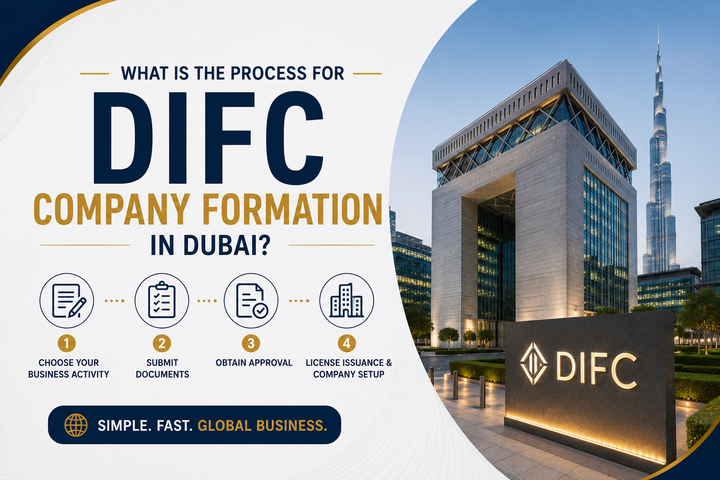
The Dubai International Financial Centre (DIFC) is one of the UAE’s leading business and financial hubs, offering a strong legal framework, international connectivity, and a wide range of opportunities for financial and non-financial businesses. For entrepreneurs, investors, professional firms, and international companies, DIFC company formation in Dubai can provide access to a sophisticated business ecosystem in the heart of the city.
DIFC supports different legal structures, including private companies, public companies, branches of foreign companies, partnerships, foundations, and special-purpose structures. The appropriate structure depends on the proposed business activity, ownership arrangement, and commercial objectives.
What Is DIFC Company Formation?
DIFC company formation is the process of establishing and registering a legal entity within the Dubai International Financial Centre. The process involves selecting an appropriate business activity and legal structure, obtaining the required approvals, submitting incorporation documents, registering the entity with the DIFC Registrar of Companies, and obtaining the relevant commercial licence.
DIFC distinguishes between financial and non-financial businesses. Companies conducting regulated financial services may also require authorisation from the Dubai Financial Services Authority (DFSA), while non-financial businesses follow the applicable DIFC commercial registration process. The DIFC Registrar of Companies is responsible for incorporation and registration matters.
Step-by-Step Process for DIFC Company Formation in Dubai
1. Choose Your Business Activity
The first step is to identify exactly what your company will do. DIFC provides opportunities for financial firms, professional services companies, technology and innovation businesses, retail activities, holding structures, and other eligible activities.
Choosing the correct activity is important because it determines the applicable licence, regulatory requirements, documents, and potentially whether additional DFSA approval is necessary.
2. Select the Legal Structure
Next, the applicant must select an appropriate legal structure. DIFC allows several structures, including a Private Company (LTD), Public Company (PLC), Recognised Company or branch, LLP, LP, foundation, and other permitted entities.
The choice should be based on factors such as the number of shareholders, ownership structure, business purpose, liability protection, and future expansion plans.
3. Reserve the Company Name
The proposed company name must comply with DIFC naming requirements. Selecting an appropriate name early can help avoid delays during the application process.
Entrepreneurs should also ensure that the proposed name does not conflict with existing registered entities or violate applicable naming rules.
4. Submit the DIFC Application
The formation application is submitted through the DIFC portal. DIFC states that the information required can vary depending on the proposed legal structure and business activities.
Applicants may need to provide information about shareholders, directors, ultimate beneficial owners, proposed activities, business operations, and other corporate details. Depending on the activity and ownership structure, additional supporting documents may also be required.
5. Obtain Initial Approval
After submission, DIFC reviews the application and supporting information. Certain DIFC setup routes use an initial approval stage before the remaining registration requirements are completed. Current DIFC guidance for relevant applications indicates that applicants receive an initial approval email following preliminary review.
For regulated businesses, the review process can involve additional regulatory requirements and should be planned accordingly.
6. Prepare and Sign Corporate Documents
Once the application progresses, the company’s constitutional documents, including the Articles of Association where applicable, need to be completed and executed.
Under the DIFC Companies Law, an incorporation application must be filed with the Registrar and accompanied by the proposed Articles of Association signed by or on behalf of the incorporators.
7. Complete Registration and Obtain the Licence
After the required approvals, documentation, and payments are completed, the entity is formally registered. The Registrar of Companies handles DIFC incorporation and registration, while the relevant commercial licence is issued for permitted non-regulated commercial activities.
The licence specifies important information such as the company name, legal status, address, permitted activities, authorised manager, and validity dates.
8. Arrange Office, Banking and Visas
After incorporation, the company can proceed with its operational requirements. Depending on the business and applicable DIFC requirements, this can include arranging office premises, opening a corporate bank account, applying for employee or investor visas, and completing ongoing compliance obligations.
The exact requirements depend on the company's structure, activities, shareholders, and staffing needs.
What Documents Are Required for DIFC Company Formation?
The documentation varies according to the type of company and business activity. Common requirements can include passport copies of shareholders and directors, proof of address, corporate documents for corporate shareholders, information about ultimate beneficial owners, business activity details, constitutional documents, and supporting financial or business information where applicable.
For example, certain DIFC activities require additional financial information depending on how the company is funded and who owns it.
Because documentation requirements can change according to the entity type and activity, applicants should verify the relevant DIFC checklist before submitting an application.
Why Choose DIFC for Company Formation?
DIFC offers a strategic Dubai location, an established financial ecosystem, an English common-law-based legal framework, and infrastructure designed for both financial and non-financial businesses. It also provides a range of legal structures and business setup options.
For entrepreneurs and international investors who need a prestigious business environment with strong legal and commercial infrastructure, DIFC can be an attractive jurisdiction.
Professional guidance can make the formation process easier by helping with activity selection, entity structure, documentation, application preparation, licensing, and post-incorporation requirements. Businesses considering DIFC company formation in Dubai can work with Takween Advisory to understand the applicable setup process and prepare their formation requirements efficiently.
Frequently Asked Questions About DIFC Company Formation
1. How long does DIFC company formation take?
The timeline depends on the legal structure, business activity, documentation, and whether regulatory approval is required. Straightforward non-regulated applications can generally move faster than financial services companies requiring additional DFSA processes.
2. Can a foreigner establish a company in DIFC?
Yes. DIFC provides structures for international investors and companies, subject to applicable ownership, documentation, licensing, and regulatory requirements.
3. What is the minimum capital required for a DIFC company?
There is no single minimum capital figure applicable to every DIFC company. Capital requirements can depend on the legal structure and nature of the proposed activity, particularly for regulated financial businesses.
4. Does a DIFC company need an office?
Office requirements depend on the entity type, licence category, and applicable DIFC rules. Applicants should confirm the premises requirements applicable to their specific setup before incorporation.
5. Do financial companies need DFSA approval?
Businesses conducting regulated financial services generally require authorisation from the Dubai Financial Services Authority. A standard DIFC commercial licence does not itself authorise regulated financial services.
6. Can I open a corporate bank account after DIFC incorporation?
Yes, a DIFC company can apply for a corporate bank account after incorporation. However, the bank conducts its own compliance and due-diligence checks, so incorporation does not automatically guarantee account approval.
7. What is the difference between DIFC and a regular UAE free zone?
DIFC has a specialised legal, regulatory, and commercial environment focused particularly on financial, professional, technology, and related businesses. A conventional UAE free zone may be more suitable for general trading, manufacturing, logistics, or other activities depending on the company's objectives.
8. Can a DIFC company sponsor employee visas?
Visa eligibility and requirements depend on the company, premises, employee position, and applicable immigration rules. Once the company is operational, the appropriate visa and employment processes can be considered.
9. What are the main costs involved in DIFC company formation?
Costs can include application and registration fees, commercial licence fees, office or premises costs, visa expenses, professional services, and other compliance-related charges. The total amount varies significantly depending on the legal structure and activity. DIFC publishes official handbooks and fee information for different entity types.
10. Is DIFC suitable for every business?
Not necessarily. DIFC is particularly attractive for financial services, professional services, technology, holding structures, family offices, and businesses seeking a specialised international business environment. Entrepreneurs should compare DIFC with mainland and other UAE free-zone options before choosing a jurisdiction.