Saudi Arabia Seed Market 2026–2034: Growth Drivers, Challenges & Emerging Trends
Posted by shubham imarc
Filed in Business 188 views
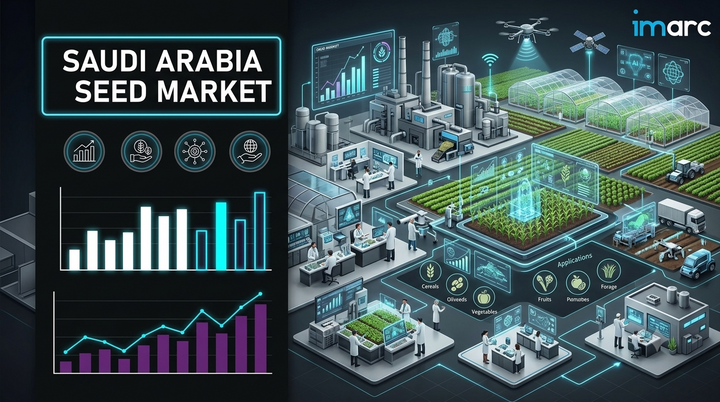
Saudi Arabia's agricultural sector is undergoing a structural transformation, driven by Vision 2030's push toward food security and self-sufficiency, rising investment in controlled-environment agriculture, and the adoption of advanced seed biotechnologies. Traditionally dependent on food imports due to arid climatic conditions, the Kingdom is now channeling substantial government funding and international partnerships into developing high-yield, drought-tolerant, and climate-resilient seed varieties suited to desert farming, hydroponics, and greenhouse cultivation.
Saudi Arabia continues to strengthen its position as one of the most active seed markets in the Middle East, with the sector supporting growing commercial farming operations across vegetables, cereals, oilseeds, and forage crops. As farmer and institutional preferences shift toward improved hybrid varieties, genetically modified seeds, and precision agriculture inputs, the industry is witnessing rapid expansion driven by government-backed research, multinational seed company partnerships, and rising food security imperatives under Vision 2030.
Saudi Arabia Seed Market Size and Overview
The Saudi Arabia seed market size reached USD 449.7 Million in 2025. Looking forward, IMARC Group expects the market to reach USD 705.4 Million by 2034, exhibiting a CAGR of 5.13% during 2026-2034. Growth is being driven by rising demand for seeds resilient to changing climatic conditions, including drought-resistant and heat-tolerant varieties, heightened focus on food security, and the rapid adoption of biotechnologically advanced seed varieties by both commercial farms and smallholder operations. The market's segmentation spans type (Genetically Modified Seeds and Conventional Seeds), seed type (Oilseeds, Cereals and Grains, Fruits and Vegetables, Burpee and Park, and Others), traits (Herbicide-Tolerant, Insecticide-Resistant, and Other Stacked Traits), availability (Commercial Seeds and Saved Seeds), and seed treatment (Treated and Untreated), with momentum reinforced by Vision 2030's continued push toward agricultural self-sufficiency and food security.
What is Driving Seed Market Growth in Saudi Arabia?
Saudi Arabia's seed market growth is driven by rising demand for climate-resilient and high-yield seed varieties, increasing biotechnology adoption, strong government-backed agricultural financing, and Vision 2030's food security mandates targeting domestic self-sufficiency.
Saudi Arabia's food security ambitions are playing a critical role in shaping seed market demand. With the government targeting above 85% agricultural self-sufficiency across key commodity categories by 2030, farmers and commercial operations are under growing pressure to adopt improved seed varieties that deliver higher yields per unit of water and land, two resources that are critically scarce across the Kingdom.
Government agricultural financing is reinforcing this momentum. With the Agricultural Development Fund providing up to 75% financing for greenhouse projects and irrigation systems, alongside 10-year tax holidays for agritech investments, commercial seed adoption is accelerating at a pace that few other markets in the MENA region can match.
A growing commercial farming base is amplifying this shift. Saudi Arabia's expanding network of greenhouse facilities, hydroponic farms, and controlled-environment agriculture projects increasingly relies on premium commercial seeds that offer:
• Improved drought and heat tolerance suited to desert growing conditions
• Higher nutritional content and disease resistance for dairy and livestock feed crops
• Consistent germination rates and yield predictability for commercial greenhouse vegetable production
• Biotechnologically advanced traits including herbicide tolerance and insecticide resistance
International seed company investments are also reshaping the competitive landscape, with global leaders including Syngenta, Bayer, BASF, Corteva, and Sakata Seed establishing strong commercial presences in Saudi Arabia and partnering with government agencies to advance seed research and capacity development.
Explore in-depth findings for this market: https://www.imarcgroup.com/saudi-arabia-seed-market/requestsample
How Vision 2030 is Reshaping Saudi Arabia's Seed Sector
Saudi Arabia's Vision 2030 has fundamentally reshaped the Kingdom's seed sector, transforming it from a traditional low-technology import-dependent landscape into one of the most innovation-focused agricultural input markets in the region. Anchored by the National Agricultural Development Strategy and the Reef Program for food security enhancement, the government has committed substantial funding toward modernizing seed research infrastructure, expanding high-quality seed access for commercial farmers, and reducing dependence on generic imported seeds with tailored, locally adapted varieties. These efforts are not isolated programs; they represent a broader strategic push to diversify the economy away from oil, strengthen domestic food production capabilities, and build an agricultural sector capable of sustaining productivity under the Kingdom's extreme climatic and water-scarcity conditions.
How AI is Reshaping the Future of Saudi Arabia's Seed Market
Artificial intelligence is increasingly positioned as a core enabler of seed selection, breeding, and agricultural performance optimization across Saudi Arabia.
The government and private sector are deploying AI-powered platforms designed to improve crop outcomes, with AI helping the seed industry through:
• Precision Seed Breeding and Genomic Selection: AI algorithms are accelerating the identification of high-performing seed varieties by analyzing vast genomic datasets, enabling seed companies to develop drought-resistant, heat-tolerant, and high-yield varieties far faster than traditional breeding programs, directly addressing Saudi Arabia's unique climatic constraints.
• Smart Crop Monitoring and Seed Performance Tracking: AI-driven drone and satellite-based monitoring systems are enabling Saudi farmers to track seed germination rates, early plant growth patterns, and crop health in real time, allowing rapid identification of underperforming varieties and enabling data-driven seed selection decisions for subsequent planting cycles.
• Climate Modeling for Seed Variety Optimization: Machine learning models are processing decades of regional climate data, soil composition records, and historical crop yield datasets to identify the optimal seed varieties for specific micro-climates across Saudi Arabia's Northern and Central, Western, Eastern, and Southern regions, enabling precision agriculture practices that maximize output per unit of irrigation water used.
• Digital Farm Management Platforms: AI-powered farm management platforms integrated with national agricultural data infrastructure are providing Saudi farmers with seed-specific planting recommendations, fertilizer pairing strategies, and irrigation scheduling tools, improving overall seed performance and reducing input waste across both large commercial operations and government-supported smallholder farming programs.
Grab a sample PDF of this report: https://www.imarcgroup.com/saudi-arabia-seed-market/requestsample
Which Seed Market Segments are Growing Fastest in Saudi Arabia?
Genetically modified and hybrid vegetable seeds are growing faster than conventional varieties, driven by controlled-environment agriculture expansion, greenhouse proliferation, and rising food service demand for consistent-quality produce.
While conventional seeds continue to form part of the market, growth is increasingly being driven by advanced seed categories. These include:
• Herbicide-tolerant and insecticide-resistant GM seed varieties for cereal and oilseed crops
• High-yield hybrid vegetable seeds for greenhouse tomatoes, peppers, lettuce, and brassica varieties
• Drought-tolerant and heat-resistant seed varieties for open-field cereal and forage production
• Treated seeds with biostimulant, fungicide, and micronutrient coatings for improved germination in saline and arid soils
• Climate-smart forage seed varieties including drought-tolerant sorghum and alfalfa alternatives aligned with water conservation mandates
The growth of advanced seed varieties is closely tied to the expansion of commercial greenhouse farming, vertical agriculture projects like NEOM's Topian initiative, and corporate farming programs by entities including the National Agricultural Development Company (NADEC) and Pure Harvest Smart Farms, all of which require consistently high-performing premium seed inputs.
How Government Policy is Supporting Saudi Arabia's Seed Sector
Government initiatives are strengthening seed research infrastructure, financing commercial seed adoption, and building international partnerships across the agricultural value chain.
The Saudi government has consistently supported the seed sector through targeted programs and strategic collaborations. Key initiatives include:
• Agricultural Development Fund Financing: Provides up to 75% financing for greenhouse projects, irrigation systems, and agritech investments with 10-year tax holidays, directly enabling commercial farmers to invest in high-quality premium seed varieties
• Reef Program: A Vision 2030 initiative dedicated to enhancing food security that has helped Saudi Arabia achieve over 63% self-sufficiency in value-added agriculture by 2023, with higher targets set for 2030
• Tamala Initiative, Tabuk: Seeks to unite 3,000 farms to enhance crop production by adopting modern farming technologies, creating concentrated demand for commercial certified seed varieties across large-scale farming clusters
• SALIC Overseas Agri-Investment Program: Saudi Agricultural and Livestock Investment Company's sovereign investments in overseas farmland in Canada, Australia, Brazil, and Ukraine support seed supply security and knowledge transfer, indirectly strengthening the domestic seed technology ecosystem
• National Agricultural Development Strategy: Provides financial support for R&D projects focused on developing new crop varieties with improved resistance to pests, heat, and water stress, aligned with Saudi Arabia's specific agro-climatic challenges
Regulatory efforts by the Saudi Ministry of Environment, Water, and Agriculture have also opened the sector to greater international collaboration, with streamlined processes for approving and commercializing new seed varieties developed by global seed companies and adapted for Saudi growing conditions.
Saudi Arabia Seed Market Trends and Drivers:
Shift Toward Climate-Resilient Seed Varieties:
Saudi Arabia's agricultural sector faces existential challenges from extreme heat, water scarcity, soil salinity, and limited arable land. These structural constraints are pushing both government research programs and commercial farming operations toward seed varieties specifically engineered for resilience in arid and semi-arid conditions. Demand for drought-tolerant wheat, heat-resistant vegetable hybrids, saline-adapted oilseed varieties, and low-water-use forage crops is growing consistently, with multinational seed companies actively tailoring product portfolios for the Saudi market.
Controlled-Environment Agriculture Driving Premium Seed Demand:
The rapid expansion of greenhouse farming, vertical agriculture, and hydroponic systems across Saudi Arabia is creating structural demand for premium hybrid and certified seed varieties that deliver consistent germination rates, predictable growth cycles, and optimal yield performance under controlled conditions. Projects such as NEOM's Topian 4-hectare precision horticulture greenhouse, Pure Harvest Smart Farms' climate-controlled vegetable production facilities, and the Tamala farming cluster in Tabuk all rely on high-quality commercial seeds as their primary agricultural input, directly expanding the addressable market for premium seed suppliers.
Biotechnology Adoption and GM Seed Expansion:
Advancements in seed biotechnology, including the development of herbicide-tolerant, insecticide-resistant, and stacked-trait GM seed varieties, are transforming crop production economics for Saudi commercial farms. As regulatory frameworks evolve and awareness of the yield and input-efficiency benefits of GM varieties grows among Saudi farmers and agribusiness operators, biotechnology adoption is expected to accelerate through the forecast period, shifting market mix toward higher-value, higher-margin seed products for leading seed companies active in the Kingdom.
Ask analyst for customized report: https://www.imarcgroup.com/request?type=report&id=20903&flag=E
Saudi Arabia Seed Industry Segmentation:
The report has segmented the market into the following categories:
Type Insights:
• Genetically Modified Seeds
• Conventional Seeds
Seed Type Insights:
• Oilseeds
o Soybean
o Sunflower
o Cotton
o Canola/Rapeseed
• Cereals and Grains
o Corn
o Wheat
o Rice
o Sorghum
• Fruits and Vegetables
o Tomatoes
o Lemons
o Brassica
o Pepper
o Lettuce
o Onion
o Carrot
• Burpee and Park
• Others (Alfalfa, Clovers and Other Forage, Flower Seed, Turf Grasses)
Traits Insights:
• Herbicide-Tolerant (HT)
• Insecticide-Resistant (IR)
• Other Stacked Traits
Availability Insights:
• Commercial Seeds
• Saved Seeds
Seed Treatment Insights:
• Treated
• Untreated
Regional Insights:
• Northern and Central Region
• Western Region
• Eastern Region
• Southern Region
Key Challenges in Saudi Arabia's Seed Industry:
Despite strong growth prospects, the seed sector faces several structural and operational challenges.
Key constraints include:
• Water Scarcity and Groundwater Depletion: With agriculture consuming approximately 80% of national water, strict groundwater licensing caps and metering compliance requirements limit the viability of water-intensive seed crops and constrain the expansion of seed production operations dependent on irrigation
• Limited Domestic Seed Production Infrastructure: Saudi Arabia remains significantly dependent on imported commercial seeds, particularly for hybrid vegetable varieties and high-tech GM crops, exposing the market to global supply chain disruptions and import cost volatility
• Regulatory Complexity for GM Seed Approval: The approval process for new genetically modified seed varieties involves multiple regulatory bodies and extended evaluation periods, slowing the commercialization of promising new seed technologies for Saudi market conditions
• Extreme Climatic Conditions: High temperatures, low humidity, and saline soil conditions across large areas of the Kingdom demand highly specialized seed varieties that may not be readily available from standard global commercial seed portfolios, creating product gap challenges for farmers in remote regions
• Limited Local R&D Capacity: Domestic seed breeding and biotechnology research infrastructure remains underdeveloped relative to the scale of agricultural ambition under Vision 2030, increasing dependence on international seed company innovation and technical partnerships for variety development
Recent Market News and Major Developments:
The Saudi Arabia seed market landscape witnessed several notable developments through 2025 and into 2026 that highlight the sector's investment momentum and strategic expansion.
• In October 2025, Saudi Agricultural and Livestock Investment Company (SALIC), wholly owned by Saudi Arabia's Public Investment Fund (PIF), and global agri-tech leader Syngenta Crop Protection AG signed a Letter of Intent to combine their expertise and explore joint agriculture projects enhancing food security in Saudi Arabia and globally. Potential collaboration areas include climate-smart farming practices, sustainable soil management, crop and seed solutions, capacity building, technical training, and digital farm management platforms, with specific focus on water conservation and development of soil regeneration methods suited to Saudi Arabia's arid conditions.
• In October 2025, Construction of an 85,000 square meter polycarbonate greenhouse for Nole Agriculture commenced in the Khotta region of Hail, northern Saudi Arabia, representing one of the largest single-site controlled-environment agriculture investments in the Kingdom and creating significant incremental demand for premium hybrid vegetable and specialty crop seeds suited to greenhouse production at scale.
• In May 2025, The Saudi-Chinese Forum signed 57 agreements worth USD 3.7 billion covering water recycling, agri-tech, and smart food security infrastructure development in Saudi Arabia, with multiple agreements directly involving seed technology transfer, precision farming systems, and crop variety development programs aligned with Saudi Arabia's Vision 2030 food security strategy.
Saudi Arabia's Seed Market Investment Opportunity:
Saudi Arabia has emerged as a regional priority for agricultural input investment, with seed sector deal activity accelerating as global agri-tech companies recognize the scale and long-term structural nature of the Kingdom's food security transformation under Vision 2030.
The Kingdom's seed market has attracted growing interest from both multinational seed companies and regional agribusiness investors, with opportunities continuing to emerge in:
• Climate-resilient and drought-tolerant seed variety development for open-field cereal and oilseed crops
• Premium hybrid vegetable and specialty crop seeds for the rapidly expanding greenhouse and controlled-environment agriculture sector
• Seed treatment solutions incorporating biological protection agents suited to saline soils and high-temperature germination conditions
• Precision agriculture digital platforms integrating seed performance data with farm management systems
• Joint venture and technology transfer partnerships with SALIC and the Saudi Agricultural Development Fund for domestic seed variety development
Government-backed initiatives, sovereign agri-investment programs, and streamlined partnership processes are supporting both local and international entry into the sector, improving its long-term competitiveness and making Saudi Arabia one of the most strategically important seed markets in the broader MENA region through 2034.
 +91 120 433 0800,