Red Number Plates in India: Meaning, Rules, Eligibility, and Everything You Need to Know
Posted by Square Insurance
Filed in Business 257 views
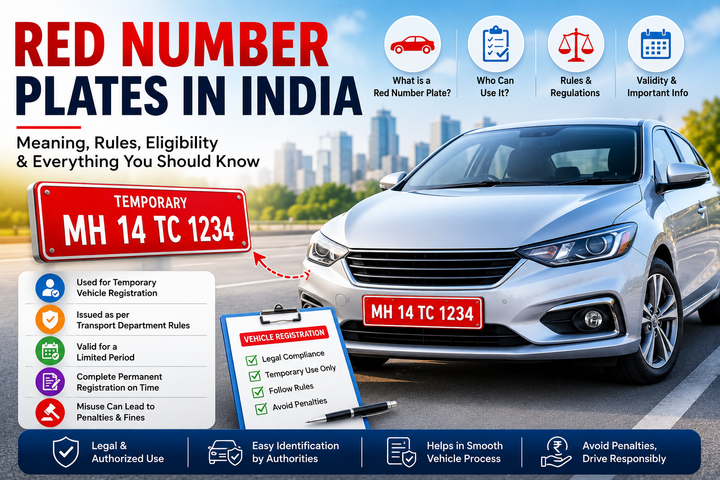
If you've ever spotted a car with a bright red number plate on Indian roads, you may have wondered what it signifies. Unlike the standard white or yellow registration plates, red number plates are not issued to every vehicle owner. They serve a specific purpose and are governed by distinct rules under India's motor vehicle regulations.
Understanding the meaning of a red number plate is important for car buyers, automobile enthusiasts, and anyone curious about India's vehicle registration system. Whether it's a brand-new vehicle awaiting permanent registration or a special category of official vehicle, the color of the number plate provides valuable information about its legal status.
In this guide, we'll explain what is a red number plate in India, who is eligible to use one, the rules associated with it, and answer some common questions surrounding these unique registration plates.
What Is a Red Number Plate in India?
A red number plate in India is a temporary registration plate issued to a newly purchased vehicle before it receives its permanent registration number from the Regional Transport Office (RTO).
When you buy a new car or motorcycle, the dealer usually arranges a temporary registration so you can legally drive the vehicle while the permanent registration process is completed. Instead of the regular white number plate with black lettering (for private vehicles), the vehicle may display a red temporary registration plate.
The temporary registration allows the owner to use the vehicle legally for a limited period while waiting for the official registration certificate and permanent number plate.
What Does a Red Number Plate Look Like?
A typical temporary red number plate includes:
-
A red background.
-
White or contrasting registration characters, depending on the issuing authority.
-
A temporary registration number issued by the dealer or RTO.
-
In some cases, the validity date may also be displayed.
The exact appearance can vary slightly between states, but its primary purpose remains the same—to identify a vehicle operating under temporary registration.
Why Are Red Number Plates Issued?
The registration process for a new vehicle involves several formalities, including documentation, payment of road tax, insurance verification, and approval by the Regional Transport Office.
Since these procedures may take a few days, temporary registration enables the buyer to drive the vehicle legally during the interim period.
Without valid registration, driving a newly purchased vehicle on public roads is generally not permitted except under specific legal provisions.
Validity of Temporary Red Number Plates
Temporary registration is not permanent. Under the Motor Vehicles Act and related rules, it generally remains valid for up to one month from the date of issue.
During this period, the vehicle owner is expected to complete the permanent registration process with the appropriate Regional Transport Office.
Once the permanent registration is approved, the red temporary number plate must be replaced with the official registration plate.
Failure to obtain permanent registration before the temporary registration expires may result in penalties if the vehicle continues to be driven on public roads.
Can You Drive Anywhere with a Red Number Plate?
Yes, a vehicle displaying a valid temporary red number plate can generally be driven on public roads during its validity period, provided:
-
The temporary registration has not expired.
-
The vehicle has valid insurance.
-
The driver holds a valid driving licence.
-
All applicable traffic laws are followed.
However, owners should complete permanent registration as soon as possible rather than waiting until the last day of validity.
Who Can Use a Red Number Plate?
Red temporary number plates are issued only to eligible newly purchased vehicles awaiting permanent registration. This includes:
-
New private cars.
-
New motorcycles and scooters.
-
Commercial vehicles before permanent registration.
-
Certain imported vehicles during the registration process.
Vehicle owners cannot request a red number plate simply for personal preference. It is issued only as part of the official registration procedure.
Difference Between Red and White Number Plates
Many people confuse temporary red number plates with regular private vehicle number plates. Understanding the distinction helps avoid confusion.
A red number plate indicates that the vehicle is temporarily registered and awaiting permanent registration. It is valid only for a limited period.
A white number plate, on the other hand, represents a permanently registered private vehicle. It remains valid unless changes in ownership or registration require replacement.
Once permanent registration is completed, every eligible private vehicle must display the prescribed permanent registration plate.
Are Red Number Plates Used for VIP or Official Vehicles?
This is a common misconception.
Many people assume that every vehicle with a red number plate belongs to a government official or VIP. In reality, the standard red temporary number plate primarily indicates temporary registration for newly purchased vehicles.
However, India also has certain special registration plate formats used by diplomatic missions and constitutional authorities. These are governed by separate rules and should not be confused with ordinary temporary red registration plates.
The meaning of a number plate depends not only on its color but also on its design, lettering, and issuing authority.
Penalties for Misusing a Red Number Plate
Using a temporary registration beyond its permitted validity or displaying an unauthorized red number plate may attract penalties under applicable motor vehicle laws.
Common violations include:
-
Driving after the temporary registration has expired.
-
Displaying fake temporary registration numbers.
-
Altering the registration plate.
-
Failing to obtain permanent registration within the prescribed period.
Traffic enforcement authorities may impose fines or take additional legal action depending on the nature of the violation.
Vehicle owners should always ensure that their registration documents remain valid and comply with state transport regulations.
How to Get Permanent Registration
The process for obtaining permanent registration usually involves the following steps:
The dealer often initiates the registration process by submitting the required documents to the Regional Transport Office. These documents generally include the purchase invoice, insurance certificate, pollution-related compliance documents where applicable, identity proof, address proof, and payment of registration charges and road tax.
After verification, the RTO assigns a permanent registration number. The owner then receives the Registration Certificate (RC), and the temporary red number plate is replaced with the permanent High Security Registration Plate (HSRP), where applicable.
The exact procedure may vary slightly depending on the state and vehicle category.
Frequently Asked Questions
Is a red number plate legal in India?
Yes. A red number plate issued as temporary registration is completely legal during its validity period.
How long can I use a temporary red number plate?
Temporary registration is generally valid for up to one month, after which permanent registration must be completed.
Can I sell a vehicle with a temporary red number plate?
Typically, the vehicle should first receive permanent registration before ownership transfer is processed. Specific situations may differ depending on applicable regulations.
Does a red number plate mean the vehicle is government-owned?
No. Most red number plates seen on newly purchased vehicles simply indicate temporary registration and are not proof of government ownership.
Can I renew a temporary red number plate?
Extensions are granted only in limited circumstances as permitted by the transport authority. Vehicle owners should complete permanent registration within the prescribed period whenever possible.
Final Thoughts
Red number plates in India play an important role in the vehicle registration process. They provide a legal way for newly purchased vehicles to be driven while permanent registration formalities are being completed. Although they are temporary, they are issued under official transport regulations and come with specific validity periods and legal responsibilities.
Understanding the purpose of a red number plate helps eliminate common misconceptions, especially the belief that every red-plated vehicle belongs to a VIP or government official. In most cases, it simply indicates that the vehicle is new and awaiting its permanent registration number.
If you've recently purchased a vehicle, ensure that your temporary registration remains valid, keep all required documents with you while driving, and complete the permanent registration process without delay. Doing so will help you stay compliant with Indian motor vehicle laws and avoid unnecessary penalties.