Walking Into History: What the Classic Inca Trail to Machu Picchu Actually Feels Like
Posted by Andean Path Travel
Filed in Business 210 views
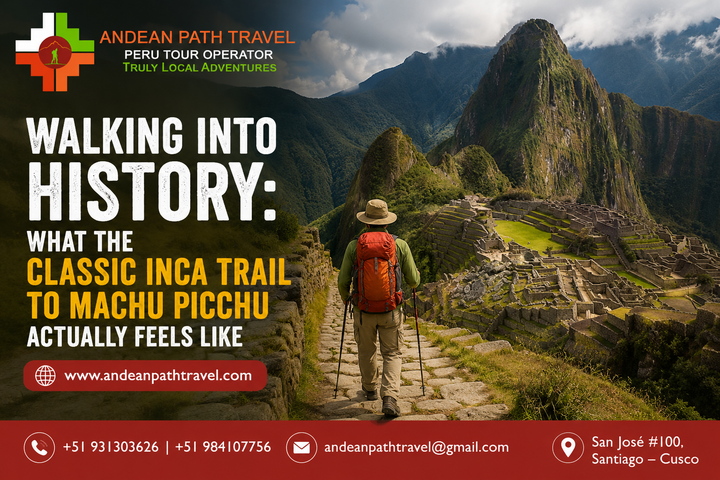
You have seen the photos. Stone steps disappearing into cloud forest, terraced ruins clinging to a mountainside, that first glimpse of Machu Picchu through the Sun Gate. What those photos cannot show you is the burn in your legs on day two, the silence of Andean peaks at dawn, or the strange calm that settles in once you accept there is no shortcut left, only the trail ahead.
The Classic Inca Trail to Machu Picchu is not just a hike. It is a four day walk through the same stone pathways Inca messengers and pilgrims used five centuries ago, ending at one of the most extraordinary archaeological sites on earth. If you are planning a trip to Peru and wondering whether this trek is worth the effort, here is what you actually need to know.
What Makes the Classic Inca Trail Different From Other Routes to Machu Picchu?
Plenty of trails lead to Machu Picchu. Salkantay, Lares, and the short Inca Trail all get you there. But only the Classic Inca Trail lets you walk through the original Inca gateway, the Sun Gate, arriving at the citadel the way it was meant to be seen.
The route covers roughly 26 miles over four days, passing three mountain passes, cloud forest, and a string of lesser known ruins like Runkurakay, Sayacmarca, and Wiñay Wayna. These sites rarely appear on postcards, yet many trekkers say they left a deeper impression than Machu Picchu itself.
Permits are limited to 500 per day, including guides and porters, so this is not a trail you can decide to walk on a whim. Booking five to six months ahead is standard practice for anyone hoping to do the full four day trek during peak season.
How Difficult Is the Trek, Really?
Day two is the one people talk about. You climb to Dead Woman's Pass at 4,215 meters, the highest point on the route, and altitude makes even a slow pace feel demanding. Most of the elevation gain happens in a single push before lunch.
That said, this is not a technical climb. It is a steady, sometimes steep walk on well maintained stone paths. Anyone with reasonable fitness and a few weeks of preparation can manage it, especially with two or three days of acclimatization in Cusco beforehand. Porters carry the heavy gear, so you are mainly responsible for a day pack, water, and your own two feet.
What if You Don't Have Four Days to Spare?
This is where a lot of travelers hit a wall. Work schedules, connecting flights, or simply wanting to see more of Peru in less time all push people toward shorter alternatives. If four days on the Classic Trail does not fit your itinerary, a 2 days Sacred Valley and Machu Picchu tour is worth serious consideration.
This shorter format usually combines a day exploring the Sacred Valley, with stops at Pisac and Ollantaytambo, followed by a train ride to Aguas Calientes and an early entrance to Machu Picchu the next morning. You still get the ruins, the scenery, and a real sense of the region's history, just compressed into a schedule that fits a shorter vacation.
It is not the same experience as walking the full trail on foot, and anyone who has done both will tell you that honestly. But for travelers with limited time, it delivers the highlight without the four day commitment.
Which Option Should You Actually Choose?
It depends on what you want out of the trip. A few honest questions can help narrow it down.
- Do you have four to five full days free, including a buffer day in Cusco for altitude?
- Are you comfortable with multi day hiking and sleeping in tents?
- Is the walking itself part of what draws you to Machu Picchu, or is the destination the main goal?
- Are you traveling with people who have different fitness levels or time constraints?
If you answered yes to the first three, the Classic Inca Trail is likely the better fit. If time or physical comfort is the bigger concern, the 2 days Sacred Valley and Machu Picchu tour covers the essentials without the physical demand.
Some travelers combine both ideas across a longer Peru trip, doing a shorter Sacred Valley visit on one occasion and saving the full trek for a return trip once they know what to expect.
What Other Trail Options Exist If Neither Fits Perfectly?
Not every trip fits neatly into a four day trek or a two day tour, which is why several variations exist for different needs and timelines. Options worth knowing about include a short Inca Trail hike over two days, a one day Inca Trail hike for those with very limited time, a Sacred Valley tour combined with the short Inca Trail over three days, and camping versions of the two day short trail for those who want a taste of trekking without the full commitment.
For travelers wanting more, there are longer combinations too, including a Private short inca trail a Sacred Valley and Rainbow Mountain combination over four days, and a six day Salkantay and Inca Trail expedition for those chasing a bigger mountain challenge. There is also a private two day short trail option that adds a climb up Huayna Picchu Mountain for those wanting the extra view over the ruins.
Final Thoughts Before You Book
Whichever route you choose, book early. Permits for the Classic Inca Trail sell out months in advance, and even the Sacred Valley and Machu Picchu tours fill quickly during June through August. Talk to a local operator who knows the current permit situation and can match a route to your actual fitness level and schedule, not just what looks good on a website.
For travelers from the USA, UK, and Canada planning a Peru trip, working with an operator based in Cusco who runs these routes regularly, such as Andean Path Travel at https://andeanpathtravel.com/, tends to make the planning process far less stressful than trying to piece together permits and logistics from abroad.
Machu Picchu will be there either way. How you arrive, on foot through the Sun Gate or by train after a day in the Sacred Valley, is really a question of what kind of trip you are looking for.