Neem vs. Turmeric: Differences, Uses, and How They Work Together
Posted by Michael Christopher
Filed in Health 250 views
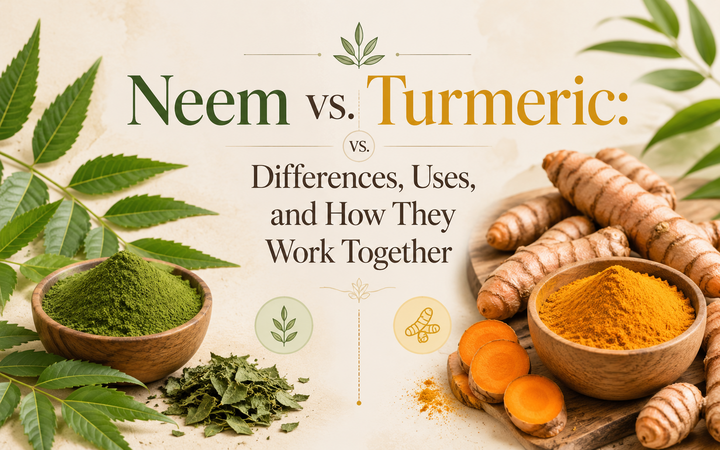
A shopper comparing a green neem product with a bright golden turmeric product may wonder whether the two botanicals serve the same purpose. Both are commonly associated with traditional plant-based practices, but they differ in origin, flavor, processing, product form, and everyday use.
Understanding neem vs. turmeric requires looking beyond their names. One may appear as a culinary spice, while the other may be sold as a leaf powder, seed oil, capsule, or personal-care ingredient.
Why Neem and Turmeric Should Be Compared by Purpose
Comparing herbs only by popularity or traditional reputation can be misleading. A more useful approach is to consider how a product is intended to be used.
Important differences include the plant material used, the amount of processing, the concentration, added ingredients, and whether the finished product is culinary, dietary, or topical.
Neither neem nor turmeric is automatically the better choice. The right option depends on the product category and the consumer’s intended use.
Neem Comes in Several Plant-Part Forms
The neem is a tree scientifically referred to as Azadirachta indica belonging to the Mahogany family. Its leaves, seeds, bark, and oil may be used in different preparations.
Because these plant parts have different characteristics, neem products should not be treated as interchangeable.
Neem Leaf Powders and Capsules
Neem leaves may be dried and ground into powder or processed into extracts. Leaf-based ingredients frequently appear in capsules, loose botanical powders, and multi-herb formulas.
Neem leaf powder is generally greenish-brown and strongly bitter. Any dietary product containing neem leaf should be used only according to its own directions.
Neem Seed Oil and External Products
Neem oil is often produced using the seeds or fruits of the neem plant. It is commonly found in soaps, shampoos, garden products, and other externally formulated items.
Neem oil should not be assumed to have the same purpose as neem leaf powder or capsules. Products labeled for external use must not be consumed.
Turmeric Is Used in Food and Supplements
Curcuma longa is a part of the ginger plant family. Its underground rhizome is the primary part used in commercial products.
The rhizome may be sold fresh, dried and ground into spice, mixed into beverage powders, placed in capsules, or processed into concentrated extracts.
Culinary Turmeric
Culinary turmeric is widely used in rice, soups, vegetables, sauces, spice blends, and warm drinks.
It has a golden-orange color and a warm, earthy flavor. In food, turmeric is primarily used to contribute taste, aroma, and color.
Turmeric Extracts
Turmeric extracts are processed differently from ordinary spice powders. Some are formulated to contain specific levels of curcuminoids, including curcumin.
The amount of these compounds can vary depending on the source material, processing method, and finished formula. Concentrated extracts may have different serving directions and should not be measured like culinary turmeric.
Neem vs. Turmeric in Everyday Use
Turmeric has a broader culinary role because its flavor works well in many dishes. Neem is considerably more bitter and is not usually used as an everyday seasoning.
Neem commonly appears in leaf supplements, botanical powders, oils, soaps, and shampoos. Turmeric is found in cooking products, tea blends, beverage mixes, capsules, extracts, masks, and creams.
Both botanicals may appear in dietary and external-use categories, but the product directions determine how each item should be used.
Where Neem and Turmeric Overlap
Neem and turmeric may both appear in capsules, powders, soaps, masks, and other personal-care products.
Sharing a product category does not mean they perform the same role. A neem-and-turmeric soap is designed for external use, while a capsule containing both ingredients is formulated as a dietary product.
Before using any formula, identify whether it is intended for cooking, supplementation, brewing, personal care, or another clearly stated purpose.
How Neem and Turmeric Are Combined
Some manufacturers combine neem and turmeric in a single product. A supplement may contain neem leaf powder with turmeric rhizome powder, while another may use concentrated extracts.
A personal-care product may instead combine neem oil with a turmeric-derived ingredient.
The term “how they work together,” in this case, refers to how they fit into the same final formula. It should not be interpreted as proof that the combination produces a stronger or special result.
Additional Ingredients Matter
Combination products may also include ginger, black pepper extract, holy basil, amla, vegetable capsule materials, natural flavors, or carrier ingredients.
These additions may affect the formula’s concentration, taste, intended use, and suitability. For this reason, the full ingredient list matters more than the product name alone.
A Practical Product Comparison Checklist
When reviewing neem, turmeric, or a combination product, check:
-
The botanical and common ingredient names
-
The plant parts used
-
Whether the formula contains powder, oil, or extract
-
The amount of each ingredient
-
Extract ratios or standardization details
-
Serving size and number of servings
-
Dietary or external-use classification
-
Additional active and inactive ingredients
-
Allergen, warning, and storage information
Clear label information is more useful than broad phrases such as “advanced herbal complex.”
Choosing the Right Product Type
Culinary turmeric may suit someone looking for a spice to use in meals. Neem leaf products should be selected only when the plant part, format, and instructions are clearly stated.
A combination formula may be convenient for someone specifically seeking both botanicals, but a longer ingredient list does not automatically make it a better choice.
Topical products should always remain separate from foods and supplements.
Responsible Use and Individual Suitability
Natural origin does not mean every product is suitable for every person.
Pregnant or breastfeeding individuals, people using medications, those managing a health condition, anyone preparing for surgery, and individuals with plant allergies should consult a qualified healthcare professional before using concentrated neem or turmeric supplements.
Stop using a product and seek appropriate guidance if an unexpected reaction occurs.
Conclusion
Neem is a tree-derived botanical available through several plant parts, including leaves, seeds, bark, and oil. Turmeric is primarily a rhizome-based ingredient widely used in cooking, beverages, supplements, and personal-care products.
Their applications may overlap, but their flavors, materials, concentrations, and intended purposes remain different.
The best way to choose between neem, turmeric, or a combined product is to identify the product category, examine the complete formula, and follow the specific directions rather than assuming the ingredients are interchangeable.
Frequently Asked Questions
1. Is neem powder suitable for seasoning food like turmeric?
Neem is much more bitter and is not commonly used as an everyday seasoning. Only products clearly labeled as food-grade should be consumed.
2. Why do some neem products specify “leaf” on the label?
Several neem plant parts are commercially used. Identifying the leaf distinguishes the product from neem bark, seed, or oil preparations.
3. Is turmeric tea made from the same ingredient as turmeric spice?
Both may come from turmeric rhizome, but tea blends can contain different particle sizes, quantities, flavors, and added ingredients.
4. Can topical neem and turmeric products be taken orally?
No. Products intended for external use must not be consumed, even when similar botanicals are also used in dietary products.
5. What does a proprietary neem-and-turmeric blend mean?
A proprietary blend may list several ingredients under one combined total without disclosing the individual amount of each botanical. Review the full label carefully.