Handle Scales for Knives: In Defense of Modern Synthetics
Posted by The Knife Connection
359 views
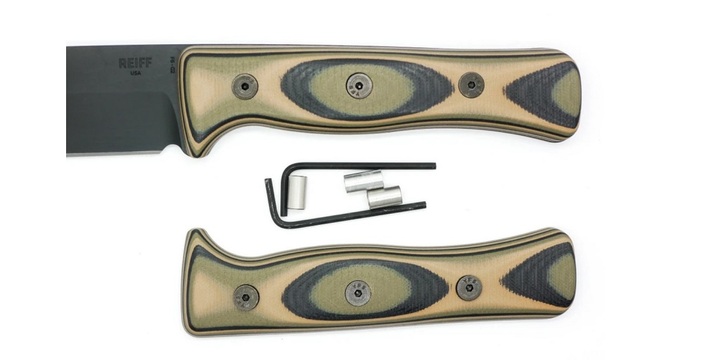
Traditionally, a knife’s handle would consist of a tang that was outfitted with either wood scales or some natural material like antler or bone. In some cases, a stick tang would run through antler or some other material.
The tang might also be wrapped in leather, or have a stacked leather grip. Many knives are still made with natural handle materials and scales.
But the truth is that, despite the aesthetic virtues of these natural materials, and despite their performance, in terms of durability and maintenance, modern handle scales for knives made from synthetics have them cornered.
This short post will break down the details.
Better in Nearly Every Way: Unpacking the Claim
Despite their beauty and cool factor, natural scale materials have some serious shortcomings, particularly with respect to maintenance.
Let’s look at leather and wood, for example. All things considered, these materials offer a solid grip, even when cold and wet. But they can crack and wear, and if not properly maintained, will rot.
Even bone, horn and antler, over time, will dry out and either shirk, warp or crack over time, if not properly cared for.
Modern handle scales for knives are made from a variety of materials such as G10, micarta, carbon fiber, and other materials that are not subject to these issues.
Micarta and G10 are excellent examples of the performance of modern knife scales. These are generally made from textiles that are impregnated with some sort of synthetic compound.
They are dense, and thanks to their textile foundation, offer solid traction, even, most of the time, when wet.
This gives them all of the advantages of most natural scale materials. But where they really shine is in durability and low maintenance requirements.
These materials, being as dense as they are, resist abrasive and percussive damage. They are also relatively chemically stable and most are for the most part non-absorbent.
This means even if they get coated in ice, are soaked in blood or oil, or get caked in mud, nothing will happen. You just rinse them off and get back to work.
Since they are non-absorbent, exposure to moisture isn’t an issue, either. Even if you put the thing away wet (which you shouldn’t do, but that’s a topic for another time) these materials will not rot, warp or crack. They are quite literally zero-maintenance materials.
Then you have other modern materials like carbon fiber (CF) or glass-filled nylon (GFN) both of which are lighter than micarta and G10, but which offer similar performance as far as tactility and low maintenance are concerned.
Also, many of these materials, particularly G10 and carbon fiber, can be produced with a wide range of aesthetic finishes, or in unique colorways.
And all of that just scrapes the surface of the value and performance they offer.
Explore Handle Scales for Knives at The Knife Connection
The takeaway here is that modern handle scales for knives can represent a significant upgrade, not just in performance, but in ease of care and longevity.
Plus, many companies, such as The Knife Connection, produce aftermarket handle scales for knives, for popular models like ESEE and Becker.
Visit their website for more information, and if you’ve been prejudiced against modern knife scale materials for any reason, it’s time to change that. You can keep your leather and wood-handled knives and still adopt a practical respect for what technology has produced.
For more information about battle horse knives and becker knives Please visit: The Knife Connection.