US-China Trade Truce 2026: Trade Relations Improve as $60 Billion in Goods Targeted for Tariff Cuts
Posted by Santosh Singh
Filed in Business 13 views
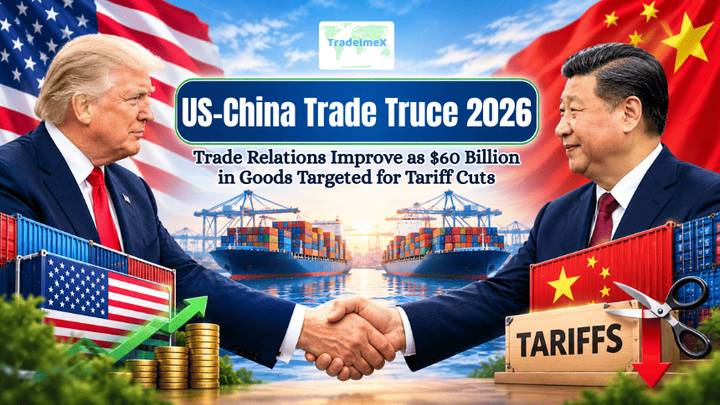
The US-China trade truce 2026 has entered a new phase as the United States and China agreed to pursue tariff reductions covering approximately $60 billion in goods traded between the two countries. Each country has proposed around $30 billion worth of non-sensitive products for more favorable tariff treatment, marking another step toward stabilizing US-China trade after years of tariff disputes.
The announcement follows a September 2026 meeting between U.S. President Donald Trump and Chinese President Xi Jinping. The two sides also agreed to extend their broader trade truce through January 10, creating additional time for negotiations over market access, investment and other economic issues.
US-China Trade Truce 2026
The latest US-China trade agreement focuses on reciprocal tariff reductions for selected non-sensitive goods. According to U.S. Trade Representative Jamieson Greer, the U.S. product list represents about $30 billion of trade and could improve market access for approximately 30% of U.S. exports to China. The product valuations were based on 2024 import data.
However, the announcement does not mean that all tariffs between the world's two largest economies have been removed. The precise size and implementation timing of individual China tariff cuts and U.S. tariff reductions were not specified in the initial announcement.
The agreement also excludes several strategically sensitive sectors, including chips, electric vehicles and batteries.
$60 Billion Tariff Cuts: Which Products Are Included?
The proposed $60 billion tariff cuts cover a wide range of products.
Products China May Receive Lower Tariffs On
China's list includes several U.S. agricultural and other products, including:
-
Corn
-
Wheat
-
Sorghum
-
Meat
-
Dairy products
-
Vegetable oils and meals
-
Fish and seafood
-
Logs and wood products
-
Cosmetics
-
Medical devices
Notably, non-seed U.S. soybeans were not included, despite being the largest U.S. agricultural export to China, valued at approximately $16.2 billion in 2025.
This makes US-China agricultural trade one of the most closely watched areas of the new arrangement.
Products the United States May Target for Tariff Reductions
The U.S. list covers a range of Chinese consumer products, including:
-
Toys and children's bicycles
-
Coffee makers and toasters
-
Tableware
-
Blankets and bed linen
-
Fireworks
-
Artificial flowers
-
Holiday decorations
-
Children's car seats
The U.S. list reportedly includes a broad toy category worth $14.4 billion in 2024, although the value fell to approximately $9.8 billion in 2025 amid higher tariffs.
How Could the US-China Trade Deal Affect Bilateral Trade?
The proposed US-China trade deal could influence import costs, market access and purchasing decisions for companies involved in bilateral commerce.
For U.S. businesses, lower Chinese tariffs on selected products could improve access to the Chinese market. Agricultural exporters, manufacturers, medical-device companies and other businesses included in China's list may see changes in their competitive position if the proposed reductions are implemented.
For U.S. importers, lower tariffs on selected Chinese consumer products could affect landed costs and sourcing strategies.
However, the impact will depend on the final tariff rates, implementation dates, product classifications and future negotiations. The agreement is therefore better understood as a targeted tariff-reduction framework rather than a complete resolution of the US-China trade war.
US-China Trade Relations: From Tariff Escalation to Negotiation
US-China relations have experienced significant trade-policy changes since the tariff disputes began in 2018. Both countries have used tariffs and other trade measures over the years, with periods of escalation followed by negotiations and temporary agreements.
A Congressional Research Service review updated in August 2026 shows that U.S. and Chinese tariffs have remained substantially above their pre-trade-war levels, even after several rounds of reductions and extensions of tariff arrangements.
The 2026 truce extension therefore provides businesses with another period of greater policy visibility, while negotiations continue on broader economic and trade issues.
What Does US-China Trade Data Show?
Monitoring US-China trade data is increasingly important for companies evaluating the effects of tariffs and changing supply chains.
Bilateral trade data can help businesses analyze:
-
US exports to China
-
US imports from China
-
Product-level trade values
-
HS-code trade flows
-
Importers and exporters
-
Shipment activity
-
Supplier and buyer trends
-
Historical trade patterns
-
Changes in sourcing markets
Trade data can also help businesses identify which product categories are most exposed to tariff changes and where new opportunities may emerge.
US Exports to China and US Imports from China
The proposed tariff reductions have different implications for US exports to China and US imports from China.
U.S. exporters could benefit from improved access to China's market if tariffs are reduced on agricultural products, seafood, medical devices, cosmetics, and other listed categories.
Meanwhile, U.S. importers sourcing Chinese toys, household appliances, tableware, and other consumer goods could potentially benefit from lower U.S. tariffs on covered products.
The two-way impact should be assessed at the individual HS code and product level rather than simply by looking at overall trade values.
Agriculture Remains a Key Part of the Agreement
The importance of US-China agriculture trade is particularly significant because agricultural products appear prominently on China's proposed tariff-reduction list.
Corn, wheat, sorghum, meat, dairy products, vegetable oils, and meals are among the products identified for favorable tariff treatment. Soybeans, however, were excluded from the announced list.
The two countries also plan to establish an agriculture working group under their trade council to discuss market access and regulatory issues.
What Businesses Should Watch Next
Companies involved in US-China trade should monitor several developments:
-
Final tariff rates for individual products.
-
Implementation dates for the proposed reductions.
-
Changes to product lists.
-
New negotiations under the extended trade truce.
-
Developments affecting agriculture and other major trade sectors.
-
Changes in U.S. import and Chinese export volumes.
-
Shifts in sourcing and supplier markets.
The announced product lists may also be adjusted in the future, making ongoing trade-data monitoring important for importers, exporters and market researchers.
Track US-China Trade with Import-Export Data
The 2026 US-China tariff agreement could create new opportunities for businesses trading between the two markets, but companies need reliable data to understand where those opportunities exist.
USImportData provides access to latest and historical U.S. import-export database information, helping businesses research products, suppliers, buyers, trade flows, HS codes, and market trends. By analyzing historical and current trade data, companies can evaluate US imports from China, US exports to China, product-level movements, and changes in international sourcing.
As the US-China trade truce of 2026 develops, tracking actual trade activity alongside tariff announcements can help businesses understand how policy changes are translating into real-world trade flows.
Source: U.S. Trade Representative, Congressional Research Service, Reuters, and other official/public trade sources.