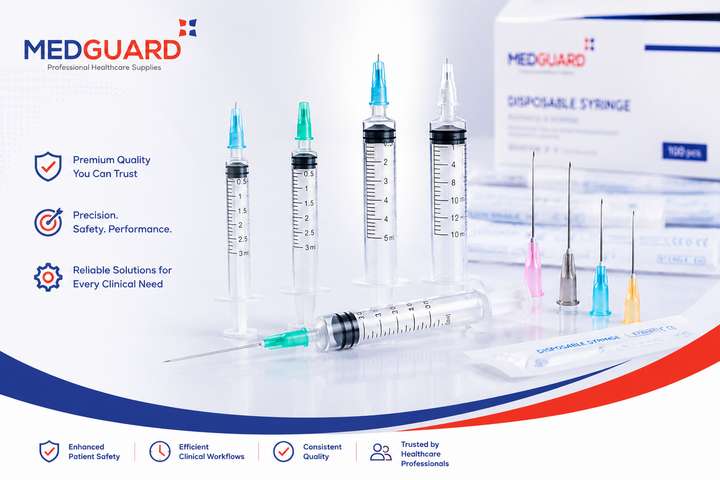
In modern healthcare environments, syringes and needles are among the most essential medical consumables used every day. From administering medications and vaccines to supporting diabetes management and diagnostic procedures, healthcare professionals depend on reliable syringes and needles to deliver safe, accurate, and effective patient care.
While they may seem like simple medical tools, selecting the right syringes and needles can significantly impact clinical efficiency, patient comfort, infection control, and treatment outcomes. Understanding the factors involved in choosing the appropriate products can help healthcare providers maintain high standards of care while supporting operational excellence.
Why Choosing the Right Syringes and Needles Matters
The performance of syringes and needles directly affects medication administration and patient safety. Inaccurate dosing, poor-quality materials, or unsuitable product selection can create unnecessary challenges for healthcare professionals and may increase the risk of errors.
Whether used in hospitals, GP practices, vaccination centres, nursing homes, or community healthcare settings, high-quality syringes and needles help ensure procedures are carried out accurately and consistently. They also support healthcare teams in delivering efficient care while maintaining compliance with clinical standards.
Understanding Different Clinical Applications
Not all syringes and needles are designed for the same purpose. Different medical procedures require specific product types, sizes, and configurations to achieve the best results.
For example:
- Vaccination programmes often require precise, low-volume syringes.
- Diabetes care depends on accurate insulin delivery.
- Blood collection procedures require appropriate needle sizes.
- Irrigation and flushing applications may require larger-capacity syringes.
- General injections often require secure and reliable needle connections.
Selecting the correct syringes and needles for each application helps improve workflow efficiency while supporting patient safety.
Prioritising Accuracy and Dose Precision
Accuracy is one of the most important considerations when choosing syringes and needles. Healthcare professionals rely on precise measurements to ensure medications are administered correctly.
Features that support dosing accuracy include:
- Clear and easy-to-read measurement markings
- Consistent product manufacturing
- Smooth plunger movement
- Reliable calibration standards
- Secure needle attachment systems
Precision is particularly important in areas such as paediatric care, diabetes management, anaesthesia, and critical care, where even small dosage variations can have significant consequences.
Supporting Infection Prevention and Control
Infection prevention remains a top priority across healthcare settings. Sterile syringes and needles play a vital role in reducing contamination risks and supporting safe clinical practices.
Healthcare facilities should look for products that offer:
- Sterile packaging
- Single-use designs
- Secure product integrity
- Reliable manufacturing standards
- Proper storage and handling guidance
Using high-quality syringes and needles helps healthcare providers maintain strong infection control protocols and minimise risks for both patients and clinical staff.
Improving Patient Comfort and Experience
Patient experience is an important factor in healthcare delivery. The selection of appropriate syringes and needles can contribute to greater comfort during injections and routine procedures.
This is especially important for patients who require frequent injections, such as those managing diabetes or undergoing long-term treatments. Choosing products designed for smooth performance and consistent delivery can help reduce discomfort and improve treatment adherence.
Healthcare professionals often consider:
- Needle gauge and length
- Injection type
- Patient age and condition
- Frequency of treatment
- Procedure requirements
These factors can help ensure a more positive experience for patients.
Evaluating Ease of Use for Healthcare Professionals
Clinical environments can be fast-paced and demanding. Healthcare professionals require syringes and needles that are easy to handle and perform consistently under daily working conditions.
Important usability considerations include:
- Ergonomic design
- Easy-to-read graduations
- Smooth plunger operation
- Secure grip surfaces
- Reliable product consistency
Products that simplify routine procedures can help improve workflow efficiency while reducing unnecessary disruptions during patient care.
The Importance of Supplier Reliability
Selecting the right syringes and needles involves more than choosing the correct product. Healthcare organisations must also evaluate the reliability of their suppliers.
Procurement teams often prioritise suppliers that provide:
- Consistent stock availability
- Reliable delivery schedules
- Quality assurance processes
- Responsive customer support
- Comprehensive healthcare product ranges
A dependable supply chain helps healthcare facilities avoid shortages and maintain continuity of care.
Ensuring Quality and Regulatory Compliance
Healthcare providers should always choose syringes and needles that meet recognised quality and safety standards. Compliance with regulatory requirements helps ensure products perform reliably and support safe clinical practices.
When evaluating products, consider:
- Product certifications
- Manufacturing standards
- Sterility assurances
- Material quality
- Batch consistency
Investing in quality syringes and needles can help reduce operational risks while supporting better healthcare outcomes.
Conclusion
Selecting the right syringes and needles is an important part of delivering safe, efficient, and effective healthcare. From ensuring accurate medication administration to supporting infection control and patient comfort, these essential medical consumables play a critical role in everyday clinical practice.
By considering factors such as application requirements, accuracy, safety, quality, and supplier reliability, healthcare providers can make informed decisions that benefit both patients and healthcare professionals. Choosing dependable syringes and needles ultimately supports better clinical performance and contributes to improved standards of patient care.