Posted
Startups often treat security as something to address once they have a dedicated security hire, but by the tim...


Nothing has been posted here yet - be the first!

Building software for an enterprise environment is a fundamentally different exercise than building for a startup or small business, even when the underlying features look similar on paper. Scale, compliance, integration complexity, and organizational politics all shape enterprise projects in ways that smaller engagements rarely encounter.
Scale is the most obvious difference. Enterprise applications often need to support thousands or tens of thousands of concurrent users across multiple departments, time zones, and sometimes countries, each with different permission levels and workflows. Architecture decisions that would be perfectly reasonable for a small application — a single database instance, synchronous processing for every request — can become serious bottlenecks at enterprise scale. Planning for this kind of growth from the architecture phase onward, rather than retrofitting it after performance problems appear, is one of the clearest signals of an experienced web development partner.
Integration complexity is another defining characteristic. Enterprises rarely build in a vacuum — new applications typically need to connect with existing ERP systems, legacy databases, identity management platforms, and a web of internal tools that have accumulated over years or decades. Some of these systems have limited or poorly documented APIs, which means integration work often takes far longer than initial estimates suggest. A realistic enterprise project plan budgets significant discovery time specifically for mapping these existing systems before committing to a development timeline.
Compliance and security requirements shape enterprise projects from day one rather than being addressed at the end. Depending on the industry, this can mean data residency requirements, detailed audit logging, role-based access control down to a granular permission level, and formal security review processes before deployment. These requirements are not optional extras — they are often the difference between a project that passes internal procurement and legal review and one that stalls indefinitely waiting for sign-off.
Organizational complexity deserves more attention than it usually gets in technical planning. Enterprise projects typically involve multiple stakeholders with competing priorities: IT wants security and maintainability, business units want features shipped quickly, and finance wants predictable costs. A development partner experienced in enterprise work knows how to navigate this — running structured discovery workshops with multiple departments, documenting decisions clearly so they cannot be relitigated later, and setting realistic expectations about how governance processes will affect timeline.
Change management is often underestimated as well. A new enterprise application, however well-built, fails to deliver value if employees do not adopt it. Training plans, phased rollouts, and feedback loops during the early adoption period matter as much as the underlying code quality. Building this into the project plan from the start — rather than treating launch as the finish line — significantly improves the odds that an enterprise application actually changes how work gets done, rather than becoming another underused tool alongside the systems it was meant to replace.
Given these layers of complexity, vendor selection for enterprise projects deserves particular rigor. Look for partners with demonstrated experience in your specific regulatory environment, references from projects of comparable scale, and a track record of handling the kind of multi-stakeholder discovery process enterprise work requires.
Service-level agreements deserve careful negotiation rather than acceptance of a vendor's standard template. Response times for critical bugs, uptime commitments, escalation paths, and penalties for missed obligations should all be spelled out explicitly and reviewed by legal and procurement teams before signing, not assumed based on a verbal conversation during the sales process. Enterprises with existing vendor governance frameworks should apply the same review rigor to a software development partner that they would apply to any other critical vendor, since a poorly performing development partner can create operational risk on the same scale as a failed infrastructure vendor.
Long-term maintainability should be evaluated as carefully as the initial build. Enterprise applications often remain in production for many years, which means the technology choices, documentation quality, and code structure established during the initial build directly affect how expensive the system is to maintain and extend a decade later. Asking a prospective vendor how they design for long-term maintainability — coding standards, test coverage expectations, and documentation practices — reveals a lot about whether they are optimizing for a fast initial delivery or for the system's full lifecycle. This breakdown of established web app development companies is a useful starting point for identifying vendors positioned for enterprise-scale engagements rather than only startup-focused delivery models.
Artificial intelligence has moved from an experimental add-on to a core consideration in how modern web applications are designed, built, and maintained. The shift affects nearly every stage of the development lifecycle, not just the features that end users interact with directly.
On the product side, AI-powered features are increasingly expected rather than novel. Intelligent search that understands intent rather than exact keyword matches, personalized recommendations based on user behavior, and automated content generation have become standard expectations in categories ranging from e-commerce to internal business tools. Building these features well requires more than plugging in an API call — it requires thinking about latency, cost per request at scale, fallback behavior when a model produces a poor result, and how to handle the inherent unpredictability of AI outputs in a production environment. Teams evaluating AI/ML development partners should look closely at how a vendor handles these operational realities, not just whether they can demonstrate an impressive prototype.
Development itself has also changed. AI-assisted coding tools have measurably increased the speed at which experienced developers can produce working code, particularly for boilerplate, test generation, and routine implementation work. This shift has raised the bar for what a development team can deliver in a given timeframe, but it has also introduced new categories of risk — AI-generated code can contain subtle bugs or security issues that pass a superficial review, which makes rigorous code review and testing practices more important, not less, as adoption increases.
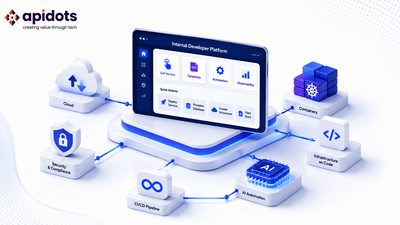
Data architecture has become more complex as AI features require different infrastructure than traditional applications. Vector databases for semantic search and retrieval-augmented generation, pipelines for keeping AI systems updated with fresh data, and monitoring systems that track model performance and drift over time are now part of many application architectures where they simply did not exist a few years ago. This complexity connects directly to broader infrastructure trends — internal developer platforms and standardized deployment pipelines make it easier for product teams to ship AI features without every team reinventing the underlying infrastructure, a shift covered in more detail in a recent guide to platform engineering and internal developer platforms.
Security and data privacy considerations have also intensified. Applications that send user data to third-party AI models need clear policies about what data is shared, how it is anonymized where possible, and whether the model provider retains or trains on that data. These questions matter more in regulated industries, where a poorly considered AI integration can create compliance exposure that did not exist before the feature was added.
None of this means every application needs AI features to succeed — plenty of well-built products deliver real value with no AI component at all, and forcing AI into a product where it does not solve a genuine user problem tends to add cost and complexity without meaningful benefit. The businesses getting the most value from AI are the ones who start with a specific, well-defined problem — reducing support ticket volume, speeding up a manual research process, improving search relevance — rather than adding AI features because competitors are doing it.
Testing AI-powered features also requires a different discipline than testing traditional deterministic code. A traditional function returns the same output for the same input every time, which makes it straightforward to write a test that checks for a specific expected result. AI outputs are probabilistic, so testing needs to shift toward evaluating a range of acceptable responses, monitoring for quality degradation over time, and building in human review processes for high-stakes decisions rather than assuming a passing test suite guarantees correct behavior in every real-world case. Teams new to shipping AI features often underestimate how much of the engineering effort goes into this evaluation layer rather than the initial integration itself.
Governance is worth establishing early rather than retrofitting after a feature has already shipped. Deciding who is accountable when an AI feature produces an incorrect or inappropriate output, how user-facing disclaimers are handled, and what the escalation path looks like when something goes wrong are organizational questions as much as technical ones. Businesses that think through this governance layer before launch tend to handle the inevitable edge cases far more gracefully than those treating AI features as a purely technical add-on with no accountability structure behind them. This comparison of leading web app development companies is a useful reference point for understanding which providers have genuine AI engineering depth versus those treating it as a marketing checkbox on an otherwise generic services page.
Therapy professionals dedicate their time and expertise to improving the lives of their clients. However, behind every successful therapy session lies a significant amount of administrative work. From scheduling appointments and completing documentation to managing telehealth sessions and coordinating with families, the operational side of a clinic can quickly become overwhelming. For speech therapists, ABA providers, occupational therapists, psychologists, and multidisciplinary clinics, having reliable therapy practice management software is no longer optional—it is essential for sustainable growth.
One of the biggest challenges therapy clinics face is time management. Providers often spend hours each week on documentation alone. Writing progress notes, updating treatment plans, and preparing reports can consume valuable time that could otherwise be spent focusing on client care. An efficient clinical documentation system helps streamline this process by offering structured templates, organized data storage, and easy access to client histories. When documentation is simplified, therapists can complete notes faster and with greater accuracy, reducing stress and improving compliance.
Scheduling is another area where many clinics struggle. Managing multiple providers, recurring sessions, cancellations, and reschedules can become chaotic without the right system. A centralized therapy scheduling system allows clinics to view provider availability, automate reminders, and reduce no-shows. When scheduling is organized and transparent, both staff and clients benefit from smoother operations and fewer disruptions.
Telehealth has also transformed the therapy landscape. Virtual sessions are now a standard part of service delivery, and clinics need secure, reliable video conferencing built specifically for clinicians. When telehealth is integrated directly into a practice management system, providers can launch sessions, access documentation, and update notes without switching between platforms. This integration saves time and minimizes technical complications during live sessions.
For ABA providers and multidisciplinary teams, data tracking and collaboration are critical. Accurate session data, behavior tracking, and team communication tools ensure that treatment plans remain consistent and measurable. Therapy-focused software designed with these needs in mind supports better coordination among providers and enhances overall treatment outcomes.
Another major benefit of integrated software is reduced administrative burnout. Many therapists report feeling overwhelmed not by client care, but by paperwork and system inefficiencies. When tasks such as scheduling, billing, documentation, and telehealth are unified into one platform, workflows become smoother and more predictable. Automation of repetitive tasks reduces manual errors and allows clinicians to regain control of their time.
In addition to operational benefits, modern therapy practice management software supports long-term growth. As clinics expand, managing more providers and clients requires scalable systems. A reliable platform adapts to increasing demand without adding complexity. This scalability ensures that growth does not compromise quality of care.
Ultimately, efficient systems lead to better client experiences. When therapists are not distracted by administrative hurdles, they can dedicate more attention to individualized treatment planning and meaningful client interactions. Accurate documentation supports better progress tracking. Organized scheduling improves consistency of care. Secure telehealth ensures uninterrupted services when in-person sessions are not possible.
Therapy clinics thrive when their systems work seamlessly behind the scenes. Investing in a comprehensive therapy practice management solution allows providers to focus on their true mission—helping clients develop, grow, and succeed—while maintaining operational excellence and professional balance.
If you are looking to streamline your workflow, reduce administrative stress, and improve overall clinic efficiency, explore how an all-in-one solution can support your practice. Visit https://www.readysetconnect.com/ today to discover how Ready Set Connect can help your therapy clinic operate smarter, faster, and more effectively.
With remote services rapidly becoming the standard across healthcare, therapy, education, and consulting industries, professionals are facing an important question:
Is my current digital setup truly secure, compliant, efficient, and built for growth?
Relying on basic video apps and scattered tools may work temporarily, but today’s clients expect a seamless and professional digital experience. From the moment they book an appointment to follow-up communication after a session, every interaction matters.
Modern service-based professionals are now prioritizing integrated systems that offer:
As digital-first service delivery continues to grow, having a structured, secure, and scalable platform is no longer optional, it’s essential for building credibility and long-term client trust.
The transition to smarter digital systems isn’t just about convenience. It’s about:
For professionals exploring a more streamlined and secure solution, platforms like ReadySetConnect are designed specifically to support online therapy, telehealth, and service-based practices with compliance-focused, integrated tools.
If you're evaluating your current setup or planning to upgrade your digital workflow, now is the perfect time to explore secure and scalable options.
YouTalent® is an online community of talent. If you have a talent, whether it’s singing, dancing, acting, modeling, drawing, or whatever talent it may be and you would like to share it with the world or to network with other talented individuals, then you've came to the right place.