How a Shia Quran Academy Supports Students With Different Skill Levels
Posted by ShiaQuran Classes
Filed in Business 13 views
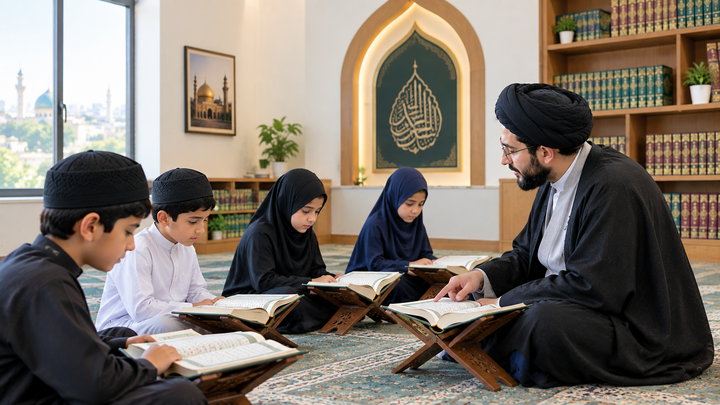
Students begin Quran learning with different levels of knowledge and experience. Some may be learning the Arabic alphabet for the first time, while others may already read the Quran but want to improve Tajweed, pronunciation, or fluency. A structured Shia Quran Academy can accommodate these differences by organizing lessons according to each student's current abilities and learning needs.
Personalized instruction can help students avoid lessons that are either too difficult or too easy. Many online Quran programs use level assessments, individualized lesson plans, and progress tracking to determine where a student should begin and how they can move forward.
Starting With the Student's Current Level
One of the first steps in supporting different skill levels is understanding what a student already knows.
A beginner may need to start with:
-
Arabic letters and their sounds
-
Basic Qaida lessons
-
Connecting letters and words
-
Simple Quran reading
-
Basic pronunciation
An intermediate learner may already understand these areas and instead need more practice with fluency, Tajweed, or Makharij. Advanced students may benefit from deeper Tajweed practice, memorization, translation, or Quranic studies.
Beginning at the appropriate level allows students to build on existing knowledge rather than repeating material unnecessarily.
How a Shia Quran Academy Adjusts Lesson Difficulty
A Shia Quran Academy can use different teaching approaches for beginners, intermediate learners, and advanced students.
Beginners
Beginners generally benefit from gradual instruction. Teachers can introduce letters, sounds, pronunciation, and basic reading skills one step at a time.
This approach gives students time to understand each concept before moving to more complex material. Structured Qaida programs are commonly used to establish these foundations.
Intermediate Students
Students who already know basic Quran reading may need to strengthen specific skills. Their lessons can focus on:
-
Improving reading fluency
-
Correcting pronunciation
-
Learning Tajweed rules
-
Practicing difficult letters
-
Reviewing previous lessons
-
Reading longer passages
Instead of starting from the beginning, the teacher can identify specific weaknesses and concentrate on those areas.
Advanced Learners
More experienced students may require lessons that go beyond basic reading. Depending on their goals, they may study advanced Tajweed, Quran memorization, translation, Tafseer, or other Islamic subjects.
The purpose is to keep learning challenging enough to encourage continued development without making the lessons unnecessarily difficult.
Personalized Learning Helps Students Progress
Students do not always learn at the same speed. One student may understand a Tajweed rule after one explanation, while another may need several examples and additional practice.
Individualized lessons allow teachers to adjust the pace accordingly. Some Shia Quran programs specifically describe their lessons as being adapted to the student's level, pace, and learning goals.
This flexibility can be especially useful when students are learning different skills at the same time. For example, a student may read fluently but still need help with pronunciation. Another may have accurate pronunciation but require more reading practice.
Regular Feedback Identifies Learning Gaps
Progress is easier to manage when teachers regularly listen to students and provide feedback.
During Quran recitation, a teacher can notice issues with pronunciation, letter articulation, Tajweed, or reading fluency. Immediate correction gives students an opportunity to practice the correct method before a mistake becomes a habit.
One-to-one learning can make this process more focused because the teacher can give the student's recitation their full attention.
Students Can Move Forward Gradually
Supporting different skill levels does not mean simply placing students into separate categories. Their level can change as they learn.
For example, a beginner who develops strong reading skills may gradually move from Qaida to Quran recitation. An intermediate student may progress from basic Tajweed to more detailed rules. A student working on memorization may increase the amount of new material only after previous portions are secure.
Regular assessment and revision can help teachers decide when a student is ready for the next stage. Some Shia Quran programs describe using assessment, appropriate course placement, progress tracking, and revision as part of their teaching process.
Different Ages May Need Different Approaches
Skill level is not determined by age alone. Children, teenagers, and adults can have very different learning needs.
Young children may benefit from shorter activities, repetition, visual support, and simple explanations. Teenagers may be ready for more independent practice, while adults may prefer lessons focused on specific Quran reading or Tajweed goals.
A flexible Shia Quran Academy can adapt lesson content and teaching methods to the learner rather than expecting every student to follow exactly the same path.
Encouraging Consistent Improvement
When students learn at a suitable level, they are more likely to understand their lessons and recognize their own progress. Small improvements in pronunciation, reading fluency, Tajweed, or memorization can gradually build stronger Quran learning skills.
A structured learning routine, regular revision, and teacher feedback can help students continue developing without feeling pressured to progress at the same speed as others.
Conclusion
A Shia Quran Academy can support students with different skill levels by starting with their existing knowledge and adjusting lessons as they progress. Beginners may need strong reading foundations, intermediate learners may focus on improving specific skills, and advanced students may explore more detailed Quranic studies.
Through appropriate level placement, personalized instruction, regular feedback, revision, and gradual progression, Quran learning can become more organized and suitable for each student's individual needs.