What Families Should Know Before Choosing a Home in Mehrauli
Posted by Lily Hazel
Filed in Other 38 views
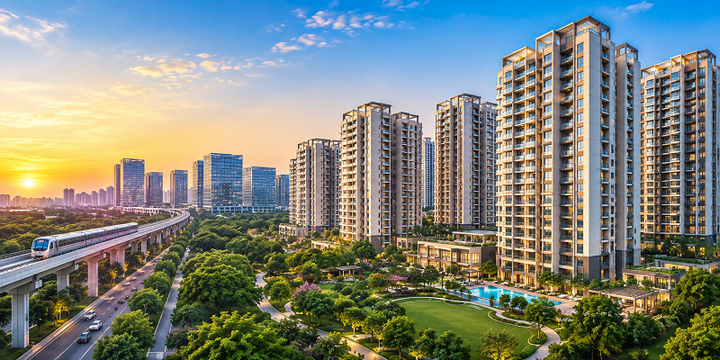
Mehrauli is one of Delhi's oldest inhabited areas, and today it sits at an interesting crossroads. Part of it feels like a quiet urban village. Part of it looks like modern South Delhi, with gated societies and wide roads. For families deciding where to settle, this mix can be both a draw and a source of confusion.
Before signing a lease or making a purchase, it helps to understand how Mehrauli actually functions day to day — not just how it looks on a property listing. This guide breaks down what matters most for families: safety, schools, commute, cost, and the everyday realities of living here. Many households exploring this belt start by comparing options through a Mehrauli room rent service, since rental listings often reveal more about ground realities than brochures do.
By the end, you'll have a clear picture of whether Mehrauli fits your family's needs, or whether a neighboring locality might serve you better.
Key Takeaways
-
Mehrauli offers a mix of heritage charm, greenery, and modern housing, but infrastructure quality varies sharply by pocket.
-
Areas near Chattarpur, Sultanpur, and Mehrauli-Gurgaon Road tend to have better road access than the older village core.
-
School and hospital access is decent but concentrated in nearby Saket, Vasant Kunj, and Chattarpur rather than Mehrauli itself.
-
Metro connectivity exists but requires a short commute to the nearest station, which affects daily convenience.
-
Rental and purchase prices are generally lower than Saket or Vasant Kunj, making it attractive for cost-conscious families.
-
Water supply and traffic congestion near the Qutub Minar stretch are the most commonly reported challenges.
Where Exactly Is Mehrauli, and Why Does Location Matter?
Mehrauli sits in South Delhi, bordering Chattarpur, Saket, and Vasant Kunj, with the Qutub Minar and Mehrauli Archaeological Park anchoring its historic identity. It stretches along the Mehrauli-Gurgaon Road, which links South Delhi to Gurugram.
This location matters because Mehrauli isn't one uniform neighborhood. It includes the old village core, newer residential colonies like Mehrauli Extension, and semi-urban pockets closer to Chattarpur farmhouses. A family looking at a flat near the metro corridor will have a very different daily experience than one looking at a house tucked inside the older lanes.
Understanding which micro-pocket a property sits in is often more important than the "Mehrauli" label itself.
Is Mehrauli Safe for Families?
Mehrauli is generally considered a moderately safe residential area, with crime levels comparable to other South Delhi localities, though street lighting and road maintenance can be inconsistent in older sections.
Families report feeling secure in gated societies and RWA-managed colonies, where security guards and CCTV coverage are standard. The older village lanes, however, can feel less monitored at night, particularly around markets and narrow bylanes.
Practical tip: If safety is a top priority, prioritize properties inside managed complexes or newer developments near Mehrauli-Gurgaon Road rather than the historic core.
What Affects Safety Perception Here
-
Street lighting quality varies block to block
-
Police presence is standard for South Delhi but not visibly heavy
-
Gated societies typically have private security
-
Older lanes near the archaeological park see fewer people after dark
What Are the Schooling Options Near Mehrauli?
Families with school-going children will find that most reputed schools are located just outside Mehrauli, in Saket, Chattarpur, and Vasant Kunj, requiring a short commute of 15 to 25 minutes.
This is one of the most important factors families overlook. Mehrauli itself has limited school infrastructure, so daily school runs often mean crossing into neighboring areas.
|
School Type |
Nearest Location |
Approx. Distance from Mehrauli |
|
CBSE Private Schools |
Saket, Chattarpur |
3-6 km |
|
International Curriculum |
Vasant Kunj |
6-8 km |
|
Government Schools |
Within Mehrauli |
1-3 km |
If you have young children, factor in school transport time before choosing a home. A location that saves rent but adds 40 minutes of daily commute may not be worth it long term.
How Is Healthcare Access in Mehrauli?
Healthcare access in Mehrauli is adequate for routine needs, with clinics and small nursing homes within the locality, while major hospitals are concentrated in nearby Saket and Vasant Kunj.
For emergencies or specialized treatment, families typically rely on hospitals in Saket, which is roughly 15 to 20 minutes away depending on traffic. This is standard for most South Delhi residential pockets, not unique to Mehrauli, but it's worth planning for, especially for families with elderly members.
Quick check: Before finalizing a home, confirm the nearest 24-hour pharmacy and hospital emergency room, and time the actual drive during peak traffic hours.
What Does Connectivity Look Like for Daily Commuters?
Mehrauli is connected via the Delhi Metro's Yellow Line and Magenta Line, though the closest stations — Qutub Minar and Chhatarpur — require a short auto or cab ride from most residential pockets.
For working professionals, this last-mile gap is the most common complaint. The metro itself is efficient, but reaching the station adds 10 to 15 minutes to any commute.
Road connectivity is stronger. Mehrauli-Gurgaon Road and the Outer Ring Road link the area to Gurugram, Saket, and Vasant Kunj, making car-based commutes fairly manageable outside peak hours.
Commute Snapshot
-
Nearest metro stations: Qutub Minar, Chhatarpur (both on connecting routes)
-
Key road links: Mehrauli-Gurgaon Road, Aurobindo Marg, Outer Ring Road
-
Average commute to Gurugram: 25-35 minutes
-
Average commute to Saket/Vasant Kunj: 15-20 minutes
What Types of Homes Are Available in Mehrauli?
Mehrauli offers a mix of independent floors, builder apartments, and gated society flats, with pricing generally lower than Saket or Vasant Kunj for comparable space.
This is one of the strongest reasons families consider Mehrauli. You often get more square footage for the same budget compared to more established South Delhi addresses. Independent floors are common in newer colonies, while gated complexes are concentrated closer to Chattarpur and the Mehrauli-Gurgaon Road belt.
Many families searching for Cheap Flats for Rent in Mehrauli find that the trade-off is usually connectivity and social infrastructure, not build quality or space.
Housing Types at a Glance
-
Independent floors – Common in Mehrauli Extension and nearby colonies
-
Builder apartments – Found in gated projects along key roads
-
Farmhouse-style homes – Concentrated in Chattarpur, bordering Mehrauli
-
Older village homes – Located in the historic core, generally cheaper but less modern
How Does Mehrauli Compare to Saket, Vasant Kunj, and Chattarpur?
|
Factor |
Mehrauli |
Saket |
Vasant Kunj |
Chattarpur |
|
Average Rent (2BHK) |
Lower |
Higher |
Higher |
Moderate |
|
Metro Access |
Indirect |
Direct |
Direct |
Indirect |
|
School Density |
Low |
High |
High |
Low |
|
Hospital Access |
Nearby |
High |
High |
Nearby |
|
Greenery |
High |
Moderate |
Moderate |
High |
|
Traffic Congestion |
Moderate |
Moderate |
Low |
High |
This comparison shows why families choose Mehrauli: lower cost and more open, green surroundings. The trade-off is fewer schools and slightly indirect metro access compared to Saket or Vasant Kunj.
What Are the Everyday Challenges Families Should Expect?
The most commonly reported challenges in Mehrauli are water supply inconsistency, narrow roads near the historic core, and seasonal traffic congestion around the Qutub Minar stretch.
These aren't unique to Mehrauli — many South Delhi urban villages face similar issues — but they're worth planning for.
Common Challenges
-
Water supply: Some pockets depend partly on tanker supply during summer months
-
Narrow lanes: Older sections have limited parking and tight roads
-
Tourist traffic: Areas near Qutub Minar see congestion during peak tourist season
-
Limited nightlife/retail: Fewer malls and entertainment options compared to Saket
None of these are dealbreakers for most families, but they should factor into your decision, especially if you're used to more developed infrastructure elsewhere in Delhi.
What Are the Benefits of Living in Mehrauli?
Mehrauli's biggest advantages are affordability, green cover, and proximity to both South Delhi and Gurugram, making it appealing for families who want space without paying premium South Delhi rents.
Why Families Choose Mehrauli
-
Lower rent and purchase prices compared to Saket, Vasant Kunj, and GK
-
Proximity to Mehrauli Archaeological Park and green spaces
-
Quieter, less commercial atmosphere than central South Delhi
-
Good road access to Gurugram for dual-income households
-
Growing number of gated, family-oriented housing projects
Real-Life Considerations Before You Decide
Beyond data points, a few practical realities shape day-to-day life in Mehrauli.
For families with young children: Factor in school commute time as a fixed daily cost, not a one-time inconvenience.
For working professionals: Test your actual commute during rush hour before signing a lease — Mehrauli-Gurgaon Road can back up significantly on weekday evenings.
For senior citizens: Confirm proximity to pharmacies and clinics, since not every pocket has 24-hour medical access nearby.
For tenants exploring options: It's worth comparing multiple listings for rental property in Mehrauli across different pockets, since prices and amenities can vary significantly between the older village area and newer developments just a kilometer away.
Future Outlook: Is Mehrauli Improving?
Mehrauli has seen gradual infrastructure upgrades, including road widening near key stretches and increased residential development, though civic improvements remain slower than in more established South Delhi colonies.
Given its location between Gurugram and central Delhi, real estate interest in Mehrauli has grown steadily. Families who prioritize long-term value alongside affordability often view this as a positive sign, though patience with ongoing infrastructure development is still necessary.
Decision Checklist for Families
Before finalizing a home in Mehrauli, confirm:
-
School commute time from the exact property location
-
Nearest hospital and pharmacy, with actual drive time tested
-
Water supply arrangement (municipal vs. tanker-dependent)
-
Distance to nearest functional metro station
-
Whether the property is in a gated society or independent building
-
Parking availability, especially in older lanes
-
Noise and traffic levels during both day and evening hours
-
RWA presence and maintenance quality, if applicable.
Conclusion
Mehrauli offers a genuine alternative to Delhi's more expensive South Delhi addresses, combining affordability, greenery, and historical character. But it's not a one-size-fits-all locality — the experience differs sharply between the older village core and newer developments along Mehrauli-Gurgaon Road.
For families, the decision often comes down to trade-offs: lower cost and more space versus a slightly longer commute to schools, hospitals, and the metro. If you take the time to test commute routes, confirm water supply arrangements, and choose the right micro-pocket, Mehrauli can be a comfortable, practical home base — one that fits both budget and lifestyle needs.
Frequently Asked Questions
Is Mehrauli a good place for families with young children?
Yes, but plan around school commute time. Most reputed schools are in Saket or Chattarpur, a 15-25 minute drive from most Mehrauli addresses.
Is Mehrauli cheaper than Saket or Vasant Kunj?
Generally, yes. Rental and purchase prices in Mehrauli tend to be noticeably lower than in Saket or Vasant Kunj for similar-sized homes.
How far is the nearest metro station from Mehrauli?
The Qutub Minar and Chhatarpur metro stations are the closest options, typically requiring a short auto or cab ride from residential pockets.
Is water supply a real problem in Mehrauli?
Some areas, particularly older sections, do rely partly on tanker supply during peak summer. It's advisable to confirm this directly with the landlord or builder before renting.
Are there good hospitals near Mehrauli?
Major hospitals are located in nearby Saket and Vasant Kunj, roughly 15-20 minutes away. Mehrauli itself has clinics and smaller nursing homes for routine care.
What kind of housing is most common in Mehrauli?
A mix of independent floors, gated apartment complexes, and older village-style homes, with newer developments concentrated near Mehrauli-Gurgaon Road.
Is Mehrauli well-connected to Gurugram?
Yes, Mehrauli-Gurgaon Road provides fairly direct access, making it a practical choice for families with one member commuting to Gurugram for work.
Is traffic a major issue in Mehrauli?
Traffic can get congested near the Qutub Minar stretch, particularly during tourist season and weekday evenings, though it's generally manageable compared to central Delhi.
Are gated societies available in Mehrauli, or mostly independent homes?
Both exist. Independent floors are more common in older colonies, while gated societies are concentrated in newer developments along key roads.
Is Mehrauli suitable for senior citizens?
It can be, provided the specific property is close to a pharmacy and clinic. Confirm proximity to essential services before choosing a home for elderly family members.