Collision Repair Shop in Cortlandt: Why Is My Steering Wheel Crooked After a Crash?
Posted by CARSTAR Spectrum Auto Inc
159 views
You’re driving home after getting into a minor fender bender or sliding into a high curb. At first glance, your car seems fine—the bumper only has a minor scratch, and the headlights still work. But as you set off down a straight road, you notice something unsettling: to keep your vehicle going straight, your steering wheel has to be turned at an angle. If you center the wheel, the car immediately pulls toward the shoulder.
A crooked steering wheel after an impact is one of the most common red flags drivers experience post-accident. While it might feel like a minor annoyance you can get used to, driving with an off-center steering wheel is a major warning sign that your vehicle’s structural, suspension, or steering alignment has been compromised.
If you are dealing with an off-center wheel or handling issues, seeking professional collision repair is critical to restoring your car's drivability and protecting your safety on the road.
Why Is Your Steering Wheel Crooked After an Impact?
Your vehicle’s steering system is an intricate network of mechanical components, hydraulic or electronic actuators, and suspension linkages. When a wheel takes a sudden hit—even at low speeds—the force transfers directly through these rigid components.
Here are the primary underlying causes behind a crooked steering wheel following an accident:
1. Severely Misaligned Wheel Angles
Vehicle alignment relies on three primary measurements: Camber, Caster, and Toe. Even a mild collision can knock these angles out of specification. If your toe angle (the direction the tires point relative to the centerline) shifts on one side, your steering wheel must be turned to keep the vehicle driving in a straight line.
2. Bent Control Arms or Tie Rods
Tie rods connect your steering rack to the steering knuckles, while control arms hold the wheel hub assembly to the frame. Because these metal rods are designed to absorb force, they readily bend under direct lateral impact. A slightly bent tie rod alters the steering geometry instantly, resulting in an off-center steering wheel.
3. Damaged Steering Rack or Gearbox
In more severe side impacts or front-end collisions, the force can damage the internal gears of the steering rack or bend the steering column itself. This can cause loose steering, fluid leaks, or an inability to center the wheel.
4. Unibody or Frame Shift
Modern vehicles feature unibody construction engineered with crumple zones. If the force of an impact reaches the structural subframe or apron, the entire mounting position of the suspension shifts. This requires specialized structural pulling to fix—not just a basic alignment.
The Hidden Dangers of Driving with a Misaligned Steering Wheel
It can be tempting to put off repairs if the vehicle still "feels fine" otherwise. However, ignoring a crooked steering wheel introduces several long-term risks:
-
Accelerated and Uneven Tire Wear: Misaligned tires scrub across the asphalt rather than rolling smoothly. This can ruin a new set of tires in just a few hundred miles.
-
Compromised ADAS Features: Modern vehicles feature Advanced Driver Assistance Systems (ADAS) like Lane Keep Assist and Electronic Stability Control. These systems rely on the Steering Angle Sensor (SAS). If the SAS reads that the wheel is turned while the car is moving straight, your safety electronics may engage unexpectedly or deactivate altogether.
-
Predictability Loss in Emergencies: In an emergency swerve, a compromised suspension or steering component can snap under sudden pressure, causing a total loss of vehicle control.
How a Certified Collision Repair Shop Resolves Steering Issues
Resolving an off-center steering wheel requires far more than a standard quick-lube alignment. Bringing your vehicle to a certified collision repair shop ensures a thorough, top-to-bottom safety analysis.
When you trust a professional collision repair center with steering or suspension damage, technicians follow a comprehensive process:
-
Digital Diagnostic Scans: Reading error codes across your Vehicle Control Modules to detect electronic sensor errors or ADAS faults.
-
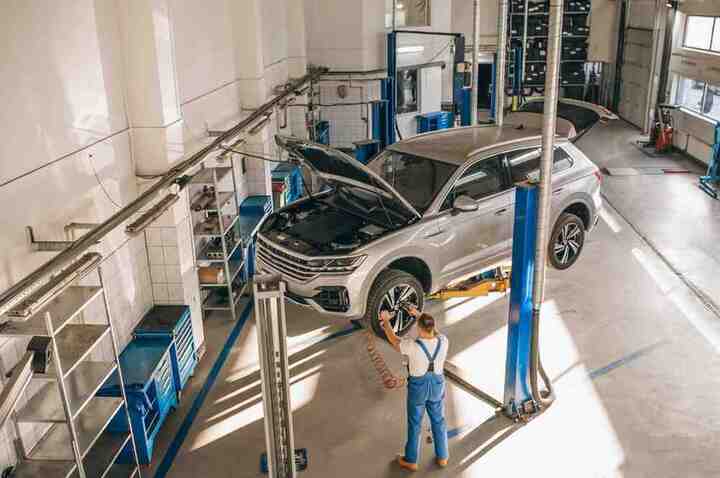
Underbody Inspection: Putting the vehicle on a lift to visually inspect tie rods, ball joints, control arms, struts, and sway bars for hairline cracks or minor bends.
-
Computerized 3D Frame & Laser Alignment: Utilizing 3D laser measuring tools to check the vehicle subframe against original factory specifications.
-
Suspension Replacement & OEM Realignment: Replacing damaged mechanical components with Original Equipment Manufacturer (OEM) parts and executing a 4-wheel computerized alignment.
-
ADAS & Steering Angle Sensor Recalibration: Re-zeroing the Steering Angle Sensor so your car's computer correctly recognizes when the wheels are straight.
Getting a complete collision repair service ensures that both the mechanical foundation and electronic safety networks perform in perfect harmony.
What to Do If You Experience Steering Issues After a Crash
If you notice your steering wheel is crooked, follow these essential steps:
-
Avoid High Speeds: Drive cautiously and avoid highway speeds until the vehicle has been inspected.
-
Document the Issue: Take note of whether the car pulls to the left or right, or if you hear clunking, whining, or grinding noises when turning.
-
Contact Your Insurance Provider: Alignment and suspension repairs resulting from a crash are typically covered under collision insurance policies.
-
Find a Certified Shop: Search online for a qualified collision repair near me to locate an accredited auto body facility equipped with diagnostic technology.
If you are located in Rockland County or the surrounding areas, visiting an established collision repair shop in West Nyack guarantees access to certified master technicians who specialize in complex structural realignments. Premier facilities like CARSTAR Spectrum Auto Inc pair advanced diagnostic tools with expert craftsmanship to ensure your vehicle leaves the shop driving perfectly straight and true.
Frequently Asked Questions (FAQs)
Q1: Can a simple wheel alignment fix my crooked steering wheel after an accident?
Answer: Not always. An alignment adjusts the angles of the tires, but if a tie rod, control arm, or strut is physically bent or cracked from an impact, an alignment alone will not solve the issue. The bent mechanical parts must be replaced before a proper computerized alignment can be performed.
Q2: Is it safe to drive with a crooked steering wheel?
Answer: It is not recommended. Beyond causing rapid tire damage, an off-center steering wheel indicates underlying suspension or frame strain. It can also cause active safety systems (like Electronic Stability Control) to malfunction during sudden driving maneuvers.
Q3: Will insurance cover steering and alignment repairs after a collision?
Answer: Yes, if you have collision coverage on your auto policy, repairs for mechanical, structural, and suspension damage caused by an accident are generally covered after you meet your deductible.
Q4: How long does it take to fix steering alignment issues after a collision?
Answer: If the issue is a minor misalignment or a straightforward tie rod replacement, repairs often take 1 to 2 days. If structural frame pulling or specialized ADAS sensor recalibration is required, the repair process may take several days to ensure complete safety checks.
Drive Straight and Safe Once Again
A crooked steering wheel is your vehicle’s way of signaling that something underneath isn't right. By acting quickly and relying on certified auto body professionals, you protect your tires, restore your vehicle's electronic safety systems, and ensure total peace of mind every time you take the wheel. Prioritize certified expertise and factory-grade alignments to get back on the road with complete confidence.