Organic Tallow Balm: How to Find One Worth Buying and Avoid Wasting Your Money
Posted by SAHIL Singh
202 views
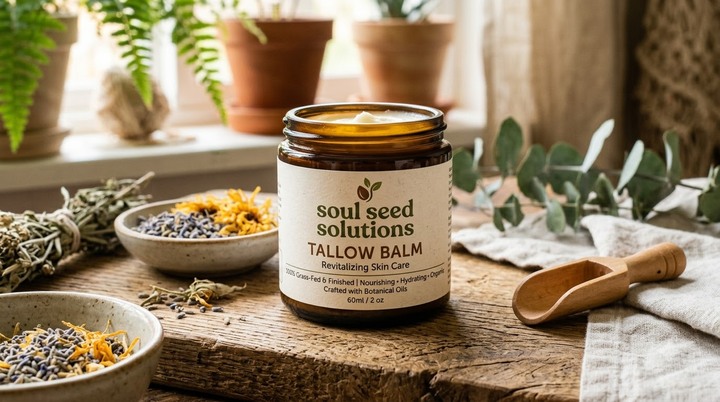
The word "organic" gets used liberally in the skincare world. It appears on labels, in marketing copy, and across product descriptions — sometimes meaningfully, sometimes not. When you're specifically looking for organic tallow balm, knowing what that term should actually mean in this context helps you cut through the noise and find something that genuinely delivers on its promise.
This isn't just a quality preference. For people choosing tallow balm precisely because they want to reduce synthetic ingredient exposure, the sourcing of the tallow itself matters enormously — and certified organic tallow balm sourced from genuinely clean, pasture-raised animals represents a meaningful step up from standard commercial options. Understanding what to look for before you buy saves both money and disappointment.
Why "Organic" Matters More With Tallow Than With Many Other Ingredients
With some skincare ingredients, organic certification is a nice addition but doesn't dramatically change the outcome. With tallow, it matters considerably more.
Fat is lipophilic — it stores fat-soluble compounds. That includes the beneficial ones like vitamins A, D, E, and K that make tallow valuable for skin. But it also includes anything the animal was exposed to during its life: pesticide residues from treated feed, veterinary medications, and other environmental compounds that accumulate in fatty tissue.
When you choose organic tallow, you're choosing fat from animals raised without synthetic pesticides in their feed, without routine antibiotics, and on pasture where the grazing environment is managed to organic standards. That's a meaningful distinction, not just a label upgrade.
What Does "Organic" Actually Mean for Tallow Balm?
This is where things get nuanced, and it's worth being clear-eyed about it.
Certified Organic vs. Organic Practices
Formal organic certification for beef tallow is complex. Cattle require certified organic pasture, certified organic feed supplementation, and compliance with welfare and management standards over a defined period. The certification process is rigorous and costly, which means some small-scale farmers who genuinely follow organic practices haven't pursued formal certification.
This creates a legitimate grey area. A small farm producing tallow from genuinely grass-fed, pasture-raised cattle with no synthetic inputs may produce a cleaner product than a certified organic product from a large commercial operation. The certification matters, but it's not the only signal of quality.
What to Look For on the Label
When assessing an organic tallow balm, look for:
-
Explicit sourcing language — grass-fed, pasture-raised, regeneratively farmed
-
Certification details — which certifying body, what standard
-
Country of origin — this affects which farming regulations applied
-
Ingredient list transparency — full disclosure of every ingredient, not just the headline ones
-
Brand transparency — companies that clearly explain where and how their tallow is sourced tend to be more trustworthy than those with vague marketing language
If a brand can't tell you clearly where their tallow comes from, that itself is useful information.
The Fatty Acid Profile: Why Grass-Fed Organic Tallow Is Nutritionally Different
Not all tallow has the same composition. The animal's diet directly influences the fatty acid profile of its fat, and that profile is what makes tallow beneficial for skin.
Grass-Fed vs. Grain-Fed: The Key Differences
Grass-fed and pasture-raised animals produce tallow with:
-
Higher conjugated linoleic acid (CLA) — an omega-6 fatty acid with anti-inflammatory properties
-
Better omega-3 to omega-6 ratio — grass-fed fat has a more balanced ratio, which matters for skin inflammation
-
Higher levels of fat-soluble vitamins — particularly vitamin A (retinol) and vitamin K2, both important for skin cell function and repair
-
More antioxidants — including vitamin E, which helps protect both the product and the skin from oxidative damage
Grain-fed tallow still contains useful fatty acids, but the nutritional density is lower across most of these markers. For a product you're applying to your skin specifically for its nourishing properties, the quality of the source fat is the foundation everything else is built on.
Evaluating the Full Ingredient List, Not Just the Tallow
An organic tallow balm is only as good as its complete formulation. Some products use high-quality tallow but then add synthetic fragrance, petroleum-derived preservatives, or filler oils that undermine the overall integrity of the product.
Ingredients That Complement Organic Tallow Well
-
Organic jojoba oil — technically a liquid wax, extremely stable, very compatible with skin sebum
-
Organic rosehip oil — high in vitamin C and essential fatty acids, supports skin tone and regeneration
-
Organic beeswax — adds a protective layer and adjusts texture without synthetic thickeners
-
Organic shea butter — rich in vitamins and fatty acids, adds softness and spreadability
-
Organic essential oils — used sparingly for scent; lavender, frankincense, and calendula are commonly used and generally well-tolerated
Ingredients That Are Red Flags
-
Synthetic fragrance (parfum) — a catch-all term that can contain dozens of undisclosed chemicals
-
Parabens or phenoxyethanol — preservatives that shouldn't be necessary in a water-free formulation
-
Mineral oil or petrolatum — petroleum derivatives that create a surface barrier but don't nourish skin
-
Long lists of unpronounceable compounds — in a product marketed on natural and organic credentials, these are contradictory
A genuinely clean organic tallow balm should have a short, readable ingredient list where you can identify every item.
Who Benefits Most From Choosing the Organic Version?
Anyone can use organic tallow balm, but certain groups have more at stake in choosing the cleaner option.
People with chemical sensitivities or multiple allergies. If your skin or immune system reacts to trace compounds, reducing the load of potential irritants from all sources — including skincare — is a sensible priority.
Those using it on broken, inflamed, or compromised skin. Damaged skin has reduced barrier function, which means anything applied absorbs more readily. Choosing the cleanest possible formulation when applying to eczema patches, wounds, or post-procedure skin matters more than it does on intact healthy skin.
Parents using it on babies and young children. Children's skin is thinner and more permeable. The case for clean, simple ingredients is stronger here than almost anywhere else.
People already committed to reducing synthetic chemical exposure broadly. If you've made changes to your diet, cleaning products, and other personal care items, it's consistent to apply the same standard to your skincare.
How Organic Tallow Balm Fits Into a Broader Skincare Routine
One of the practical appeals of organic tallow balm is its versatility. Rather than using five different products for five different purposes, many people find it functions as an all-in-one option.
It can serve as a facial moisturiser, body balm, hand cream, lip balm, cuticle treatment, and even a light protective barrier before exposure to harsh weather or water. The rich texture suits nighttime use particularly well, allowing it to work through the night when skin is in repair mode.
For those transitioning from conventional skincare, it's worth simplifying gradually. Swap one product at a time rather than replacing everything at once, so you can accurately observe how your skin responds to organic tallow balm on its own.
Morning vs. Evening Application
Morning: A small amount warmed between the palms and pressed gently into damp skin after cleansing. Less is more — you want the skin to feel nourished, not coated, before going about your day.
Evening: A slightly more generous application can be used at night, particularly on the face, hands, or feet. Applying to slightly damp skin and allowing it to absorb fully before contact with bedding gives the best results.
Price as a Quality Signal — but Not the Only One
Genuinely organic, grass-fed tallow balm costs more to produce than conventional alternatives. The cost of sourcing certified organic or genuinely clean pasture-raised tallow, slow rendering, and formulating with organic carrier oils adds up. A very cheap "organic tallow balm" should prompt scrutiny rather than celebration.
That said, high price alone doesn't guarantee quality. Use it alongside ingredient transparency, sourcing information, and brand credibility rather than treating it as the primary indicator.
A reasonably sized tin of quality organic tallow balm used consistently — and sparingly, because a little goes a long way — typically represents good value compared to the combined cost of multiple conventional products it can replace.
Frequently Asked Questions
Is organic tallow balm better than regular tallow balm for sensitive skin?
Generally yes. Organic tallow from grass-fed animals has a cleaner fatty acid profile and avoids the accumulation of synthetic residues in the fat, which matters for people whose skin is already reactive.
Can organic tallow balm replace my regular moisturiser?
For many people, yes. Its fatty acid compatibility with human skin sebum makes it an effective standalone moisturiser for the face and body.
Does organic certification guarantee the tallow is grass-fed?
Not automatically. Organic certification covers feed quality and farming practices but doesn't always mean exclusively grass-fed. Look for both "certified organic" and "grass-fed" or "pasture-raised" explicitly stated.
How do I know if the product I'm buying is genuinely organic?
Look for third-party certification details, clear sourcing information, and full ingredient disclosure. Brands that are transparent about their sourcing are generally more trustworthy.
Is there a smell difference between organic and non-organic tallow balm?
Well-rendered tallow of any kind should have a mild, neutral scent. The primary scent of a balm usually comes from any added essential oils, not the tallow itself.
Can I use organic tallow balm during pregnancy?
The base ingredient is generally considered safe, but some essential oils used as additions are not recommended during pregnancy. Check the specific formulation and consult your midwife or doctor if unsure.
Choosing organic tallow balm is a decision about both skin health and ingredient integrity. When the sourcing is transparent, the formulation is clean, and the product is used consistently, it offers a genuinely nourishing alternative for people who've found conventional skincare falling short.