Solving Excessive Indoor Heat with the Best Replacement Windows for Texas
Posted by SAHIL Singh
Filed in Business 270 views
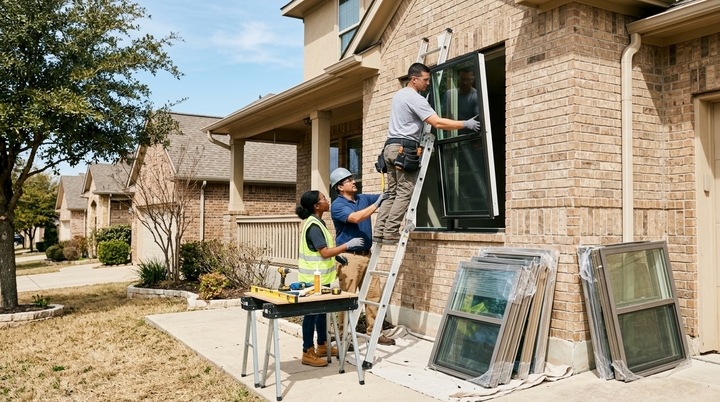
Introduction: Why Texas Homes Overheat — And Why Windows Are the Main Culprit
Texas summers are not just uncomfortable — they are relentless. With average summer temperatures regularly exceeding 100°F across major cities like Dallas, Houston, San Antonio, and Austin, keeping the interior of a home cool is both a comfort necessity and a financial challenge.
Most homeowners instinctively blame their HVAC system when certain rooms become unbearably hot. They call technicians, replace filters, and upgrade thermostats — only to find the problem persists. What they often fail to realize is that their windows are the primary source of the problem.
Choosing the best replacement windows for Texas climate conditions is one of the most impactful decisions a homeowner can make. The right windows don't just block heat — they transform the entire comfort profile of your home while simultaneously reducing your monthly energy expenditure.
In this article, we'll explore exactly how windows drive indoor heat problems, what technologies exist to solve them, and how to identify the best replacement windows for Texas homes specifically.
Understanding Solar Heat Gain: The Science Behind Your Hot Rooms
Before choosing a solution, it helps to understand the problem scientifically.
Solar Heat Gain Coefficient (SHGC) is the measure of how much solar radiation a window admits into a building. The scale runs from 0 to 1 — the lower the number, the less heat the window transmits.
According to the U.S. Department of Energy, clear single-pane glass has an SHGC of approximately 0.86, meaning it allows 86% of solar heat to pass directly into your home. In Texas's high-sun environment, this turns south- and west-facing rooms into virtual greenhouses during peak afternoon hours.
Modern, high-performance replacement windows designed for hot climates can achieve SHGC ratings as low as 0.17 to 0.25 — reducing solar heat transmission by more than 70% compared to older single-pane glass. That difference is immediately felt in room temperatures, thermostat demand, and energy bills.
The Energy Star program recommends that windows installed in the Southern climate zone — which includes all of Texas — have an SHGC of 0.25 or lower to effectively combat solar heat gain.
Why Standard Windows Fail in the Texas Climate
The Unique Challenges of the Texas Environment
Texas doesn't just present one climate challenge — it presents several simultaneously:
-
Extreme heat that pushes HVAC systems to their limits from May through October
-
Intense UV radiation that degrades window seals, frames, and coatings faster than in northern states
-
High humidity in coastal and eastern regions that accelerates moisture infiltration through compromised seals
-
Severe storm activity, including hail, high winds, and occasional hurricane-force conditions in Gulf Coast areas
-
Dramatic temperature swings in West Texas and the Panhandle that cause rapid thermal expansion and contraction of window frames
Standard builder-grade windows installed in homes 10 to 20 years ago were not engineered with today's understanding of Texas-specific climate demands. They lack the specialized coatings, gas fills, and frame engineering that define the best replacement windows for Texas conditions today.
Key Technologies That Define High-Performance Windows for Texas
1. Low-E Glass Coatings
Low-emissivity (Low-E) glass is the single most important technology for managing solar heat gain in Texas homes. A microscopically thin metallic coating is applied to the glass surface, reflecting infrared radiation (heat) while allowing visible light to pass through freely.
There are two primary types relevant to Texas homeowners:
-
Solar control Low-E coatings — Designed specifically to block heat before it enters the home, ideal for south- and west-facing windows in hot climates
-
Passive Low-E coatings — Designed to retain heat inside, better suited for colder climates (less relevant for most of Texas)
For Texas applications, solar control Low-E glass is the correct choice. It can reduce cooling loads by 10% to 15% according to research from Lawrence Berkeley National Laboratory, which directly translates to lower air conditioning costs throughout the long Texas summer.
2. Gas-Filled Double and Triple Pane Units
Modern replacement windows are constructed with two or three panes of glass separated by an insulating gas — typically argon or krypton. These gases are denser than air and significantly reduce thermal transfer between the outdoor and indoor glass surfaces.
-
Argon gas is the most commonly used and cost-effective option, reducing thermal conductivity by approximately 34% compared to air-filled units
-
Krypton gas offers superior insulation but comes at a higher price point, typically reserved for triple-pane configurations
For the best replacement windows for Texas homes, double-pane argon-filled units with solar control Low-E coatings represent the optimal balance of performance and value in most residential applications.
3. Warm-Edge Spacer Systems
The spacer is the component that separates the two panes of glass within the window unit. Traditional aluminum spacers conduct heat and cold readily — a process called thermal bridging — creating "cold edges" in winter and "hot edges" in summer where condensation and heat transfer are concentrated.
Modern warm-edge spacer systems made from foam, silicone, or composite materials dramatically reduce this thermal bridging effect. According to the Efficient Windows Collaborative, warm-edge spacers can improve the overall window U-factor by 0.02 to 0.05 — a meaningful improvement in overall thermal performance.
4. Frame Material and Its Role in Heat Management
The frame material of your replacement window significantly affects both thermal performance and longevity under Texas conditions. The primary options include:
-
Vinyl frames — The most popular choice for Texas homeowners due to their excellent insulating properties, resistance to heat-driven warping, and low maintenance requirements. High-quality vinyl frames do not conduct heat the way aluminum frames do.
-
Fiberglass frames — The premium choice offering superior dimensional stability under extreme temperature swings, excellent insulating capacity, and exceptional longevity. Ideal for Texas's demanding climate.
-
Wood frames — Beautiful but high-maintenance, and susceptible to moisture and UV degradation in Texas's climate without rigorous upkeep.
-
Aluminum frames — Poor thermal performance due to high conductivity; generally not recommended as the best replacement windows for Texas heat management unless thermally broken.
Middle Section: Real Impact on Energy Bills and Home Comfort
How Much Can You Actually Save?
The financial case for high-performance replacement windows in Texas is compelling. According to Energy Star's savings data, Texas homeowners replacing single-pane windows with Energy Star-certified products can expect annual savings of $300 to $583 per year — some of the highest savings estimates in the country due to the state's extreme cooling demands.
Over a 10-year period, those savings accumulate to $3,000 to $5,800 — a significant offset against the cost of window replacement. Combined with potential increases in home resale value, the return on investment is strong and well-documented.
Additionally, many Texas utility providers — including Oncor, CenterPoint Energy, and Austin Energy — offer rebate programs for homeowners who install Energy Star-certified replacement windows, further reducing the net cost of upgrading.
For homeowners seeking Affordable Replacement Window Systems that don't compromise on performance, the combination of energy savings and utility rebates makes high-performance windows more financially accessible than many assume.
Room-by-Room Comfort Transformation
Beyond the numbers, the lived experience of upgrading to high-performance replacement windows is significant. Homeowners consistently report:
-
Elimination of hot spots in south- and west-facing rooms that were previously unusable during afternoon hours
-
More consistent temperatures throughout the home, reducing HVAC cycling and improving system longevity
-
Reduced glare without sacrificing natural light, thanks to tinted Low-E coatings
-
Lower humidity levels indoors, as properly sealed windows prevent moisture infiltration
These comfort improvements are not subjective — they are the direct, measurable result of reduced solar heat gain and improved thermal insulation that defines the best replacement windows for Texas homes.
Impact Resistance: An Often Overlooked Factor in Texas
Texas is not just hot — it's stormy. Hailstorms, severe thunderstorms, and Gulf Coast hurricanes create a compelling case for impact-resistant window options in many parts of the state.
Laminated glass — the same technology used in automobile windshields — holds together upon impact rather than shattering into dangerous shards. It provides protection against hail damage, wind-borne debris, and forced entry attempts.
According to the Insurance Institute for Business & Home Safety (IBHS), impact-resistant windows can significantly reduce storm-related damage claims and may qualify homeowners for insurance premium discounts in high-risk Texas counties.
When evaluating the best replacement windows for Texas, homeowners in hail-prone areas (West Texas, DFW corridor) or hurricane-risk zones (Gulf Coast) should strongly consider impact-resistant glazing as part of their selection criteria.
How to Choose the Right Replacement Window Company in Texas
The best window products in the world deliver disappointing results if they are improperly installed. Air gaps, incorrect shimming, inadequate flashing, and poor sealant application can negate the thermal performance of even the highest-rated window units.
When selecting a provider, Texas homeowners should prioritize:
-
Demonstrated experience with Texas-specific climate requirements and product selection
-
Manufacturer-certified installation teams who are trained on specific window systems
-
Comprehensive written warranties covering both products and installation labor
-
Transparent assessment processes that evaluate existing frame conditions before recommending replacement scope
-
Energy Star product lines with verified SHGC ratings appropriate for the Southern climate zone
The best replacement windows for Texas homes are only as effective as the expertise behind their installation and selection.
Conclusion: Stop Fighting the Heat with the Wrong Tools
Turning your thermostat down repeatedly while your windows pour solar heat into your home is a losing battle. The root cause of excessive indoor heat in most Texas homes is not inadequate air conditioning — it is inadequate window performance.
Investing in the best replacement windows for Texas climate conditions is one of the highest-impact, highest-return home improvements available to Texas homeowners today. With solar control Low-E coatings, gas-filled panes, quality frame materials, and professional installation, you can fundamentally change the thermal profile of your home — room by room, season by season.
Don't spend another Texas summer fighting heat that modern window technology can eliminate. Choose high-performance replacement windows engineered for the demands of the Lone Star State, and experience the difference from the very first cool, comfortable afternoon.