Best Fertility Hospital in Palakkad: PE and Pregnancy
Posted by DR Aravind IVF
Filed in Health 45 views
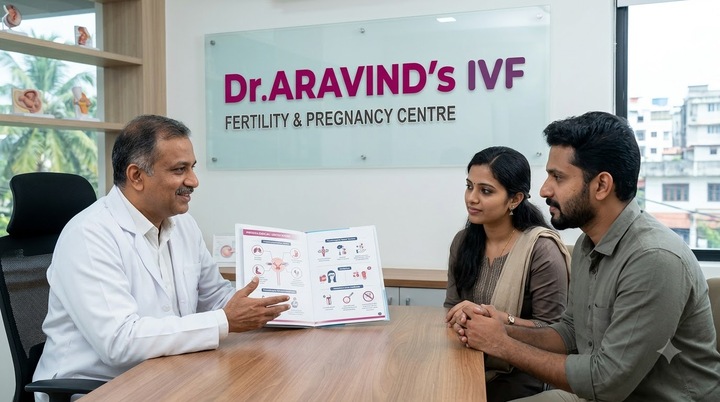
Premature ejaculation can become a source of worry when a couple is trying to have a baby. A man may wonder whether ejaculating sooner than expected means he has low fertility or poor sperm quality. In most situations, these are two different concerns.
A Best Fertility Hospital in Palakkad can help assess whether ejaculation timing is affecting the couple's ability to have intercourse and whether there are any additional male or female fertility factors.
What Is Premature Ejaculation?
Premature ejaculation generally describes ejaculation that happens sooner than desired, occurs repeatedly, and causes personal or relationship distress.
It can be present from the beginning of sexual activity or develop later in life.
There is no single experience that applies to every man. Frequency, level of control, duration, and emotional impact all matter when assessing the concern.
An occasional episode does not necessarily indicate a medical condition.
Can It Prevent Pregnancy?
Premature ejaculation does not automatically prevent pregnancy.
If ejaculation occurs after penetration, sperm can still enter the reproductive tract and fertilization may occur.
The difficulty becomes more relevant when ejaculation consistently occurs before penetration or prevents intercourse from being completed.
In such circumstances, the timing of ejaculation can become a practical obstacle to natural conception.
This is different from having abnormal sperm.
Does It Affect Sperm Quality?
Premature ejaculation itself does not necessarily damage sperm.
Sperm health is assessed through parameters such as concentration, motility, and morphology.
A man can experience ejaculation-control problems while having normal semen parameters. Likewise, someone without premature ejaculation can have reduced sperm quality.
If conception is delayed, semen analysis can provide more useful information than judging fertility based on ejaculation timing.
Why Can It Happen?
There can be several contributing factors.
Psychological influences may include:
-
Performance anxiety
-
Relationship tension
-
Stress
-
Fear of disappointing a partner
-
Previous negative sexual experiences
Biological and physical factors can also influence the outcome.
Certain hormonal changes, altered sensitivity, inflammation, or other health conditions may contribute to some men.
Sometimes several factors overlap.
Can Fertility Pressure Make It Worse?
Trying to conceive can create pressure that was not present previously.
Couples may carefully track ovulation and feel that intercourse has to happen on particular days. This can make sex feel more like a task than intimacy.
A man who is already worried about ejaculating quickly may become increasingly focused on controlling the response.
That anxiety can affect sexual arousal and make the experience more difficult.
Open communication between partners can help reduce unnecessary pressure.
How Is the Problem Evaluated?
A healthcare professional may ask about when the problem started, how frequently it occurs, the degree of control, sexual history, relationship concerns, and any associated symptoms.
Your medical history and current medications may also be assessed.
If pregnancy has been difficult to achieve, a semen analysis may be recommended to check whether another male-factor issue is present.
Further testing is usually based on the findings rather than performed automatically for everyone.
Is Treatment Available?
Yes. Management can vary according to the underlying cause and individual needs.
Depending on the situation, treatment may include behavioral techniques, counseling, psychological support, topical treatments, or prescribed medication.
Some men benefit from learning ways to recognize and manage arousal before ejaculation becomes difficult to control.
Treatment should be discussed with a qualified professional rather than relying on unverified online remedies.
What If Ejaculation Happens Before Penetration?
When ejaculation consistently occurs before penetration, natural conception can become challenging because semen may not be deposited inside the vagina.
Addressing the ejaculation problem may help restore the possibility of intercourse-based conception.
However, if the couple also has another fertility issue, treating premature ejaculation alone may not be enough.
This is why a broader assessment is useful when pregnancy has not occurred.
Should Both Partners Have a Fertility Assessment?
When conception is delayed, both partners may need evaluation.
Male factors can involve sperm production, reproductive anatomy, hormones, or sexual function.
Female factors may involve ovulation, ovarian reserve, fallopian tubes, uterine health, age, or other reproductive conditions.
Looking at both sides avoids placing the entire burden of infertility on one symptom.
When Is Assisted Reproduction Considered?
If natural intercourse remains difficult or another fertility problem is identified, assisted reproductive techniques may sometimes be discussed.
Depending on the circumstances, options may include IUI, IVF, or ICSI.
The decision depends on the couple's medical findings, not simply on the presence of premature ejaculation.
For couples requiring advanced reproductive care, a Best IVF Hospital in Kerala can be considered based on clinical expertise, laboratory capabilities, treatment options, and suitability for their specific needs.
What Can Men Do to Support Sexual Health?
General health can contribute to sexual wellbeing.
Useful habits include:
-
Regular exercise
-
Adequate sleep
-
Balanced nutrition
-
Avoiding tobacco
-
Limiting alcohol
-
Maintaining a healthy weight
-
Managing long-term stress
-
Keeping existing medical conditions under control
These measures are supportive but should not replace professional treatment when symptoms persist.
When Should You Seek Help?
Consider speaking with a professional when ejaculation occurs sooner than desired repeatedly, causes distress, affects the relationship, or makes attempts to conceive difficult.
Additional symptoms such as erectile problems, reduced sexual desire, pain, urinary changes, or previous fertility concerns are also reasons to seek evaluation.
Getting help does not automatically mean that fertility treatment or IVF will be required.
Conclusion
Premature ejaculation is primarily a sexual-function concern and does not automatically indicate infertility or poor sperm quality. However, when ejaculation repeatedly occurs before penetration, it can make natural conception more difficult.
If the problem is affecting intimacy or your plans for pregnancy, Book an appointment with a qualified fertility or sexual-health professional to understand the underlying factors and discuss appropriate treatment options.