Diamond Stud Earrings: How to Choose the Right Pair
Posted by DIGITAL MARKETING
207 views
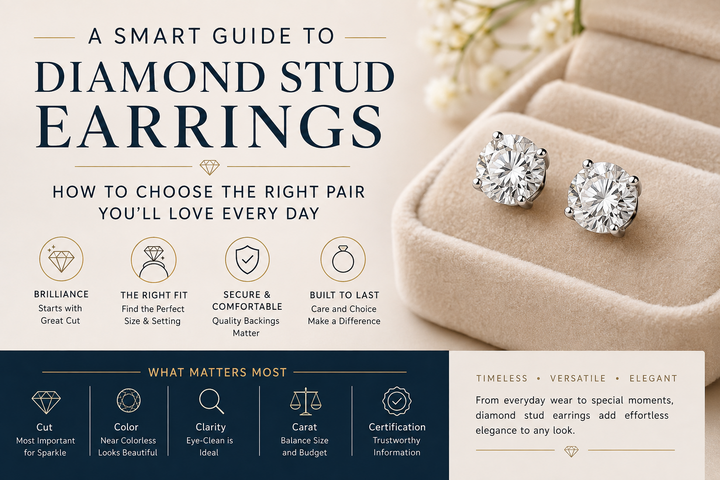
Diamond earrings have a simple design, but choosing the right pair takes more thought than many buyers expect. A well-chosen diamond stud can work with casual clothes, office outfits, and formal wear without looking out of place.
The best pair is not always the one with the largest stones or highest grades. Size, sparkle, setting style, metal, comfort, and budget all affect the final choice. Understanding these details helps you spend money on features you can actually see and enjoy.
Why Stud Earrings Remain So Versatile
Stud earrings sit close to the earlobe and place the stone at the center of attention. They have no hanging parts, which makes them comfortable for daily use and easy to combine with other accessories.
Their clean shape also works across different personal styles. A small round pair can look subtle and polished, while larger stones create a stronger visual effect. Different diamond shapes can make the same basic design feel classic, modern, or distinctive.
Studs also make practical gifts because they do not depend heavily on clothing size or personal styling habits. However, buyers should still consider metal color, stone shape, and preferred earring size.
How Diamond Stud Size Is Measured
Earring size can confuse first-time buyers because diamond weight is usually listed as total carat weight. This figure represents the combined weight of both stones.
For example, a one-carat total weight pair usually contains two diamonds weighing about 0.50 carats each. Buyers who expect one carat in each ear may be surprised by the actual size.
Carat weight also does not tell you exactly how large a diamond will appear. Two stones with the same weight can have slightly different face-up dimensions. Their cut proportions and shape affect how much surface area remains visible.
For daily wear, many people prefer a balanced size that adds sparkle without feeling heavy. Larger earrings may suit buyers who want a stronger statement.
What Makes a Diamond Stud Sparkle?
Cut quality has a major effect on brilliance. A well-cut diamond reflects light back toward the viewer instead of allowing too much light to escape through the bottom.
For round brilliant diamonds, cut should usually receive more attention than small differences in color or clarity. Excellent or very good cut grades often provide strong visual performance.
Other shapes use different grading methods, so measurements and appearance deserve closer inspection. Oval, princess, cushion, pear, and emerald-cut diamonds can all work well in stud settings.
Matching also matters. Since earrings appear as a pair, the two stones should have similar dimensions, color, shape, and overall brightness. They do not need identical laboratory specifications, but obvious differences may become distracting.
Understanding Color and Clarity
Color grades describe how much noticeable body color a diamond shows. Near-colorless diamonds often offer a useful balance between appearance and price, especially when viewed from normal conversation distance.
The metal setting can also affect how color appears. White gold and platinum can make slight warmth more noticeable, while yellow or rose gold may blend naturally with warmer diamond tones.
Clarity measures internal and external characteristics known as inclusions and blemishes. Earrings usually do not require extremely high clarity grades because people rarely inspect them from a few inches away.
An eye-clean diamond can provide excellent value. Paying extra for microscopic improvements may offer little visible benefit in everyday use.
Buyers comparing mined stones with lab created diamonds can use the same basic quality factors, including cut, color, clarity, and carat weight. The main differences involve origin, pricing, and personal preference rather than the basic grading system.
Choosing the Best Setting Style
Four-Prong Settings
Four-prong settings use four small metal claws to hold each diamond in position. They expose more of the stone, which can create a light and open appearance.
This design is popular for round and princess-cut stones. It can also make the diamond look slightly more prominent because less metal surrounds it.
Six-Prong Settings
Six-prong settings provide additional contact points around a round diamond. Some buyers prefer their secure feel and more traditional appearance.
The extra prongs add visible metal, so they may not suit people who want the least noticeable setting possible.
Bezel Settings
A bezel surrounds the edge of the diamond with a thin rim of metal. It creates a smooth profile and provides extra protection around the stone.
This option can work especially well for active lifestyles. The design also reduces exposed edges that may catch on clothing or hair.
Selecting the Right Metal
The setting metal affects appearance, maintenance, price, and skin comfort. White gold offers a bright look and often costs less than platinum, but it may need occasional replating to maintain its finish.
Yellow gold creates a warm contrast with diamonds and has a traditional appeal. Rose gold adds a softer pink tone that can feel more distinctive.
Platinum has a naturally white color and strong durability. It is denser than gold and usually carries a higher price.
People with metal sensitivities should check the alloy composition before buying. Nickel in some gold alloys can cause irritation for certain wearers.
Diamond Stud Backs and Everyday Security
The earring back deserves as much attention as the front setting. A beautiful pair offers little value if the backs feel loose or uncomfortable.
Push backs are common because they are simple and quick to use. Their friction-based design works well for many everyday earrings.
Screw backs use threaded posts and require the wearer to twist each back into place. They take longer to put on but may provide added peace of mind for valuable pairs.
Some earrings use locking or guardian-style backs. These designs can offer a secure hold while remaining easier to handle than traditional screw backs.
Before buying, consider how often you plan to remove the earrings. Convenience matters for daily use, while additional security may become more important with higher-value stones.
How to Balance Quality and Budget
A smart budget focuses on visible beauty rather than perfect grades on paper. Start with cut performance and matching because these qualities strongly affect how the pair looks.
Next, choose a carat range that fits your preferred visual size. You can then adjust color and clarity to stay within budget without sacrificing obvious beauty.
Certification can provide useful information for significant purchases. Independent grading reports document characteristics such as carat weight, color, clarity, and measurements.
Remember that earrings are normally viewed from farther away than engagement rings. This viewing distance gives buyers more flexibility with color and clarity grades.
Caring for Your Earrings
Daily products such as lotion, hair spray, makeup, and skin oils can build up on diamonds. This residue may reduce their brightness even if the stones remain undamaged.
Clean earrings gently with warm water, mild dish soap, and a soft brush. Rinse them carefully and dry them with a lint-free cloth.
Inspect the settings from time to time. A loose prong or damaged back should receive professional attention before the earring is worn again.
Store the pair in a soft pouch or separate jewelry compartment. Keeping them away from harder pieces can help prevent scratches to the metal.
Choosing a Pair You Will Actually Wear
The best earrings fit your lifestyle as well as your budget. Think about where you plan to wear them, how much sparkle you prefer, and how often you want to remove them.
A carefully selected diamond stud does not need exceptional grades in every category to look impressive. Strong cut quality, good matching, a secure setting, and sensible proportions often matter more.
Buyers considering natural stones or lab created diamonds should compare options based on the qualities they value most. Origin, budget, size, and personal priorities can all guide the final decision.
Choose a pair that feels comfortable, looks balanced on the ear, and fits the way you dress. Those practical details are what turn a beautiful purchase into earrings you can enjoy regularly.