Cristalhyal in Skincare: The Ingredient Redefining Everyday Hydration
Posted by Priyanka Sharma
Filed in Business 51 views
Skincare has moved far beyond simple moisturizing. Today, formulations are built around targeted actives that solve specific concerns, and hydration remains the foundation of healthy, resilient skin. Among the newer generation of hydrating actives gaining attention from dermatologists and formulators alike is Cristalhyal in skincare, a biotechnological ingredient that has quietly become one of the most talked-about additions to modern moisturizers. This article explores what makes this ingredient unique, how it works at a cellular level, and why it has found a permanent place in daytime skincare routines.
What Is Cristalhyal?
Cristalhyal is a next-generation form of hyaluronic acid, developed through advanced fermentation technology rather than traditional extraction methods. Unlike standard hyaluronic acid, which sits primarily on the surface of the skin, this ingredient is engineered to offer multiple molecular weights within a single formulation. This structural design allows it to hydrate at different depths of the epidermis simultaneously, rather than only forming a superficial hydration film.
The result is a more complete hydration experience. Skin receives moisture at the surface, within the mid layers, and closer to the deeper epidermal structures, creating a cushioning effect that plumps fine lines and restores a smoother texture over time.
Why Formulators Are Choosing This Ingredient
The skincare industry has seen countless hydrating ingredients rise and fall in popularity. What sets this one apart is its stability and compatibility with other actives. It blends seamlessly into creams, serums, and lotions without altering texture or causing pilling, which is a common complaint with poorly formulated hyaluronic acid products.
Formulators also value its ability to support the skin barrier. Compromised barriers lead to sensitivity, redness, and accelerated moisture loss. By reinforcing this barrier, the ingredient indirectly protects skin from environmental stress, pollution, and transepidermal water loss throughout the day.
Benefits of Cristalhyal in Day Cream
When incorporated into daytime formulations, this ingredient offers advantages that are particularly relevant for skin exposed to sunlight, pollution, and temperature fluctuations. The benefits of Cristalhyal in day cream are numerous and directly address the demands placed on skin during waking hours.
First, it delivers long lasting hydration that does not feel heavy or greasy. Day creams need to absorb quickly and sit comfortably under makeup or sunscreen, and this ingredient supports that lightweight finish while still delivering measurable moisture retention.
Second, it improves skin elasticity. Repeated exposure to environmental aggressors weakens collagen and elastin fibers over time. A well hydrated dermis supports these structural proteins, helping skin appear firmer and more supple throughout the day.
Third, it creates an immediate plumping effect. Fine lines caused by dehydration, rather than deep set wrinkles, often become less visible within hours of application. This makes it especially valuable for those seeking a fresh, rested appearance without invasive treatments.
Fourth, it strengthens the skin's natural defense mechanisms. A properly hydrated barrier is more resistant to irritants, temperature changes, and pollutants commonly encountered during the day. This resilience reduces the likelihood of redness, tightness, and sensitivity.
Fifth, it supports better absorption of subsequent products, including sunscreen. When skin is adequately hydrated, other actives penetrate more evenly, allowing formulations layered afterward to perform as intended.
How to Incorporate It Into a Daily Routine
For best results, day creams containing this ingredient should be applied after cleansing and any hydrating serums, but before sunscreen. Gentle, upward massaging motions help the formula absorb fully without disrupting the skin barrier. Consistent morning use, paired with adequate water intake, amplifies the hydrating benefits over weeks of continued application.
Those with oily or combination skin need not worry about heaviness. The lightweight molecular structure means it does not clog pores or contribute to excess shine, making it suitable across most skin types, including sensitive skin when paired with a well balanced formulation.
Who Should Use It
Anyone experiencing dehydration, dullness, or early signs of fine lines can benefit from this ingredient. It is particularly useful for individuals living in dry climates, those who spend long hours in air conditioned environments, or people frequently exposed to pollution and sun. Even oily skin types, which often mistakenly avoid hydrating actives, benefit from its balancing properties.
Final Thoughts
Hydration remains one of the most underestimated pillars of effective skincare, and choosing the right active ingredient can make a measurable difference in how skin looks and feels throughout the day. Formulations built around this advanced hyaluronic acid technology offer a smarter, more complete approach to daytime hydration than many conventional alternatives.
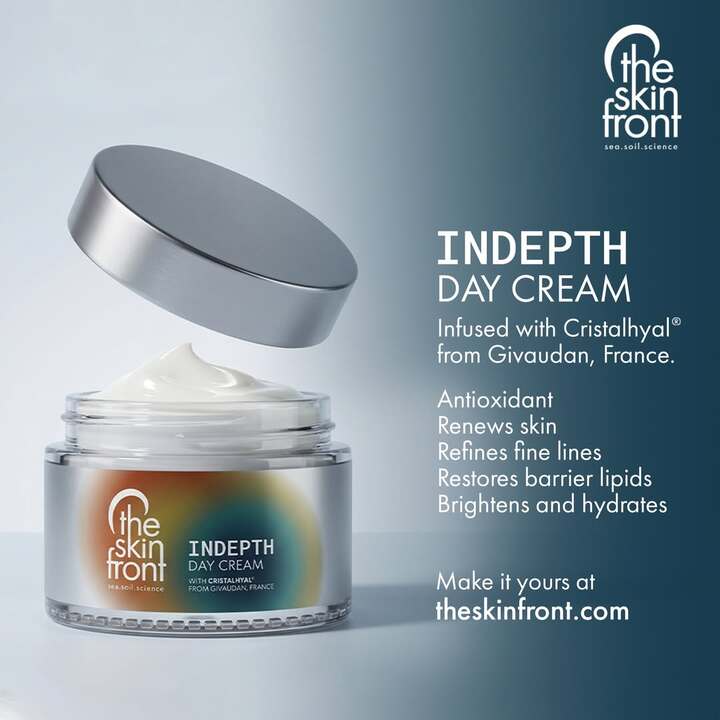
Brands that prioritize scientifically backed actives are setting a new standard for what a day cream should deliver, and The Skin Front has embraced this approach with its INDEPTH Day Cream, formulated with this very ingredient sourced from Givaudan, France. For anyone seeking visible, lasting hydration paired with barrier support, The Skin Front offers a formulation worth considering as part of a daily skincare ritual.
Frequently Asked Questions
1. What makes this ingredient different from regular hyaluronic acid?
Regular hyaluronic acid typically hydrates only the surface layer of skin, offering a temporary plumping effect. This advanced version uses multiple molecular weights, allowing hydration at several skin depths simultaneously. This creates longer-lasting moisture retention and a more cushioned, resilient texture compared to conventional single-weight formulations commonly found in older skincare products.
2. Can sensitive skin tolerate this ingredient in a day cream?
Yes, sensitive skin generally tolerates this ingredient well since it is non-irritating and works to strengthen the skin barrier rather than weaken it. However, patch testing any new formulation is always recommended before full application, especially for those with reactive or compromised skin conditions requiring extra caution.
3. Will this ingredient make my skin oily throughout the day?
No, its lightweight molecular structure absorbs quickly without leaving a greasy residue. It is formulated to hydrate without clogging pores, making it suitable for oily and combination skin types as well. Most users notice a matte, comfortable finish rather than excess shine after application.
4. How soon can visible results be expected after regular use?
Many users notice improved plumpness and softness within hours of the first application, since surface hydration works quickly. However, deeper improvements in elasticity and fine lines typically become noticeable after two to four weeks of consistent daily use alongside proper skincare habits.
5. Should this ingredient be applied before or after sunscreen?
It should always be applied before sunscreen during the morning routine. As a hydrating day cream ingredient, it prepares the skin barrier and improves the even absorption of products applied afterward, including sunscreen, ensuring both hydration and sun protection work effectively together throughout the day.
6. Is this ingredient safe for all skin types, including acne-prone skin?
Yes, it is generally considered safe for acne-prone skin since it does not clog pores or increase oil production. Its hydrating properties can actually support healing and barrier repair, which is often compromised in acne-prone skin due to harsh treatments or excessive dryness.
7. Can this ingredient be layered with other active ingredients like retinol?
Yes, it pairs well with most active ingredients, including retinol, since it helps counteract the dryness and irritation these actives can cause. Using a hydrating day cream alongside retinol treatments often improves overall tolerance and reduces flakiness, redness, or discomfort during initial usage periods.