How to Choose the Right Water Softener for Your Home
Posted by Thomas Engel
Filed in Other 54 views
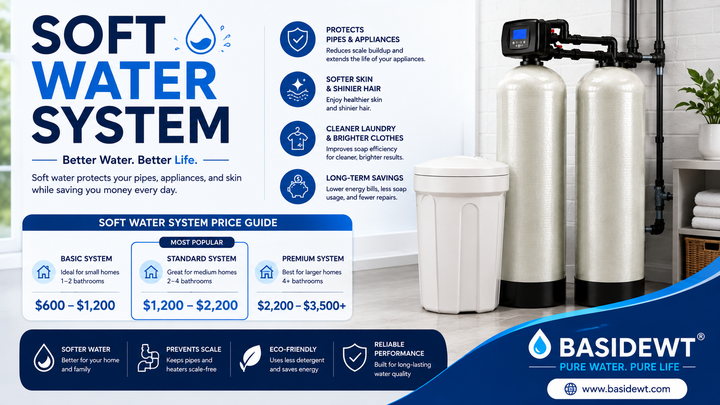
Hard water is one of those household problems that often goes unnoticed until its effects become difficult to ignore. White deposits appear around faucets, soap seems harder to rinse away, glassware develops cloudy spots, and appliances that use water may gradually accumulate mineral buildup. If these issues sound familiar, your home may benefit from a properly selected water softener system.
Choosing the right system, however, involves more than buying the largest or most expensive unit available. Water hardness, household size, daily water use, system capacity, installation requirements, and maintenance all affect whether a particular solution will work efficiently. Understanding these factors makes it easier to invest in residential water treatment that matches your home's actual needs.
Understanding Hard Water and Water Softening
Hard water contains dissolved minerals, primarily calcium and magnesium. These minerals are naturally picked up as groundwater moves through soil and rock. The amount present varies significantly from one location to another, which is why water hardness can differ even between nearby communities.
Hard water is not necessarily a sign that water is unsafe to drink. The main concern for many households is its effect on plumbing, fixtures, appliances, laundry, and everyday cleaning.
A conventional water softener uses a process called ion exchange. Water passes through a tank containing resin beads that attract calcium and magnesium ions. In exchange, the resin releases sodium or, in some systems, potassium ions. The softened water then continues into the home's plumbing.
Over time, the resin becomes loaded with hardness minerals. A regeneration cycle restores its ability to soften water. During regeneration, a concentrated salt solution is typically passed through the resin to remove accumulated minerals, after which the system rinses itself before returning to normal operation.
This process is different from filtration. A water filter may remove sediment, chlorine, or other substances depending on its design, while a softener is specifically intended to reduce hardness minerals.
Start With Your Home's Water Hardness
Before choosing a softener, determine how hard your water actually is. This is one of the most important steps because a system designed for moderately hard water may not be suitable for a home with extremely hard water.
Water hardness is commonly expressed in grains per gallon (GPG) or milligrams per liter (mg/L) as calcium carbonate. A professional water test can provide a more reliable measurement than simply judging hardness by visible scale.
Testing also helps identify other water characteristics that may influence treatment decisions. For example, iron and manganese can interfere with some softening systems, while unusual pH or sediment levels may require additional treatment.
If you are unsure where to begin, a detailed soft water system guide can help explain the basic considerations before you compare specific equipment.
Once you know the hardness level, you can estimate how much softening capacity your household requires. This prevents a common mistake: selecting a unit based only on the physical size of the tank rather than its actual treatment capacity.
Match System Capacity to Household Demand
Water softener capacity refers to how much hardness the system can remove before regeneration is needed. Capacity is often measured in grains.
Household demand depends on several factors, including the number of people living in the home, average water consumption, and the hardness of the incoming supply. A family of five using a large amount of water will generally require more capacity than one or two people living in the same-sized house.
Consider a simple example. Imagine a four-person household with moderately hard water and relatively high daily consumption. A small softener may technically soften the water, but it could require frequent regeneration. That may increase salt and water consumption and make the system less convenient to manage.
An oversized unit has its own drawbacks. If demand is too low compared with the system's capacity, the equipment may not operate as efficiently as intended.
The goal is not to choose the biggest system. It is to choose one with enough reserve capacity to handle normal household demand without unnecessary regeneration.
Demand-based or metered systems can be particularly useful because they monitor actual water consumption and initiate regeneration when needed rather than relying solely on a fixed schedule.
Consider Installation Before You Buy
A water softener needs more than a convenient spot near a water line. Installation requirements can vary depending on the system and the home's plumbing configuration.
Most traditional units require connections to the main incoming water supply, a drain for regeneration wastewater, and access to an electrical outlet if the control valve requires power. Salt-based systems also need enough space for the brine tank and access for adding salt.
The location matters for practical reasons. A system installed in a cramped corner may be difficult to refill, inspect, or service later. The area should also provide reasonable protection from extreme temperatures and conditions that could damage the equipment.
Homes with unusual plumbing layouts may require bypass valves or plumbing modifications. If the installation involves cutting existing water lines or changing the home's main supply arrangement, professional installation can help prevent leaks and ensure the system is configured correctly.
It is also worth checking local plumbing requirements before installation. Some areas have specific rules concerning discharge from regeneration cycles or the installation of water treatment equipment.
Think About Maintenance and Operating Costs
Buying the equipment is only part of the cost of owning a water softener. Regular maintenance and consumables should also be considered.
For salt-based systems, homeowners generally need to monitor the brine tank and replenish salt when necessary. The frequency depends on household water use, hardness, system settings, and the efficiency of the equipment.
Water softener maintenance can also include checking the brine tank, inspecting connections, keeping the surrounding area clean, and following the manufacturer's recommended service schedule. Some systems may require periodic cleaning or replacement of components.
Operating efficiency deserves attention as well. A unit that regenerates more often than necessary can use additional salt and water. Proper sizing and accurate programming can help reduce unnecessary cycles.
When comparing systems, look beyond the initial purchase price. Consider salt consumption, water use during regeneration, replacement parts, professional servicing, and the expected lifespan of major components. A system with a higher upfront price may make sense if it is better suited to your home's demand and operates efficiently over time.
Choose Features That Solve Real Household Problems
Modern softeners can include a wide range of features, but not every feature is equally valuable for every homeowner.
A metered control system, for example, can be useful because it bases regeneration on actual water consumption. A reliable bypass valve makes it easier to temporarily route water around the softener when maintenance is required.
Some systems provide alerts when salt levels are low or when maintenance is due. Others are designed with compact footprints for homes where installation space is limited.
Smart connectivity may appeal to homeowners who want to monitor equipment through a phone or home network, but it should not be the primary reason for choosing a system. Basic performance, appropriate capacity, reliable controls, and serviceability are generally more important.
Think about the problems you are actually trying to solve. If scale buildup is your main concern, focus on effective hardness reduction. If space is limited, prioritize a suitable compact design. If maintenance is difficult to remember, monitoring features may provide practical value.
Make Water Treatment Part of a Bigger Plan
A softener does not necessarily address every water-quality concern. The right approach depends on what is present in the incoming supply.
For example, a household might need sediment filtration before the softener if the water contains visible particles. In other situations, homeowners may need separate treatment for taste, odor, chlorine, iron, or other specific concerns.
This is why water testing should come before purchasing multiple pieces of equipment. Testing provides a clearer picture of the water and helps prevent unnecessary treatment.
For private wells, testing can be especially important because water characteristics may change over time. A treatment setup that worked several years ago may no longer address current conditions.
A well-planned home water treatment strategy focuses on the actual composition of the water rather than adding equipment simply because it is marketed as useful.
A Practical Checklist for Choosing a Softener
Once you have your water test results, review the following points before making a decision:
-
Water hardness: Know the hardness level rather than estimating it.
-
Household size: Consider the number of regular occupants.
-
Water consumption: Account for bathing, laundry, cooking, cleaning, and other daily use.
-
System capacity: Select enough capacity for normal demand with reasonable reserve.
-
Regeneration method: Understand whether the system uses metered or scheduled regeneration.
-
Installation space: Confirm that there is enough room for the equipment and routine servicing.
-
Drain and electrical access: Check the practical installation requirements.
-
Maintenance: Understand salt requirements, cleaning, servicing, and replacement parts.
-
Additional treatment: Determine whether filtration or another treatment stage is needed.
-
Long-term operating costs: Compare water and salt consumption rather than looking only at the purchase price.
A little preparation can prevent expensive mistakes. The best water softener system is not necessarily the one with the largest capacity or the most features. It is the one that matches the home's water hardness, usage patterns, plumbing setup, and maintenance expectations.
For homeowners dealing with mineral scale and the everyday inconveniences of hard water, choosing the right softening equipment can make household water management considerably easier. By testing the water first, calculating realistic demand, evaluating installation needs, and planning for ongoing maintenance, you can select a system based on how your home actually uses water rather than relying on guesswork.