What Happens Before Drivers Reach the Danger Zone? Understanding the Decision Distance Behind Temporary Signage
Posted by Thomas Engel
Filed in Business 249 views
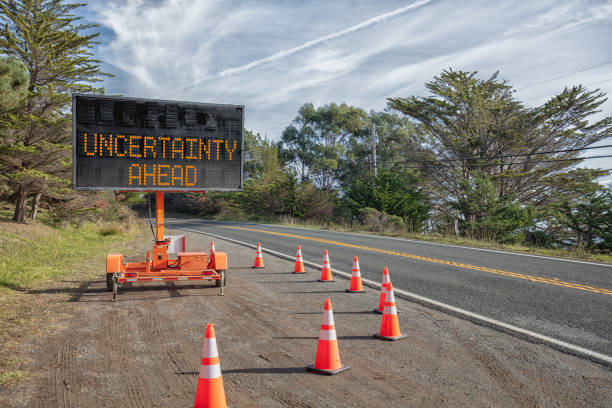
Most drivers only become aware of a roadwork site when they physically reach the point where the road has changed.
They see the cones narrowing the lane, the flashing lights of maintenance vehicles, the workers wearing high-visibility clothing and the equipment occupying space that was previously available for normal traffic movement. To the driver, this feels like the beginning of the hazard.
From a professional traffic management perspective, however, the danger zone begins much earlier.
It begins at the moment a driver first needs to understand that something ahead is different.
That moment might happen hundreds of metres before the work area itself, when a temporary sign becomes visible on the roadside and the driver's brain starts processing information about what they are about to encounter.
-
Should they reduce speed?
-
Will their lane continue?
-
Do they need to change position?
-
Is the vehicle next to them also going to move over?
These decisions are made long before the vehicle reaches the physical hazard, which is why the placement of portable signage is not simply a matter of putting a warning sign somewhere near the work area.
It is about creating enough decision distance for drivers to understand, process and respond safely before they enter an environment where their choices become limited.
The Roadwork Site Does Not Begin Where the Work Starts
When people think about temporary traffic management, they often focus on the visible elements of the work zone.
The excavation.
The construction vehicle.
The workers.
The closed lane.
The barrier cones separating traffic from the activity taking place.
However, experienced traffic management teams understand that these are only the final stages of a much longer process. The actual safety system begins before drivers even realise they are approaching a changed environment.
A successful roadwork setup gradually introduces information.
First, drivers become aware that something ahead is different.
Then they receive instructions about what that difference means.
Finally, they reach the point where they need to adjust their behaviour.
This sequence is important because people generally make safer decisions when they have time to prepare rather than when they are forced to react.
A driver who understands what is coming has the opportunity to slow down smoothly, check surrounding traffic and position their vehicle correctly. A driver who discovers the change too late is immediately placed under pressure, and pressure is where unpredictable decisions often happen.
Decision Distance Is About Giving People Time to Think
The term "decision distance" may sound like a technical traffic engineering concept, but the idea behind it is surprisingly simple.
Every driver needs a certain amount of time and space between receiving information and acting on that information.
A temporary sign does not physically move traffic.
It does something much more important.
It begins the thinking process.
When a motorist sees a warning sign ahead, their brain begins creating a picture of what they are approaching. They start comparing the information from the sign with what they can see in front of them, while also considering the movement of other vehicles around them.
This process happens quickly, often without conscious thought, but it still requires time.
The problem is that many temporary traffic setups are designed from the perspective of the person standing beside the road rather than the person approaching at speed.
The worker sees the sign.
The driver experiences the journey towards the sign.
Those are two completely different perspectives.
A Sign Can Be Correct and Still Fail
One of the most misunderstood aspects of temporary signage is that simply having the correct sign does not guarantee an effective safety system.
A sign can be legally correct.
It can be clearly printed.
It can be positioned upright.
It can contain the correct message.
Yet it can still fail if drivers do not have enough time to understand and react to it.
Imagine a driver travelling along a busy urban road during peak traffic. They see a lane closure warning sign, but the sign is positioned so close to the restriction that they only have a few seconds to process the instruction while vehicles around them are also trying to respond.
The sign itself is not the problem.
The problem is that the information arrived too late.
Effective temporary signage is not only about what information is communicated. It is about when that information reaches the person who needs it.
Case Study: The Same Road Closure With Two Different Outcomes
Consider two road maintenance teams carrying out almost identical work on two separate roads.
Both teams have the correct equipment.
Both have trained workers.
Both use temporary signs, barrier cones and safety procedures.
The difference is not what equipment they have.
The difference is how they think about the driver.
The first team approaches the setup from a practical perspective. They place signage close to the work area because that is where the disruption begins, and from their position beside the road, the arrangement appears logical.
However, drivers approaching the site experience something different.
They receive information late.
They have less time to adjust.
Lane changes happen closer to the work area.
Traffic becomes less predictable.
The second team takes a different approach.
Before placing equipment, they consider the journey of the approaching driver and ask a different question:
"At what point does this person need to know what is happening?"
By moving the warning point further away from the hazard, they create a smoother transition where drivers can understand the situation before they reach the restricted area.
The physical work being completed is identical.
The outcome is not.
The difference comes from understanding decision distance.
Speed Changes the Meaning of Distance
A common mistake is assuming that a certain sign placement will work in every situation.
It will not. Distance behaves differently depending on speed. A temporary sign positioned correctly in a slow-moving industrial area may not provide enough information for vehicles travelling along a high-speed road.
At higher speeds, vehicles cover more ground before drivers have completed the process of noticing, understanding and responding to information.
A few seconds can represent a significant amount of distance.
This is why professional traffic management requires more than simply knowing where equipment should be placed. It requires understanding how people interact with the environment around them.
The road itself changes the meaning of the equipment.
Why Portable Signage Is Critical During Temporary Changes
Permanent road signs are designed for stability.
They communicate information that remains relevant for long periods of time.
Temporary situations are different because the environment can change from one hour to the next.
A maintenance team may need to close one lane in the morning and reopen it later in the day.
A construction site may alter access routes as different phases of work begin.
An emergency repair may require immediate communication with road users before a permanent solution can be created.
This is where portable signage becomes valuable.
Products such as Stromberg Folding Signs allow teams to quickly communicate changing conditions without relying on permanent infrastructure. Their value is not only that they can be moved; it is that they allow safety messages to move with the situation.
In temporary environments, flexibility is part of safety.
The First Few Seconds After Seeing a Sign Matter Most
When drivers encounter temporary signage, they are not simply reading words.
They are building an understanding of what is happening.
A successful sign answers several questions quickly:
-
What has changed?
-
How does it affect me?
-
What should I do next?
If those answers are clear, the driver can respond calmly.
If they are unclear, the driver begins filling in the gaps themselves.
That is where problems occur.
A confused driver may brake suddenly, hesitate between lanes or make an unnecessary manoeuvre because they are trying to solve the problem too close to the hazard.
Good temporary signage removes uncertainty before it becomes a safety issue.
Weather and Visibility Can Reduce Decision Distance Without Warning
Even the best-designed temporary traffic setup needs to account for real-world conditions.
A sign that performs well on a clear afternoon may not communicate with the same effectiveness during heavy rain, early morning darkness or poor visibility conditions.
Drivers do not experience the road in perfect conditions.
They experience it while dealing with glare, weather, fatigue, surrounding vehicles and countless other distractions.
This is why high-quality temporary signage and correct placement work together.
The sign needs to be visible.
The message needs to be understood.
And both need to happen early enough for the driver to respond.
Good Traffic Management Feels Almost Boring
One of the interesting things about effective temporary traffic management is that the best setups rarely attract attention.
Drivers pass through.
Traffic continues moving.
Workers complete their tasks.
Nothing dramatic happens.
That is exactly the goal.
A well-planned temporary traffic system creates predictability in a situation that could otherwise feel uncertain.
The driver never thinks about the hundreds of decisions made behind the scenes.
They simply receive information at the right moment and respond naturally.
Key Takeaways
-
Decision distance is the time and space drivers need to understand temporary traffic changes and respond safely.
-
Temporary signage works best when it communicates before drivers reach the actual hazard.
-
A correctly designed sign can still fail if it is positioned too late.
-
Traffic management should be planned from the driver's perspective, not only the worker's perspective.
-
Vehicle speed, weather and visibility conditions all influence how much decision distance is required.
-
Portable signage allows safety teams to quickly adapt when temporary conditions change.
-
Effective traffic management reduces uncertainty by giving drivers clear information before they need to act.
Frequently Asked Questions
1. What is decision distance in temporary traffic management?
Decision distance refers to the space a driver needs after seeing a warning or instruction to understand the situation, decide what action is required and safely adjust their driving behaviour.
2. Why is temporary sign placement important?
The location of a temporary sign determines whether drivers receive information early enough to respond calmly or whether they are forced into sudden decisions close to the hazard.
3. Can a temporary sign be visible but ineffective?
Yes. A sign may be easy to see but still ineffective if it is placed too close to the hazard or does not give drivers enough time to process the information.
4. Why are portable folding signs useful for roadwork?
Portable folding signs allow traffic management teams to quickly communicate changing conditions, making them ideal for temporary work zones, emergency repairs and changing access routes.
5. Does vehicle speed affect temporary signage requirements?
Yes. Higher speeds require greater decision distance because vehicles travel further during the time it takes drivers to recognise and respond to information.
6. What other equipment works with temporary signage?
Temporary signage usually works alongside equipment such as barrier cones, pedestrian barriers, safety barriers and other traffic management products to create a complete safety system.
Conclusion
The most important part of a roadwork warning system is not the moment when a driver reaches the danger zone.
It is everything that happens before that moment.
The temporary sign was placed in advance.
The warning message that creates awareness.
The distance that allows a decision to be made.
When temporary traffic management is planned properly, drivers rarely notice the complexity behind it because the experience feels natural and predictable.
But behind that smooth experience is careful thinking about human behaviour, vehicle movement and the simple reality that people make better decisions when they are given enough time.
A temporary sign does not remove the hazard ahead.
It gives drivers the opportunity to prepare for it.
And that preparation is where safer roads begin.
Create Better Temporary Traffic Management with SafetyXpress
SafetyXpress supplies professional traffic safety equipment in South Africa, including Stromberg Folding Signs, RoadQuip Barrier Cones, pedestrian barriers and temporary traffic management solutions designed for construction projects, road maintenance teams, industrial facilities and public environments.
Choosing the correct signage and safety equipment helps businesses create clearer communication, safer work zones and more predictable movement for everyone using the area.
Speak to SafetyXpress today for practical advice on selecting temporary traffic equipment that matches your real-world safety requirements.