SEO Audit Checklist: Improve Your Website's Performance
Posted by Rishi Pundir
Filed in Business 241 views
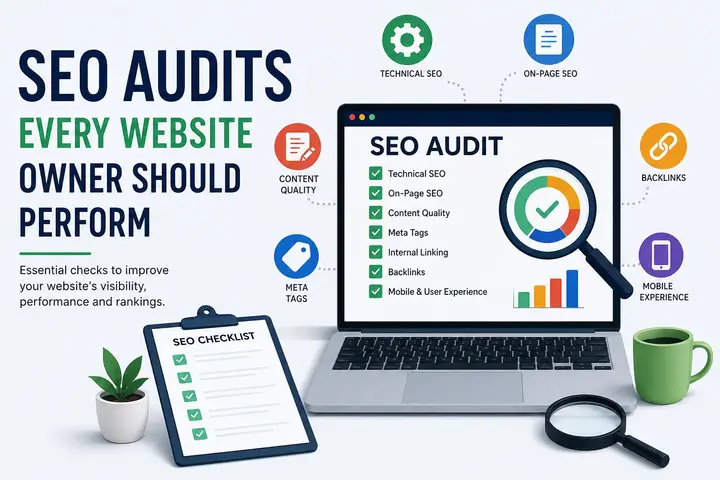
Your website may look great, load quickly, and even publish high-quality content regularly. However, if your search traffic has stalled or rankings have dropped, hidden SEO issues could be the reason.
Search engines constantly update how they evaluate websites. At the same time, websites evolve with new pages, plugins, design changes, and content updates. Without regular reviews, small technical or on-page issues can quietly affect your visibility in search results.
This is where SEO audits become essential. Understanding the importance of an SEO audit helps website owners identify problems before they impact traffic, improve user experience, and maintain strong search engine performance.
In this article, we'll learn about the key checklist for SEO audits that every website owner should follow and how it contributes to long-term organic growth.
1. Technical SEO Audit
Technical SEO forms the foundation of your website's search performance. Even excellent content may struggle to rank if search engines cannot crawl or index your pages efficiently. A technical audit should include checking:
- Crawl errors
- Broken internal links
- XML sitemap accuracy
- Robots.txt configuration
- HTTPS implementation
- Core Web Vitals
- Mobile responsiveness
- Duplicate URLs
- Brand Name Consistency in Schemas and HTML
Google recommends ensuring that pages are easily crawlable and provide a fast, user-friendly experience. Regular technical audits help uncover issues before they become major ranking obstacles.
2. On-Page SEO Audit
Every page should clearly communicate its intent to both users and search engines. Review important on-page elements such as:
- Page titles
- Heading structure (H1, H2, H3)
- URL structure
- Internal linking
- Image alt text
- Keyword placement
- Content freshness
Avoid creating multiple pages targeting the same keyword, as keyword cannibalization can reduce overall ranking potential.
One of the biggest benefits of an SEO audit is identifying pages that require optimization instead of creating unnecessary new content.
3. Meta Tags Review
Meta titles and meta descriptions are often the first impression users get in search results. Although meta descriptions are not direct ranking factors, compelling titles and descriptions can significantly improve click-through rates.
Pay close attention to optimize:
- Title length
- Description length
- Duplicate meta tags
- Missing metadata
- Keyword relevance
Understanding the importance of meta tags helps ensure that every important page communicates its value effectively within search engine results pages (SERPs).
Before publishing updates, it's helpful to test how your snippets will appear using a meta tags preview tool. This allows you to optimize readability and avoid titles or descriptions being truncated.
4. Content Quality Audit
Not every published page continues to deliver value over time. Review your content periodically to identify:
- Outdated information
- Thin content
- Duplicate articles
- Low-performing pages
- Missing internal links
According to Google's Search Quality guidance, helpful, people-first content should demonstrate experience, expertise, authority, and trustworthiness (E-E-A-T).
Rather than publishing more content, improving existing high-potential pages often delivers better SEO results. For example, updating statistics, adding FAQs, improving examples, and refreshing screenshots can significantly improve content performance.
5. Internal Linking Audit
Internal links help search engines understand your site's structure while guiding visitors to related content. Always check whether:
- Important pages receive enough internal links
- Anchor text is descriptive
- Orphan pages exist
- Navigation remains logical
A strong internal linking strategy distributes authority across your website pages and improves content discoverability.
6. Backlink Profile Audit
Backlinks remain one of the strongest ranking signals, but quality matters far more than quantity. Review your backlink profile regularly to identify:
- Spammy domains
- Toxic links
- Lost backlinks
- New referring domains
- Link growth trends
Tools like Google Search Console and reputable SEO platforms like Semrush and Ahrefs can help monitor your backlink health.
Instead of chasing large numbers of links, focus on earning relevant mentions from trustworthy websites within your industry.
7. Mobile and User Experience Audit
Google primarily uses mobile-first indexing, meaning your mobile website largely determines how your pages are evaluated. Review areas including:
- Mobile responsiveness
- Navigation simplicity
- Button spacing
- Readability
- Loading speed
- Pop-up usability
A poor mobile experience often increases bounce rates and reduces conversions, even if rankings remain stable.
Common SEO Audit Mistakes to Avoid
Many website owners perform audits but overlook important details. Some common mistakes include:
- Only checking rankings instead of underlying issues
- Ignoring technical warnings
- Forgetting image optimization
- Publishing duplicate metadata
- Never updating older content
- Fixing problems without measuring results
An SEO audit should become an ongoing process rather than a one-time project.
Why Regular SEO Audits Matter
Search algorithms evolve continuously. New competitors emerge, website content changes, and technical issues can appear unexpectedly. Regular SEO audits help you:
- Detect technical issues early
- Improve website usability
- Increase organic visibility
- Strengthen content quality
- Support better indexing
- Improve click-through rates
- Build long-term search performance
Whether you manage a business website, blog, or eCommerce store, consistent audits help maintain a healthy SEO foundation.
Conclusion
Performing regular SEO audits isn't just about fixing errors—it's about creating a better experience for both users and search engines.
From technical health and content quality to understanding the importance of meta tags and testing snippets with a meta tags preview tool, each audit plays a role in improving overall website performance.
The greatest benefits of an SEO audit come from identifying opportunities before they become costly problems. By making SEO audits part of your regular website maintenance routine, you'll be better positioned to improve rankings, attract qualified visitors, and achieve sustainable organic growth over time.