Europe Grid-Scale BESS: Investment Signals Across a Changing Power System
Posted by Swapna Supekar
Filed in Other 20 views
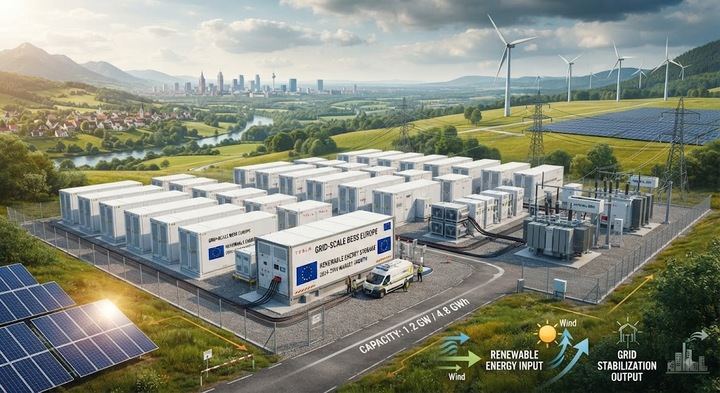
Why Utility-Scale Batteries Are Becoming Essential to Europe’s Grid
Europe’s energy transition is creating a more complex relationship between generation, networks, markets, and demand. Solar and wind resources can produce electricity at times that do not perfectly match consumption, while grid congestion can limit how much power moves between regions. Grid-scale battery energy storage offers a flexible way to manage some of these mismatches.
The Europe Grid-Scale Battery Energy Storage (BESS) Market is expanding alongside the broader modernization of European power systems. Battery projects can respond in milliseconds, making them suitable for frequency-related services, while their stored energy can also be used for market trading and renewable shifting. Their combination of speed and controllability differentiates them from many conventional flexibility resources.
One significant trend is the increasing attention to battery duration. Early projects often emphasized short-duration applications because they matched established lithium-ion economics and ancillary-service needs. As renewable penetration rises, however, some developers and policymakers are considering longer durations that can move larger amounts of energy across several hours.
Europe Grid-Scale Battery Energy Storage (BESS) Market Trends increasingly reflect this shift toward application-specific design. A battery serving frequency response may prioritize power capability and rapid cycling, while a renewable-shifting project may prioritize energy capacity and predictable dispatch. The most appropriate configuration therefore depends on the service being targeted.
Grid-scale storage can also support renewable project economics. During periods of strong wind or solar production, electricity prices may fall because supply is abundant. Batteries can absorb some of this output and release electricity later. This can reduce exposure to unfavorable pricing patterns, although actual value depends on market spreads, battery efficiency, degradation, and operating limits.
Network considerations are equally important. Transmission upgrades remain essential for moving electricity across regions, but batteries can provide localized flexibility in selected circumstances. A battery placed near a constrained node may help manage short-term congestion or provide operational support. Its usefulness depends on grid rules and whether operators can procure the required service.
Europe’s diverse electricity markets create both opportunities and complexity. Countries differ in balancing mechanisms, capacity arrangements, network charges, connection processes, and access to ancillary services. Developers operating across multiple markets must adapt project strategies to local conditions rather than assuming that a successful model in one country will automatically transfer to another.
Technology innovation is broadening the sector. Lithium-ion remains widely deployed, but developers are also assessing sodium-ion, flow batteries, and other alternatives. These technologies may become relevant where project requirements emphasize different combinations of safety, materials, duration, cycle life, and cost. Manufacturing scale and supply-chain maturity will influence how quickly alternatives can compete.
Digitalization is another important development. Battery assets generate extensive operational data covering temperature, state of charge, cell performance, charging behavior, and market activity. Advanced software can use these signals to optimize dispatch and protect asset health. Predictive maintenance can also identify potential equipment issues before they cause significant downtime.
Commercial structures are evolving alongside technology. Some projects rely on merchant revenues, while others seek income through capacity arrangements, tolling structures, or agreements with utilities and renewable developers. Hybrid approaches can combine predictable revenue with market exposure, although they require careful management of contractual restrictions and operating priorities.
The future development of European grid-scale storage will depend on how markets value flexibility and how quickly network and renewable investment progress. Their role will be strongest where technical capability aligns with a defined system requirement.
For companies assessing this market, the key issue is not simply how many batteries will be installed. It is how projects will be designed, connected, financed, operated, and integrated into complex electricity markets. That perspective can help industry participants understand where storage opportunities may emerge Europe.