Habit Tracker: A Simple Way to Build Better Daily Habits
Posted by haya ch
125 views
Habit Tracker: A Simple Way to Build Better Daily Habits
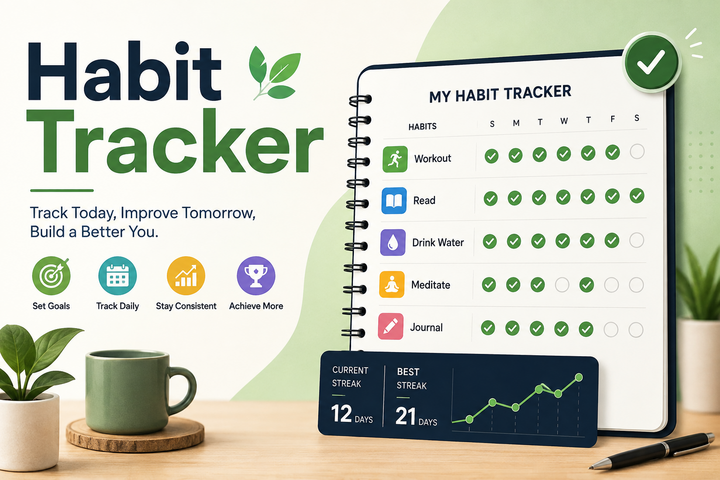
A habit tracker is a practical tool that helps you record daily actions and stay consistent with the routines you want to develop. Whether your goal is exercising regularly, reading more, drinking enough water, sleeping on time, or improving productivity, tracking your progress can make your goals easier to manage. Instead of depending entirely on motivation, you can use a simple tracking system to see your progress, identify missed days, and stay focused on long-term improvement.
What Is a Habit Tracker?
A habit tracker is a system used to monitor whether you complete a particular habit each day. It can be a paper calendar, spreadsheet, mobile application, or web-based tool. The basic idea is simple: choose a habit, decide how often you want to complete it, and record your progress.
For example, if you want to develop a reading routine, you might set a goal of reading for 20 minutes every evening. Each time you complete the activity, you mark it as done. After several weeks, you have a clear record showing how consistently you followed the routine.
This simple approach can make personal goals feel more concrete. Rather than wondering whether you are making progress, you can look at your tracking history and understand your performance.
Why Is Habit Tracking Important?
Building a new routine can be challenging because results are not always visible immediately. A habit tracker provides a visual reminder that small actions can add up over time.
One important benefit is accountability. When you record your behavior, you become more aware of how often you actually follow your plans. This awareness can encourage you to make better decisions throughout the day.
Tracking can also help you recognize patterns. You may discover that you exercise more consistently in the morning or that you frequently skip reading when you stay up late. These observations can help you make practical changes to your routine.
Most importantly, tracking shifts your attention from perfection to consistency. Missing one day does not erase your previous progress. The objective is to return to the habit and continue moving forward.
How Does a Habit Tracker Help With Consistency?
Consistency becomes easier when progress is visible. A habit tracker can turn an abstract goal into a series of small daily actions.
Suppose you want to improve your fitness. Instead of focusing only on a large goal such as losing weight or becoming stronger, you can track simple behaviors such as walking, stretching, or completing a workout.
Every completed activity becomes evidence that you are following your plan. Over time, these small successes can create a sense of progress and encourage you to keep going.
Digital tracking tools can make this process even easier by providing reminders and progress views. When you receive a reminder at the right time, you are less likely to forget an activity that you planned to complete.
What Habits Can You Track?
A habit tracker can be used for many areas of everyday life. The most useful habits are usually specific, realistic, and connected to a meaningful goal.
Health and Fitness
Health-related routines are among the most common habits people track. You might monitor daily walks, workouts, stretching, water intake, sleep schedules, or meditation.
The purpose is not to create a complicated health plan. Instead, tracking helps you become more aware of the small behaviors that contribute to a healthier lifestyle.
Productivity
You can also use tracking to improve your work and study routine. Reading, planning the next day, completing focused work sessions, reducing unnecessary screen time, or learning a new skill can all become trackable habits.
When these activities are recorded regularly, it becomes easier to understand which routines support your productivity.
Personal Development
Personal development often comes from small improvements repeated over time. Journaling, practicing a skill, reading books, learning a language, or spending time on creative activities can be monitored through a daily tracking system.
The key is to select habits that genuinely matter to you rather than trying to track every part of your life.
Daily and Monthly Habit Tracking
Daily tracking gives you a close-up view of your routine. You can quickly see whether today's habit was completed and maintain awareness of what needs attention.
Monthly tracking provides a wider perspective. Looking at several weeks together can reveal patterns that are difficult to notice on a single day. For instance, you may find that your consistency improves during certain weeks or that specific days are more difficult for maintaining your routine.
Using both approaches can make your tracking system more useful. A daily check-in keeps you focused on the present, while a monthly overview helps you evaluate longer-term progress.
Digital Habit Tracker vs. Paper Tracking
Traditional paper trackers remain useful for people who enjoy writing things down. A notebook or calendar can provide a satisfying way to mark completed habits and create a visual record.
However, digital tools can reduce the amount of manual work involved. A digital habit tracker may provide reminders, streak information, progress summaries, and organized views that are difficult to maintain on paper.
For people who prefer a browser-based solution, Expirel's Habit Tracker provides features designed to make daily habit monitoring easier. Users can record habits, view progress, maintain streaks, and receive reminders without relying on a traditional paper chart.
The better option depends on your lifestyle. If you enjoy physical planners, paper tracking may be enough. If you want automated reminders and accessible progress information, a digital solution can be more convenient.
How to Start Tracking Your Habits
Starting with too many goals can quickly make tracking feel overwhelming. A better approach is to begin with two or three habits that are realistic and meaningful.
First, choose a specific behavior. "Become healthier" is too broad to track effectively, while "walk for 20 minutes" is clear and measurable.
Next, decide when the activity will happen. Connecting a new habit with an existing routine can make it easier to remember. For example, you might read after dinner or stretch before going to bed.
Finally, record your progress consistently. Do not abandon the system because of an occasional missed day. A missed day is useful information because it can help you understand what interrupted your routine.
Tips for Getting Better Results
The best tracking system is one that feels simple enough to use every day. Avoid adding unnecessary habits simply because they sound productive.
Set realistic expectations and give yourself time to develop a routine. Some habits may become easier quickly, while others require more patience and repetition.
It can also help to review your progress regularly. At the end of each week, look at the habits you completed and consider what made them easier or harder. This small review can help you adjust your schedule and make your routine more practical.
Another useful approach is to focus on progress rather than perfection. A strong routine is not one where you never miss a day; it is one where you can recover from interruptions and return to your plan.
Make Habit Tracking Part of Everyday Life
A tracking system works best when it becomes part of your normal routine. Choose a convenient time to update your progress, such as after breakfast or before going to sleep.
Keeping the process quick can also improve consistency. If recording a habit takes only a few seconds, there is less resistance to doing it regularly.
Over time, your tracking history can become a useful record of your behavior. You can see which routines have become consistent, which ones need more attention, and where your daily schedule could be improved.
Build Better Routines One Day at a Time
A habit tracker does not magically create discipline, but it can provide the structure needed to make consistency easier. By recording small actions, reviewing your progress, and learning from missed days, you can create routines that fit your actual lifestyle.
The most effective approach is to start small and focus on habits that support your personal goals. Whether you choose a notebook, spreadsheet, or digital platform such as Expirel, consistent tracking can help turn intentions into repeatable actions.
Better habits are usually built through small decisions made repeatedly. When those decisions become visible, it becomes easier to understand your progress and keep moving toward your goals.