How Carbon Monoxide Exposes Gaps in Your Breathing Air System
Posted by Air & Vacuum Process Inc
205 views
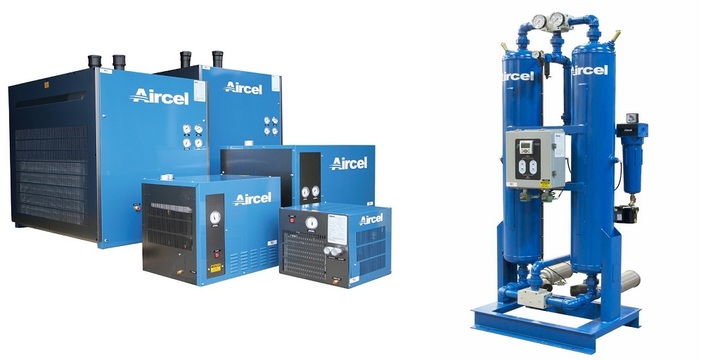
Carbon monoxide doesn't announce itself. No odor, no taste, no visible presence in the air. Workers in spray paint booths, sandblasting enclosures, and confined spaces breathe it in without any signal from their senses, and when headaches or dizziness show up, they attribute them to a long shift rather than the air supply. A breathing air system that doesn't actively monitor for CO gives workers false confidence that what they're breathing is safe.
What a Breathing Air System Knows That Workers Don't
The human body has no reliable mechanism for detecting CO at dangerous concentrations. OSHA sets the permissible 8-hour exposure limit at 35 ppm. At 200 ppm, workers experience headaches within a couple of hours. At 1,600 ppm, conditions become life-threatening in under an hour. None of those thresholds produce any physical sensation in the air itself, which means a breathing air system without a continuously operating CO analyzer leaves workers without any warning at all.
Standard compressed air breathing system setups pull intake air through a compressor, and if that compressor sits near an idling engine, a diesel generator, or a loading dock with active truck traffic, CO enters the supply line before any filtration stage can catch it. Air quality standards under OSHA 29 CFR 1910.134 set the CO limit in a respirator air supply at 10 ppm for Grade D air. Reaching that limit doesn't require an equipment failure. It just takes a poorly positioned intake and a combustion source nearby that nobody accounted for when the system went in.
The Environments Where a Breathing Air System Failure Gets Serious Fast
Spray painting operations draw supplied air for worker protection inside the booth, but CO risk often originates outside it. A breathing air compressor pulling intake near a parking structure, a forklift corridor, or any combustion source pushes CO into the supply before the filtration system for breathing air ever processes it. The filtration stages handle moisture, particulates, and hydrocarbons, but CO at intake concentrations can pass through without triggering any alarm unless a breathing air system includes real-time CO monitoring as part of its design.
Confined space entry and sandblasting enclosures raise the stakes considerably. Workers in those environments cannot step outside if they feel off. They depend entirely on an air purification system or supplied respirator because the surrounding atmosphere is already unsafe to breathe. CO contamination in those situations becomes a critical exposure event with no easy exit.
High-pressure breathing air systems used for SCBA refill stations, industrial diving, and fire department equipment carry the same exposure profile. OSHA breathing air requirements for Grade D air specify CO concentration limits, minimum oxygen content, and dew point standards. Meeting those requirements consistently means monitoring continuously, not testing once at the start of a shift and assuming conditions hold.
What Time of Day Does Your Breathing Air System Get Tested?
CO concentrations in a supply line don't stay fixed throughout a workday. A breathing air system serving a facility where combustion sources run on variable schedules produces different air quality at different times. A sample test taken at 7 a.m. captures one moment. By noon, when diesel trucks are staging at a nearby loading dock and the compressor intake draws from the same airspace, concentrations may have climbed well past the 10 ppm Grade D limit without anyone noticing.
A continuously operating CO analyzer monitors that variation and triggers an alarm when levels exceed a preset threshold. Workers get a warning they'd never receive from their own senses. Facility managers get documentation that the system responded correctly when conditions changed.
For operations specifying this kind of equipment, Air & Vacuum Process Inc. builds breathing air systems that treat CO monitoring and multi-stage filtration as standard requirements rather than optional features. Their systems are worth reviewing for any application where CO exposure is a realistic operational risk.
For More Information About Compressed Air Dryer System and Natural Gas Dehydration Unit Please Visit: Air & Vacuum Process Inc.