4 Unique Aspects of KA-BAR Knives (Specifically the USMC Fighting Knife)
Posted by The Knife Connection
Filed in Business 59 views
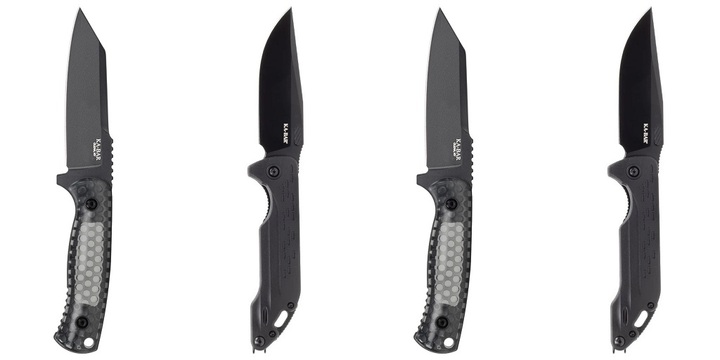
There are few knives in history with profiles as immediately recognizable as the USMC Fighting Knife from KA-BAR Knives. Perhaps the Buck 110 Folding Hunter can rival it, but the pickings are certainly slim.
Either way, the USMC Fighting Knife is an infamous knife. That’s partially due to its history, and partially due to the features it possesses that make it practical for the applications for which it is designed.
With that said, here are 4 features of this iconic knife that double down on practicality.
Not Just 1095, 1095 Cro-Van (with a Practical Blade Finish)
The classic KA-BAR knife is made with a special blade steel alloy. It’s 1095, a practical tool steel with a lot of history and practicality behind it (not to mention affordability), but it’s not just 1095. It’s a special grade called 1095 Cro-Van.
Your standard 1095 is iron with .95% carbon in it. It is a tough tool steel that can take a solid heat treatment for good edge retention. The one ding against it is that it rusts easily.
1095 Cro-Van has a small addition of both chromium and vanadium added to it. In the former case, the addition of chromium helps prevent corrosion, and in the latter, the addition of vanadium makes the steel both tougher and harder, for better resistance against wear and abuse.
Also, many KA-BAR Knives are made with a black Cerakote finish, which does two things: it reduces reflectivity, which can be a good bonus to improve discretion, and it also insulates the blade against corrosion.
A Stacked Leather Handle
The vast majority of modern tactical and service knives are made with synthetic scales like G10 or Micarta that are affixed to a knife’s full tang with fasteners. Many can be removed or upgraded as needed.
The KA-BAR Single Mark Utility Knife, for instance, is not modern, and it is not made with synthetic knife scales. Rather, it is made with a stacked leather handle.
The one thing about a stacked leather handle is that it will need a lot more care and attention compared to synthetic knife scales. With that said, there are many advantages to a stacked leather handle.
A stacked leather handle is much more comfortable in the hand, especially when you are not wearing gloves. It’s also safer in extreme cold because it does not conduct heat as readily as many synthetics.
Moreover, leather will offer excellent traction even if it absorbs water, oil or some other liquid. Ultimately, it’s worth the extra care and maintenance that it will require.
A Crossguard
Whether or not a modern service knife has a crossguard is a matter of design intent. On knives that are intended to be used for bushcraft or survival, the crossguard gets in the way.
But for a knife that it intended to be used as a combat knife, the crossguard can accomplish two useful things.
It can help prevent your hand from slipping up on the blade, and it can also protect your hand against an opponent’s strikes.
An Exposed Pommel
Many KA-BAR Knives are made with a hex nut that’s exposed as a pommel on the base of the tang.
The fact that the pommel is exposed means that you can use the nut as a crushing tool, which affords the knife better leverage.
Explore KA-BAR Knives in Detail
Want to learn more about KA-BAR knives like the Single Mark Utility knife? Visit The Knife Connection. They carry a number of KA-BAR knives and other classic knives from top brands like Cold Steel, OKC, Buck, ESEE, and more. Stop by their website and get in touch with them if you have any questions.
For more information about LT Wright and Karesuando Knives Please visit: The Knife Connection.