Is a Fixed Blade or a Folder Best for Me?
Posted by The Knife Connection
197 views
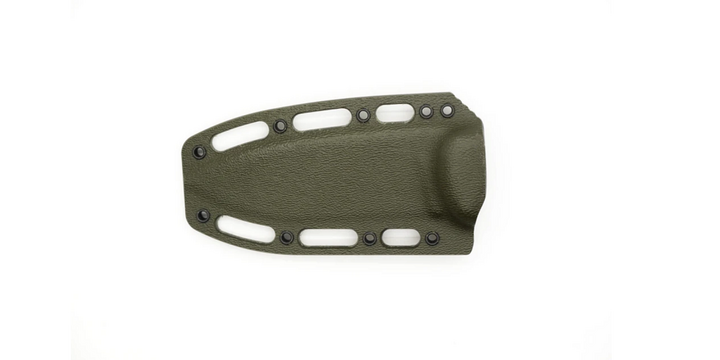
Among those who carry a knife everyday, whether for general utility or in the line of official duty, there are two main options: fixed blades or folders.
Which is for you will depend on your intended use case and application. This short post may help with that.
Why a Fixed Blade?
Fixed blades knives do not have a pivot point and require a sheath for carry, but there are many reasons to carry one, including the following:
- Strength and structural integrity. A fixed blade knife, especially one with a full tang, will be physically stronger and more durable than any folder.
- Versatile mounting options. A fixed blade knife with a Kydex sheath can be mounted for carry in a variety of configurations, not just tip down on the belt.
- Believe it or not, some fixed blade knives are very small, light and discreet, especially when neck carried.
- Simpler maintenance. Fixed blade knives have no moving parts, streamlining maintenance considerably.
Why Not?
Now let’s look at some reasons a fixed blade knife might not be ideal.
- For better or worse, even smaller fixed blades need a sheath, making them slightly less convenient than folders.
- No need for the extra structural integrity. Not every task requires the structural integrity of a fixed blade knife.
Why a Folder?
There are many people whose EDC knives are folders, and here are some of the reasons why.
- Convenience, no sheath needed. A folder does not require you to carry a sheath, which is just one less thing you have to have.
- Folders can be carried free inside a pocket, making them categorically more discreet, more of the time, than most fixed blade knives.
Why Not?
Still, there are some reasons that a folder might not make sense.
- Structural inferiority. Fixed blade fanatics will say that folders are “pre-broken” and they have a point. No locking knife is as strong as a fixed blade with a full tang, period.
- More maintenance. It is harder to clean and lubricate a folding knife, with its pivot mechanism and lock point.
Options in Folders
It’s also worth noting here that there is more than one type of folding knife out there. Here are some of your options.
- Traditional folders. Most traditional pocket knives have multiple blades and are non-locking, with slipjoint mechanisms. They also generally require both hands to open and close them.
- Conventional locking folders. Most modern locking folders have one blade and a deployment mechanism that requires only one hand to open, such as a flipper tab, thumb stud, or thumb hole.
- Assisted opening knives. Assisted opening knives have an internal spring that completes deployment of the blade once the knife has been partially opened, enhancing ease of use with one hand.
- Automatic knives. Automatic knives fully deploy with the push of a button or lever, requiring no other input from the user. A single action knife will deploy automatically but must be manually retracted, whereas a double action auto till both deploy and retract automatically.
Explore TKC Knives at The Knife Connection
Still not sure whether a fixed blade or a folder is for you? Check out the TKC Knives available online at The Knife Connection.
In addition to TKC Knives, The Knife Connection also carries scales and sheaths compatible with popular models like ESEE Knives.
And, on top of that, they carry an exhaustive catalog of folders and fixed blade knives from the top brands. Regardless of what you ultimately determine is for you, they have something that will fit the bill.
For more information about Great Eastern Cutlery and Bushcraft Knife Please visit: The Knife Connection.