EDC Knife Deployment: What Method Is Best?
Posted by The Knife Connection
294 views
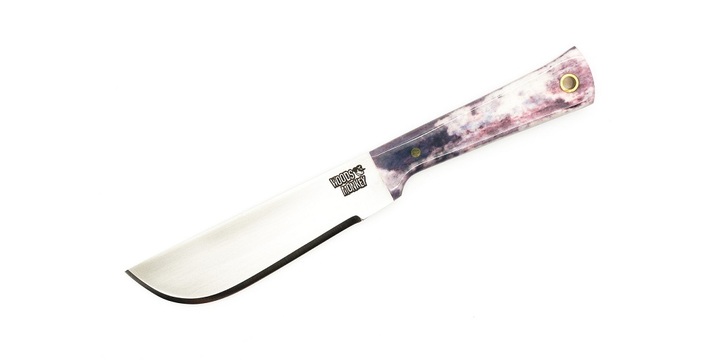
What method an EDC knife uses for deployment is one of the key features you should evaluate before you buy, as it will impact the usability of the knife as well as the learning curve you need to surmount to become proficient with the tool.
Here are some of the more common deployment methods used in most folders carried as EDC knives.
Nail Nicks
Nail nicks are old school, and pretty much obsolete in modern EDC knives, except traditional pattern pocket knives, which still use them.
While simple, affordable, and reliable, a knife with a blade that has a nail nick requires two hands to open, so at this point they have been pretty much been relegated to traditional pocket knives, such as those produced by Victorinox, Case, and Rough Ryder, though they do still occasionally show up in other patterns here and there.
Flipper Tabs
A flipper tab commonly manifests as an extension of the blade stock that protrudes from the top of the knife when the blade is closed.
To deploy the knife, you press on the tab and flip the blade open rapidly. Done properly, this is one of the fastest ways to deploy a folding knife. It also can be done with one hand, and with practice, the tab can be used against a sharp surface, like a table edge, to open the knife.
Another great thing about a flipper tab is that it can be incorporated as an additional deployment method, and combined with others like thumb studs or holes.
Flipper tabs are also naturally ambidextrous, so the design does not favor either right or left-handed users, though it does take a little getting used to.
Thumb Studs
Thumb studs are pretty common on most folding knives nowadays and all things considered are probably the most popular of all folding knife deployment methods.
They’re relatively easy to learn to use, and when a user becomes proficient he or she can open a knife with the thumb studs almost as quickly as an auto.
There is one drawback here, though. You need thumb studs on both sides of the blade to make the knife ambidextrous. Most knives have that, though.
Thumb Holes
Thumb holes are a type of deployment feature that some popular knives, like Spyderco knives, sport, and which are useful for many of the same reasons as thumb studs, but which some consider more practical.
The advantages of thumb holes are all the same as thumb studs. However, thumb holes lighten the overall knife because they remove material instead of adding it.
And, on top of that, thumb holes unlike thumb studs are naturally ambidextrous.
Not a Fan of Folders? Carry a Fixed Blade EDC Knife
While all of these deployment features can be useful in the hands of someone practiced with them, if you’re not a fan of them, consider a fixed EDC knife.
Not only won’t you need to learn how to use a specific deployment method, but there won’t be a lock to break or a pivot mechanism to maintain. Sometimes simple is the best.
Your Next EDC Knife Is Waiting for You at The Knife Connection
Here for a new EDC knife? Whatever it is you ultimately settle on, there are options waiting for you at The Knife Connection. They represent the top brands and carry a number of fixed and folding models that would serve admirably as an EDC knife.
Check out their online catalog and get in touch with them directly if you have any questions or would like a recommendation.
For more information about Esee 6 and Bradford Guardian 3 Please visit: The Knife Connection.