Why Menstrual Hygiene Still Needs Urgent Attention in Urban Poor Areas
Posted by wateraid india
Filed in Health 227 views
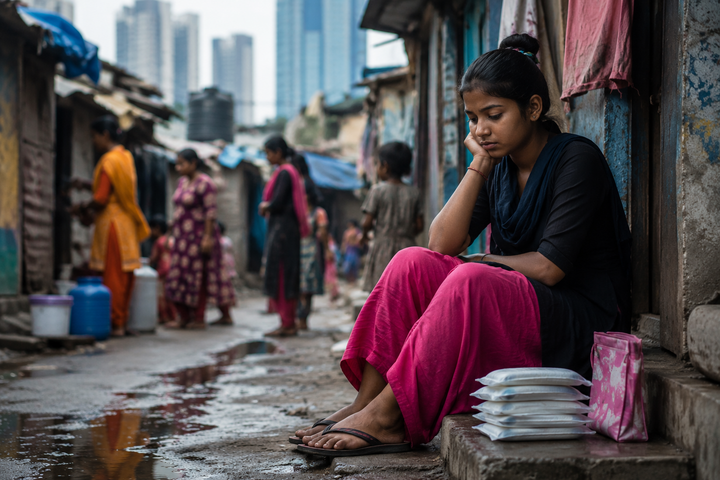
Menstruation is a natural biological process, yet for millions of women and girls living in India's urban informal settlements, it remains a source of shame, silence, and serious health risk. While much of the national conversation on menstrual hygiene has focused on rural India and school-going adolescents, the specific struggles of women in urban poor communities slum dwellers, migrant workers, and informal labourers such as waste pickers often go unnoticed. Their challenges are compounded by cramped housing, inadequate water and sanitation infrastructure, irregular incomes, and social taboos that make menstruation even harder to manage with dignity.
The Hidden Crisis in India's Cities
Urban poverty creates a particular kind of invisibility. Unlike rural areas, which have received sustained policy attention through national sanitation missions, informal urban settlements frequently fall outside the reach of civic services. Many households in these communities share toilets with dozens of others, have no reliable access to clean water, and lack private spaces to wash, change, or dry menstrual materials. For women engaged in physically demanding, informal work such as waste picking the problem is even more acute: irregular working hours, lack of nearby sanitation facilities at worksites, and minimal social security leave little room to manage periods safely.
Research consistently shows that lack of knowledge remains a major barrier. Many women and adolescent girls in these communities have had little formal education about the menstrual cycle, and what they do know is often shaped by myths and cultural taboos rather than accurate health information. This knowledge gap, combined with limited access to affordable sanitary products and safe disposal systems, pushes many women toward unhygienic practices that carry real health risks, including reproductive tract infections.
WaterAid India's Response: Working With, Not For, Communities
WaterAid India has been addressing this gap through a multi pronged strategy that goes beyond simply distributing products. Its approach centers on three pillars: building awareness to break taboos around menstruation, supporting the creation of menstrual-hygiene-responsive water and sanitation facilities, and helping communities build the long-term capacity to sustain these changes themselves.
One of WaterAid India's most significant urban interventions has been its participation in Saamuhika Shakti, a collective-impact initiative in Bengaluru working in solidarity with informal waste pickers and their families. The initiative brings together multiple organisations including Hasiru Dala, which champions the rights and livelihoods of waste pickers, alongside partners working on education, livelihoods, and child protection around a shared goal of improving quality of life for waste-picker communities. Within this collaborative, WaterAid India's specific role has been to improve access to water, sanitation, and hygiene services, with a strong emphasis on menstrual hygiene management for adolescent girls and women.
Rather than arriving with predetermined solutions, WaterAid India's programme model in these communities starts with participatory assessments mapping out exactly where households lack access to safe water and sanitation, and what specific barriers women face. Communities are then presented with options to choose from, and are asked to contribute a share of the cost toward any infrastructure built, a design choice intended to build a sense of ownership rather than dependency. On the awareness side, the organisation uses interactive tools such as body-mapping exercises and menstrual-hygiene-themed games to help women and girls understand their own reproductive health in an accessible, shame-free format, since many participants have previously had almost no factual grounding on the subject.
The results of this collaborative approach, and of complementary work by partners like Hasiru Dala, are notable. Community-level interventions in waste-picker settlements have driven a dramatic shift away from unsafe menstrual practices toward safer alternatives like reusable cloth pads and menstrual cups, with some communities reporting that the overwhelming majority of menstruating women and girls have made the switch after sustained awareness sessions. Thousands of individuals across these waste-picker communities have gained improved access to water and sanitation services as a direct result of the initiative.
Why This Work Still Matters
Menstrual hygiene cannot be solved through infrastructure alone, nor through awareness campaigns alone it requires both, delivered together and sustained over time. Urban poor communities face a unique combination of physical, economic, and social barriers that rural-focused programmes often don't address. Without safe toilets, private washing areas, and affordable products, even the most well-intentioned awareness campaign will fall short. And without breaking the silence and stigma around menstruation, even the best-built facility may go unused.
WaterAid India work with communities like Bengaluru's waste pickers illustrates what a genuinely community-led approach can look like: one that treats women not as passive recipients of aid, but as decision-makers in solutions that affect their own bodies, health, and dignity. As India's cities continue to grow, ensuring that urban poor communities are not left behind in the push for safe, dignified menstrual health will remain an urgent and unfinished task.