How a Digital Gloss Meter Improves Paint Testing Accuracy
Posted by Testronix Instruments
Filed in Music 337 views
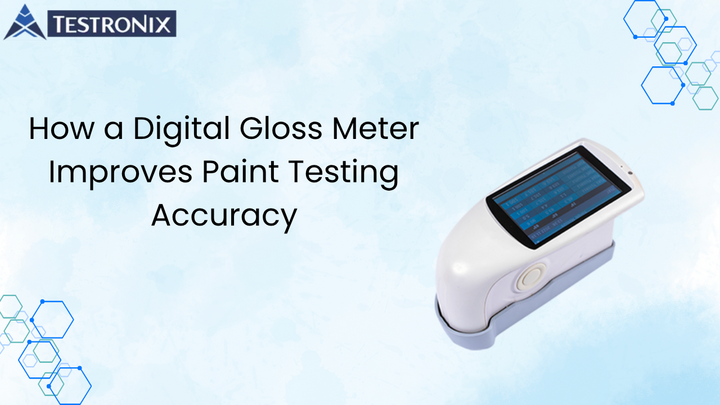
Achieving a consistent finish is essential for any painted surface. The visual appeal and protective qualities of paint coatings depend heavily on their final appearance. Paint manufacturers and applicators need reliable methods to quantify this appearance. This is where specialized paint testing equipment becomes crucial for quality assurance. A small variation in gloss can signal a flaw in the coating process. Using advanced tools ensures that every batch meets the required specifications accurately and consistently.
The Science Behind Gloss Measurement
Gloss is defined as the specular reflection of light from a surface. It is the property that determines how shiny a painted object appears to the eye. Measuring gloss is necessary because our perception of shine can be subjective. Standardizing this measurement allows for objective quality control checks. This process involves shining a light at a specific angle onto the surface and measuring the amount of light that is reflected back at an equal and opposite angle. This reading provides a numerical value for the surface's gloss level.
The angle used for measurement depends on the expected level of gloss. High-gloss surfaces are typically measured at 20 degrees. Semi-gloss surfaces often require a 60-degree geometry. Very low-gloss or matte finishes are usually tested using an 85-degree angle. Historically, manual devices offered a basic way to check these values. However, the move toward sophisticated, modern paint testing equipment has dramatically improved reliability. This shift ensures the data collected is dependable for complex manufacturing environments.
Why Digital is Superior for Accuracy
Traditional, analog methods of gloss measurement often introduce human error and inconsistencies. These older devices rely on moving parts and manual reading, which can lead to variance between different operators. Such variations make it difficult to maintain tight quality standards across production batches or between different testing facilities. Accuracy and reproducibility are vital goals in any rigorous testing environment. A digital gloss meter solves these long-standing issues by automating the measurement process completely.
Digital instruments provide precise, repeatable readings displayed instantly on a screen. They eliminate the subjectivity inherent in analog readings. Furthermore, many digital models offer advanced calibration features that ensure sustained accuracy over time. Reputable suppliers like Testronix Instruments understand that precision instrumentation is non-negotiable in the paint industry. Their devices provide the reliable data points necessary for maintaining superior product quality and minimizing material waste.
Calibration and Consistency
Proper calibration is the cornerstone of accurate gloss testing. A digital gloss meter must be calibrated frequently against certified reference standards. This ensures that the instrument is measuring correctly across its entire scale. Manufacturers provide certified tiles with known gloss values for this purpose. Ignoring regular calibration will eventually result in unreliable data, regardless of how advanced the instrument is.
Modern digital meters often include internal memory to store multiple calibration points. This feature allows technicians to quickly verify the device’s performance before starting a test sequence. When technicians use high-quality paint testing equipment, they can be confident in the resulting data. The ability to store and compare readings over time is invaluable for troubleshooting and process improvement.
The Advantage of Multi-Angle Measurement
Different surfaces and applications demand different measurement angles. Many advanced digital gloss meters now feature multi-angle capabilities. These devices can measure gloss at 20°, 60°, and 85° simultaneously. This is a significant advantage for coatings that exhibit complex reflective properties.
The multi-angle capacity allows for a more comprehensive assessment of surface quality. It eliminates the need to switch between different instruments for various gloss levels. This saves considerable time in the quality control lab. For example, a reliable supplier like Testronix Instruments may offer meters that integrate all three geometries into a single handheld unit. This integration streamlines the testing process, making quality checks faster and more thorough.
Integration with Quality Control Systems
Beyond the physical measurement, a digital gloss meter excels in data management. Most modern devices can connect to computers or quality control networks. This allows test data to be immediately logged and analyzed. Technicians no longer need to manually record readings, which further reduces the possibility of error.
This seamless integration is a major step forward for quality assurance. It provides an audit trail for every single test performed on a paint batch. The stored data can be used for statistical process control and long-term trend analysis. When investing in new paint testing equipment, look for features that support this level of connectivity and data integrity.
Conclusion
The digital gloss meter has transformed the landscape of paint testing accuracy. It offers a leap in precision and reproducibility compared to its analog predecessors. For industries where surface finish and aesthetic quality are paramount, these instruments are indispensable. They ensure that the final product consistently meets the highest standards. Reliable manufacturers, including Testronix Instruments, continue to drive innovation in this essential category of quality control instrumentation. Upgrading to a digital meter is a smart investment in product consistency and customer satisfaction.