Non-Profit Web Development: Practical Steps for Mission-Driven Organizations
Posted by Dimai Kandi
Filed in Other 37 views
Grant reports, donor pledges, and public accountability define the financial landscape of every non-profit. That environment demands careful reasoning before any significant purchase. A website ranks among those purchases. It must work hard on your behalf without asking too much from your budget.
The real question is not whether you need a website. You do. The question is how to build one that earns its keep. Below is a stage-by-stage framework for answering that question with confidence.
Communicating Your Mission at First Glance
A visitor's willingness to engage depends on how quickly they grasp your purpose. Long-winded introductions and clever taglines rarely achieve that goal. Direct language paired with honest visuals does.
Lead with the essentials. State plainly who you serve and what outcome you pursue. Then show visitors exactly where to click if they want to help. Ambiguity at this stage costs you supporters you will never get back.
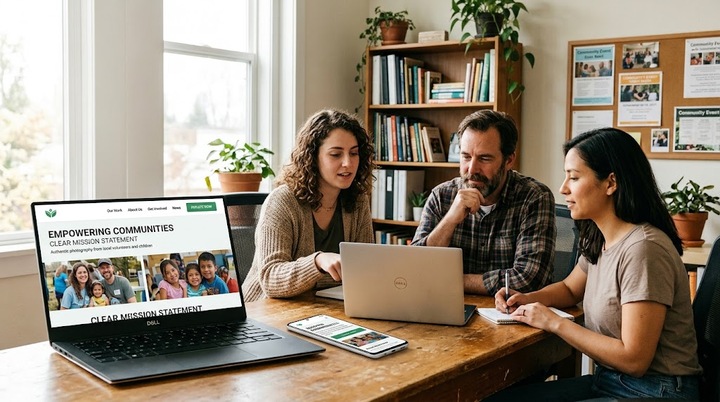
Affordable website design starts by asking what content matters most and trimming everything else. A clean homepage with real program photos communicates more sincerity than a gallery of stock images ever will. Audiences have become sophisticated about distinguishing staged photography from authentic work. Use your own pictures to close that gap instantly.
Keep navigation predictable and brief. Five or six primary links guide visitors without decision fatigue. Every extra item pushes the donate button further from view. Restrained menus let the mission take center stage.
Selecting a Builder Who Respects Your Limits
Every non-profit eventually crosses the threshold from planning to construction. That transition raises a fundamental staffing question. Do you assign the project internally or contract someone outside?
Some teams begin by hiring a cheap web designer and hoping for the best. The motivation is clear — keep spending minimal and launch quickly. But constrained timelines and thin budgets in inexperienced hands tend to produce fragile results. Those results become expensive liabilities once the site is live.
Affordable website design offers a more reliable cost-control method. It favors battle-tested themes and visual editors over full custom development. The hours saved on coding get reinvested in content planning and usability testing. That reallocation produces a stronger site overall.
Look for freelancers who have worked with mission-driven organizations. They understand grant cycles, volunteer dependencies, and donor communication. Local agencies may also offer adjusted rates as part of their community involvement. Widen your search before narrowing your choice.
Give your budget number openly in the first conversation. Designers cannot propose realistic deliverables without that anchor point. Finalize a written contract covering deliverables, timelines, and revision limits before construction begins. A shared document keeps both sides accountable.
Functions Your Site Must Perform Well
Regardless of how much you spend, the website has jobs to do. Each one directly influences whether visitors become supporters. Treat these functions as requirements rather than upgrades.
Giving Without Obstacles
The donate button must appear on every page with strong visual contrast. Once clicked, the giving process should feel effortless and brief. Two minutes is the target ceiling. Account creation must never stand between a donor and a completed gift.
Process payments through widely trusted services like Stripe or PayPal. Any cheap web designer should know how to integrate these without custom development. Their fee structures are transparent and their brand recognition reassures donors. Simplicity in the checkout flow correlates directly with completed donations.
Proof of Progress
Donors want evidence that their support creates measurable change. Present current program numbers alongside short testimonials from real participants. A literacy program that helped 150 adults read independently last quarter should say so. Concrete achievements carry more persuasive weight than mission language alone.
Open Financial Reporting
Charitable supporters respond well to organizations that reveal how funds move. A brief chart or summary showing fund distribution builds immediate credibility. If 85 cents of every dollar reaches programming, communicate that figure openly. Financial candor converts occasional givers into annual supporters.
Inclusive Design Standards
Web accessibility ensures that every potential supporter can navigate your site. Visitors using screen readers need descriptive alt text on every image. Those with low vision require sufficient contrast between text and background. Building inclusively reflects the same values your non-profit champions in the community.
Choosing Technology That Won't Drain Resources Later
Long-term maintenance costs depend heavily on the platform you select. WordPress delivers deep functionality and near-endless extensibility through plugins. It also demands recurring spending on hosting plans, premium tools, and security monitoring. Sites without regular technical care degrade faster than most teams expect.
For lean organizations, bundled platforms reduce complexity dramatically. Squarespace and Wix package hosting, security, and support into one monthly charge. Their built-in responsive templates work across screen sizes without extra configuration. Fewer technical dependencies create fewer budget surprises each quarter.
Non-profit pricing programs from major vendors further reduce your tool costs. Google Workspace for Nonprofits provides essential collaboration tools at zero charge. TechSoup unlocks deep discounts on software from numerous manufacturers. These resources are easy to access once your organization verifies its non-profit status.
Building Content Momentum Without a Content Team
Content keeps a website relevant to both donors and search engines. But ambitious publishing schedules overwhelm small non-profit teams within weeks. A measured cadence built around what you can sustain is the answer.
One well-crafted update per month maintains visible activity. Choose a recent program highlight, a community event recap, or an organizational reflection. Steady output signals momentum to supporters who revisit the site. Search rankings also respond to consistent, meaningful publishing.
Authentic video requires no professional crew or production budget. A volunteer holding a phone can capture raw moments from daily operations. Even a cheap web designer can integrate those recordings cleanly into the page structure. Donors often trust unpolished footage more than scripted promotional material.
Email collection rounds out your content approach effectively. Many first-time visitors need time before they feel ready to give. Pair a newsletter signup with a free downloadable resource to encourage participation. Regular communication keeps your cause visible until the moment of decision.
Ongoing Care for Your Digital Presence
Launching a website marks the beginning of a maintenance cycle, not its conclusion. Unchecked sites accumulate dead links and stale announcements quickly. Software updates left pending become security exposures over time. A small monthly investment in upkeep prevents large problems from forming.
Give one person clear ownership of the monthly site review. They should load each key page and verify smooth operation throughout. Swap out old program photos and update the copyright year in the footer. Archive expired events so the homepage always reflects current work.
Talk to your developer about continued support before the contract closes. Many professionals bundle updates, backups, and monitoring into modest monthly arrangements. Ongoing involvement from the original builder preserves consistency in code quality. Preventive maintenance is always less expensive than emergency recovery.
Letting Data Shape Your Next Steps
Intuition plays a role in organizational leadership. But website refinement works better when guided by concrete visitor data. Google Analytics delivers detailed behavioral tracking at no cost. It maps traffic sources, page engagement, and points of exit.
Focus on the donation conversion rate as your leading performance signal. If a thousand visitors produce only five completed gifts, friction exists in the process. The giving page may collect more information than donors are comfortable sharing. Alternatively, the homepage may lack a compelling enough opening.
Introduce individual changes one at a time and measure the effect. Move a call-to-action higher on the page or simplify a dense paragraph. A cheap web designer who knows analytics tools can streamline the measurement setup. Methodical experiments yield compounding results across successive months.
A Framework That Lasts
Non-profit web development on donor-funded resources demands steady, thoughtful decision-making. Cut features that add cost without supporting your mission or your giving goals. Invest in transparent communication, accessible design, and consistent upkeep. Those foundations support growth regardless of shifting digital trends.
Donors entrust organizations with something more valuable than money alone. A website that mirrors their generosity through honesty and clarity builds lasting partnerships. That partnership is the quiet engine behind every non-profit that endures.