Offshore Web Design: How to Hire Safely and Avoid Costly Mistakes
Posted by Dimai Kandi
Filed in Other 38 views
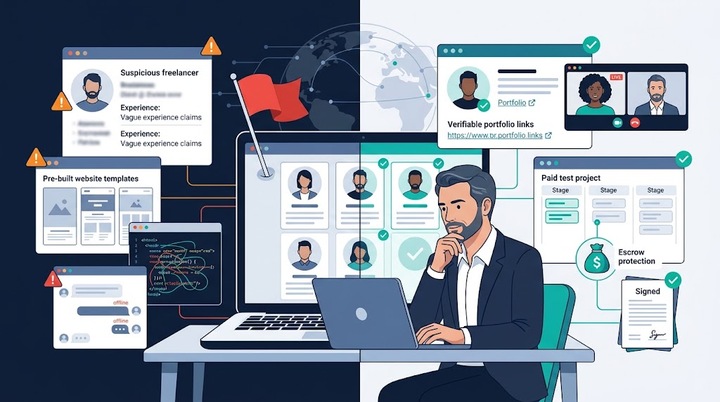
Price is normally the first consideration when a website is needed. Agencies in your area often charge rates that smaller businesses cannot absorb. That is why so many people explore options abroad. Advertisements featuring cheap website design look like a practical solution to a tight budget.
Then the troubling accounts begin to circulate. Work stops without explanation. Designs get replicated from elsewhere. The code delivered is messy and hard to maintain. These reports understandably make buyers hesitant about transferring money overseas.
Offshore hiring can still be a sound decision, though. Risk drops sharply when you follow a defined process. What follows explains how to identify a reliable cheap web designer while safeguarding both your funds and your project.
Draft a brief with complete detail
Failure often starts with the opening message. Sending "I need a website for my business" gives a designer almost nothing to act on. Remote teams perform best with exact requirements. When your description is vague, they fill the gaps themselves, and those gaps get filled incorrectly.
Record every requirement in writing. List all the pages you expect. Describe the specific features you need. Provide examples of sites you find effective and explain why. State clearly what you do not want. Include your logo, brand colors, and any copy you have ready.
Precision limits the room for error. A capable designer will follow up with clarifying questions. Anyone who agrees to everything without reading your brief should be avoided.
Review their portfolio with care
A polished screenshot proves very little. Anyone can download a template and present it as original work. Ask for live links instead. Visit each site and explore it thoroughly. Check the mobile layout. Measure the loading speed. A broken or slow site credited to them is a significant warning.
Where possible, request staging access. That confirms genuine involvement in the build. You can also ask for raw design files from Figma or Sketch. If only flat images are available, the work may belong to someone else.
Arrange a direct video conversation
You are hiring a person, not a company logo. A brief video call tells you far more than written messages. It accomplishes two important things.
First, it assesses communication. If a ten-minute call is hard to follow, a long engagement will be far worse. Being understood matters more than flawless grammar.
Second, it exposes middlemen. Many "designers" online are actually sales agents. They take your payment and subcontract the work at a lower rate. Ask them to explain a technical decision from their portfolio. Ask how they approach a particular animation. Hesitation or vague replies suggest you are speaking with a broker, not a builder.
Start with a small paid task
Never hand over the full budget on day one. That is among the most expensive mistakes people make. Begin with something limited. Pay them to build one landing page. Or ask them to convert a single design into HTML.
Compensate them fairly for this trial. Then watch how they work. Do they meet the deadline? Do they communicate well when problems appear? Is the code clean and structured?
The trial costs a little extra upfront. It also prevents a much larger disaster later. If it goes well, you can hire them for the full project confidently. If it fails, you lose only a small amount.
Use milestones and escrow for safety
Never pay everything in advance. Break the project into clear, measurable milestones. A common structure pays twenty percent to start, thirty percent for the design mockup, thirty percent for development, and twenty percent after launch.
Select a payment platform that offers escrow. The money is held by a third party until you approve the work. This keeps both parties accountable.
Define "done" in writing as well. Does the price include mobile optimization? Basic SEO setup? A set number of revisions? Put every detail in the contract. The agreement should also state that you own the final code and design files once payment is complete.
Verify English skills and time zone overlap
This sounds elementary, yet it ruins more projects than bad code does. You need to explain complex ideas simply. A serious language barrier creates frustration on both sides.
Time differences matter just as much. A team twelve hours ahead means half your day is spent waiting for responses. Find someone whose working hours overlap with yours by at least three or four hours. That overlap keeps collaboration smooth and the project moving forward.
Final thoughts
Offshore hiring remains an effective way to make a limited budget go further. But cheap web design is not effortless. It simply demands closer management.
Write a clear brief. Verify their work. Talk to them directly. Start small. Protect your money. Follow these steps, and you avoid the scams and the junk. You finish with a great site, a reliable partner, and more money in your bank account.
A cheap website designer can deliver strong results when the process is handled properly. Treat the search as a careful business decision rather than a hopeful gamble. That mindset separates a successful launch from an expensive lesson.