Ceramic vs. Porcelain Large Format Tiles: Durability, Cost and Best Uses
Posted by Dimai Kandi
Filed in Other 6 views
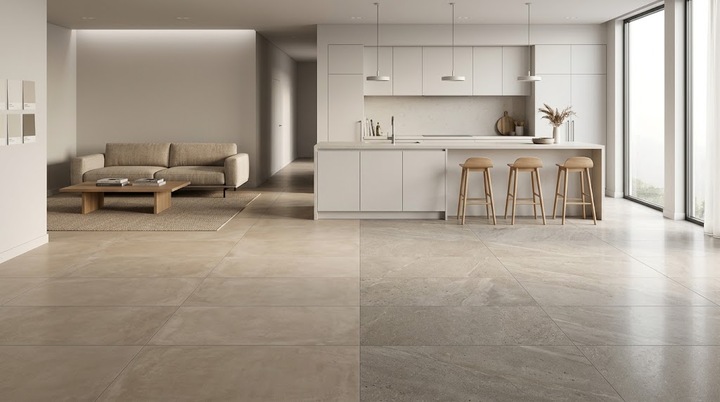
Tile aisles have changed dramatically over the years. Small squares that once covered every showroom floor are becoming harder to find. Large format tiles have filled that gap, and the reasons are straightforward.
Fewer grout lines. A cleaner look. Rooms that feel bigger and more seamless. What is not to like?
But once you start comparing options, you run into a decision that trips up a lot of homeowners: ceramic or porcelain? They look similar on a shelf. They are often displayed side by side. And the price difference can be confusing, sometimes significant, sometimes barely noticeable.
First, What Is the Actual Difference?
Both ceramic and porcelain tiles are made from clay and fired in a kiln. That is where the family resemblance ends. Porcelain is made from a finer, denser clay. It is fired at higher temperatures, usually around 1,200°C or more. The result is a harder, denser, less porous tile.
Standard ceramic is made from a coarser clay, often red or brown in color underneath the glaze, and fired at lower temperatures. It is softer and more porous, though the glaze on top gives it its color and protection.
In plain terms: porcelain is the tougher cousin. Ceramic is the cheaper, lighter, easier-to-cut one. Both have their place.
Durability: Where Porcelain Pulls Ahead
Let us start with the category porcelain wins outright.
Porcelain's density makes it resistant to just about everything. Water, stains, scratches, heavy foot traffic, freeze-thaw cycles outdoors. Its water absorption rate is under 0.5%, which is why it is rated for outdoor use in cold climates. Water gets in, freezes, expands, and porcelain shrugs it off.
Ceramic absorbs more water. Not a huge amount, but enough that it is generally not recommended for outdoor use in places where winters get cold. Indoors, though? It holds up fine in most rooms.
Now, here is where large format tiles complicate the picture a bit.
Large tiles, anything bigger than roughly 15x15 inches, with some now measuring five feet or more, are more demanding than standard tiles. They flex less across their span, which means the surface underneath has to be flat. Really flat. They are also heavier and harder to handle during installation.
Ceramic's softer body is actually a small advantage here if you are a DIYer. It scores and snaps with a basic cutter. Porcelain, especially in large sizes, often needs a quality wet saw and a diamond blade. Some installers charge more for porcelain for exactly this reason.
But once installed, porcelain large format tiles are hard to beat. They handle high-traffic areas, commercial floors, and busy households without complaint. If you are tiling an entryway, a kitchen floor, or a commercial space, porcelain is usually the safer call. Ceramic large format tiles work well on walls, in light-traffic bathrooms, and in rooms where the floor does not take a beating. Just know its limits.
Cost: More Complicated Than You Would Think
Here is where people get surprised. Yes, porcelain generally costs more than ceramic per square foot. Ballpark figures:
-
Ceramic tile: $1–$8 per square foot for material
-
Porcelain tile: $3–$15+ per square foot for material
But the gap has narrowed a lot. Mass-produced porcelain from major manufacturers is often priced close to mid-range ceramic. Meanwhile, handcrafted or imported ceramic can cost more than basic porcelain. The label alone does not tell you the price anymore.
The real cost difference often shows up in installation, especially with large format tiles.
Large tiles need more prep. The subfloor has to be flat within tight tolerances, or you will get lippage, where one tile edge sits higher than its neighbor. That means more self-leveling compound, more thinset, and more labor time. Installers may also charge extra for porcelain because it is harder and slower to cut.
So a realistic budget comparison for a 200-square-foot room might look like this:
-
Ceramic large format: cheaper material, cheaper cuts, but check the durability needs of the space
-
Porcelain large format: higher material and labor cost, but often a longer lifespan and less maintenance over time
If you are only staying in a home a few years, ceramic might be all you need. If this is your forever house or a rental property, porcelain's lifespan usually justifies the extra cost.
One more thing worth mentioning: visit a ceramic tile shop in person if you can. Online photos hide a lot. Tile color, texture, and finish look different under showroom lighting than on a screen, and seeing full-size slabs side by side makes the ceramic-versus-porcelain decision much easier. Staff at a good shop can also tell you what is in stock locally, which matters more than people expect when you need three extra boxes mid-project.
Where Each One Shines
Let us make this practical. Here is where each material makes sense.
Choose porcelain large format tiles for:
-
Kitchen floors. Heavy traffic, dropped pans, spills. Porcelain takes it all.
-
Entryways and mudrooms. Dirt, grit, and wet boots are no match.
-
Outdoor patios and walkways. The low water absorption rating is essential if you get freezing winters.
-
Commercial spaces. Restaurants, retail, offices — anywhere the floor needs to survive constant use.
-
Shower floors and wet areas. Less absorption means fewer problems long-term, though slip resistance matters more here. Look for textured finishes.
-
Fireplace surrounds and countertops. Porcelain handles heat well.
Choose ceramic large format tiles for:
-
Bathroom and accent walls. Large tiles on walls look fantastic, and walls do not take abuse. Ceramic's weight advantage helps here too.
-
Kitchen backsplashes. Easier to cut around outlets and windows.
-
Light-traffic bathrooms. A guest bath or powder room floor does not need porcelain-level durability.
-
Budget-conscious renovations. If you want the large format look without the price tag, ceramic delivers it.
-
DIY projects. If you are installing it yourself, ceramic is far more forgiving to work with.
A Few Things That Apply to Both
Whichever material you pick, large format tiles come with shared realities:
Your subfloor matters more than your tile choice. A slightly uneven floor that is invisible under small tiles becomes obvious under 24x48-inch ones. Budget for leveling compound.
Grout lines will be minimal, so what is left counts. Even two grout lines across a big tile surface stand out. Take time picking a grout color that works.
Rectified edges are worth it. Rectified tiles are cut to exact dimensions after firing, allowing tighter grout joints and a cleaner overall look. Most large format tiles are rectified, but double-check.
Buy 10–15% extra. Breakage happens. Dye lots vary. Running short mid-project is a headache nobody wants.
The Bottom Line
There is no universal winner here. It depends on the room, the budget, and how long you need the floor to last. If durability is the priority, or the tile is going somewhere tough, porcelain wins. It costs more upfront but rarely needs replacing.
If cost is the priority, or the tile is going on a wall or in a low-traffic spot, ceramic does the job nicely. Modern ceramic looks great and saves real money.
And if you are still torn, do what the pros do: pick your top two or three options, get samples, and live with them for a few days. Lay them in the actual room. Look at them in morning light and evening light. Tile is a long-term decision. A little patience before you buy beats regret after installation.
The best tile is not the most expensive one or the trendiest one. It is the one that fits the space, the budget, and the way you actually live.