How Tough Are Your Mosaic Floor Options? A Material-by-Material Guide
Posted by Dimai Kandi
154 views
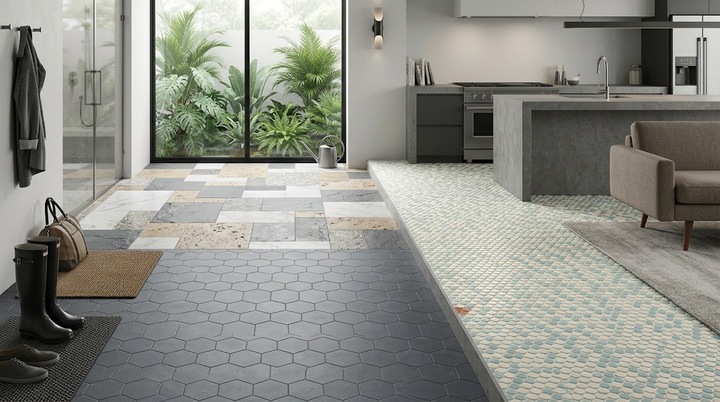
A floor is not a painting you hang and admire from a distance. It is a surface you walk on, drag things across, and splash water upon without much thought. The material beneath your feet matters far more than the color above it.
Showrooms make every option look spectacular under perfect lighting. But perfect conditions do not exist in real homes. Stains happen. Objects fall. Humidity lingers. Before selecting mosaic floor tiles, understanding how each material responds to these realities is essential.
Three materials dominate the floor mosaic market: porcelain, ceramic, and natural stone. Each has distinct strengths and real weaknesses. Here is an unvarnished comparison.
Porcelain: Engineered for Endurance
Porcelain begins with clay, but the transformation during manufacturing is dramatic. Firing occurs at temperatures ranging from 1,200 to 1,400 degrees Celsius. This process drives out virtually all moisture and fuses the clay particles into an exceptionally tight structure. The resulting tile is measurably denser and harder than its ceramic cousin.
That density makes porcelain mosaic floor tiles remarkably resilient under daily punishment. Gritty shoes, dragged furniture, and scattered debris leave minimal evidence on the surface. High-traffic corridors and entryways maintain their appearance over extended periods without visible degradation.
Water resistance is perhaps porcelain's most practical advantage. Absorption rates routinely fall below 0.5 percent. Liquids bead on the surface instead of penetrating the body. For bathrooms, kitchens, and laundry areas, this property alone justifies the material choice. In climates where moisture is constant, porcelain remains structurally unaffected.
Many porcelain products feature consistent coloring throughout the entire body of the tile. This through-body design means that surface damage does not reveal a contrasting material underneath. Small chips and nicks blend into the overall surface, maintaining the floor's cohesive appearance without tile replacement.
The downside surfaces during installation. Porcelain's density makes it resistant to cutting tools. Standard nippers and basic saws struggle with it. Diamond-blade wet saws are necessary, making professional installation strongly recommended for anything beyond a straightforward layout. That initial investment secures decades of reliable performance.
Ceramic: The Accessible Alternative
Ceramic occupies the opposite end of the durability spectrum. Fired at considerably lower temperatures, it retains more moisture and a softer internal structure. The tile's resilience depends almost entirely on the glaze applied to its face.
A quality glaze creates a smooth, hard surface that repels stains and handles routine wear. Daily foot traffic and regular cleaning do not pose problems for an intact glaze. The concern arises when impact forces exceed the glaze's tolerance.
Dropping a heavy object onto ceramic can crack or chip the surface coating. The softer clay beneath the glaze becomes immediately visible. That clay is typically terracotta red or plain white — colors that contrast sharply with the glazed finish. The damage is conspicuous and permanent at the tile level.
Unlike porcelain, ceramic does not offer through-body consistency. A chipped tile cannot hide its wound. Replacement is the only remedy for maintaining a uniform appearance. In spaces with minimal activity, this remains an occasional concern rather than a constant one.
Where ceramic earns its keep is in ease of handling. It cuts cleanly with basic hand tools. Drilling through it for pipe connections requires less effort and specialized equipment. Rooms with complicated geometry — numerous turns, fixtures, and irregular boundaries — benefit from ceramic's forgiving nature during installation.
The material also costs less per square meter. For extensive floor areas with moderate traffic expectations, the cumulative savings are meaningful. Just ensure the space does not demand the resilience that ceramic cannot consistently deliver.
Stone: Earth-Crafted Beauty with Earth-Crafted Demands
Nothing duplicates the visual depth of natural stone. Geological forces spanning millions of years create veining patterns, mineral deposits, and color variations that no manufacturing process can authentically reproduce. Marble, granite, slate, and travertine each carry a distinct geological fingerprint.
Performance varies dramatically by stone type. Granite stands among the hardest materials available for any flooring application. It resists both scratching and chipping with impressive consistency. In terms of pure durability, granite rivals even porcelain.
Slate brings a different set of qualities. Its naturally layered, textured face provides inherent slip resistance — a quality that polished surfaces lack entirely. When wet, slate maintains grip underfoot. This makes it a sensible choice for entryways exposed to rain or bathrooms with frequent water contact.
Marble attracts admiration for its elegant veining but demands honest assessment of its physical properties. It is a comparatively soft stone. Fine particles tracked indoors can scratch its surface gradually. Acidic substances pose an additional risk — wine, juice, vinegar, and certain cleaning agents cause chemical etching. These marks alter the surface texture permanently.
Travertine contains natural cavities formed during its geological creation. Manufacturers fill these holes with resin before the tiles reach market. Heavy, sustained foot traffic can gradually loosen those fills. The resulting uneven surface catches dirt and requires regular attention.
The universal concern across all stone varieties is porosity. Natural stone absorbs liquids when unsealed, often rapidly and deeply. An unattended coffee spill on an unprotected surface can produce an indelible stain. Prospective buyers evaluating stone mosaic floor tiles should appreciate this characteristic before selecting a variety.
Ongoing care is the non-negotiable companion of stone flooring. Sealing occurs before installation and must be repeated annually, or more often in moisture-heavy environments. Immediate spill response is critical. Stone rewards those who commit to consistent maintenance and challenges those who prefer minimal involvement.
Climate Considerations That Matter
Local environmental conditions influence flooring performance significantly. Heat and persistent humidity accelerate certain types of wear while leaving other materials unaffected. Selecting the right material means accounting for where the floor will actually live.
Porcelain handles tropical humidity without compromise. Its near-zero absorption rate means moisture never penetrates the body. Mold, mildew, and warping are non-issues. Chemical cleaning agents do not damage the surface. Its performance remains steady regardless of seasonal conditions.
Ceramic tolerates humidity adequately at the tile level. The glazed surface manages moisture without difficulty. The joints between tiles, however, tell a different story. Cement grout absorbs ambient moisture and supports mold growth in warm, damp conditions. Sealing slows this process but does not eliminate it entirely.
Stone presents the most climate-sensitive challenges. Sealer coatings break down faster under constant humidity than in dry environments. This accelerates the maintenance cycle considerably. Wet stone also becomes slippery — polished marble on a bathroom floor creates genuine safety hazards when wet. Textured alternatives like slate or matte porcelain offer far more reliable traction.
Consider your willingness to perform routine maintenance honestly. In humid urban settings, materials that demand less attention typically deliver better long-term satisfaction. Weigh the pleasure of beauty against the burden of upkeep before committing to mosaic floor tiles made from natural materials.
Grout Lines Deserve Your Attention
Mosaic patterns inherently generate more grout than large-format tile installations. Smaller pieces mean more joints, and every joint is a potential point of failure. This structural reality applies regardless of which tile material you choose.
Cement-based grout absorbs water, stains, and bacteria over time. In wet areas, discoloration appears quickly, followed by crumbling. The visual decline is unpleasant, but the underlying structural risk is more serious.
Post-installation sealing is essential. Epoxy grout represents a substantial improvement for long-term durability. It forms an impermeable barrier against water and staining that traditional grout cannot match. The application demands more patience and precision, but the performance difference justifies the effort.
When joints deteriorate, consequences extend well beyond aesthetics. Water passes through failed grout and reaches the adhesive layer beneath. The subfloor absorbs this moisture, leading to swelling and weakening. Tiles eventually loosen and lift. The entire floor may require removal. Protecting grout is protecting the foundation of your installation.
Selecting Wisely
Porcelain stands as the strongest performer across the broadest range of conditions. It endures heavy traffic, absorbs negligible moisture, and conceals minor damage through consistent body coloration. For active households and demanding spaces, it presents the lowest long-term risk.
Ceramic suits specific scenarios — limited budgets, low-traffic rooms, and projects where installation simplicity matters. Maintain spare tiles from your original purchase for inevitable replacements. Enter the arrangement with open eyes about its limitations.
Stone appeals to those who prize natural uniqueness and accept the work required to sustain it. Matching the stone variety to its intended use is vital. Reserve softer varieties for elegant, gentle spaces. Commit fully to the sealing and cleaning regimen.
When selecting mosaic floor tiles for your home, prioritise durability alongside design. Consider traffic patterns, moisture exposure, and your maintenance tolerance alongside color and texture. A thoughtfully chosen floor serves reliably for years and rewards the careful deliberation behind its selection.