What Makes EV Rental App Development Different From Traditional Car Rental Apps?
Posted by Steve Jonas
Filed in Technology 245 views
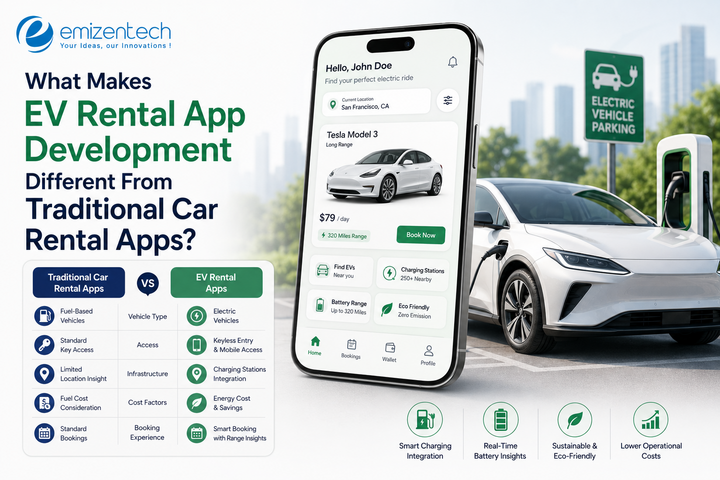
The transportation industry is shifting toward electric mobility, and rental businesses are adapting just as quickly. As governments encourage EV adoption and customers become more environmentally conscious, demand for electric vehicle rental services continues to grow. This shift has created new opportunities for businesses looking to launch specialized rental platforms.
Unlike conventional solutions, EV rental app development requires features that support battery-powered vehicles, charging infrastructure, and real-time energy management. Building an EV-focused platform is not simply about replacing fuel-powered cars with electric ones. It involves designing a digital ecosystem that helps users confidently locate, book, charge, and manage electric vehicles throughout their journey.
This guide explains why EV rental apps are growing rapidly, how they differ from traditional rental platforms, the essential features they need, and the business benefits they offer.
Why EV Rental Apps Are Growing Faster Than Traditional Rental Platforms
The rapid expansion of the electric vehicle market is changing customer expectations. Users now look for rental services that provide seamless EV experiences rather than simply offering vehicles for short-term use.
Rising Consumer Adoption of Electric Vehicles
More consumers are becoming comfortable driving electric vehicles as charging networks expand and EV prices become more competitive. Rental companies are responding by adding electric fleets to meet growing demand from business travelers, tourists, and environmentally conscious customers.
Government Support and Sustainability Initiatives
Many countries provide incentives for EV adoption through subsidies, tax benefits, and investments in charging infrastructure. These initiatives encourage rental businesses to invest in electric fleets while making EV rentals more attractive and affordable for customers.
Lower Long-Term Operating Costs
Electric vehicles generally require less maintenance because they have fewer moving parts than combustion-engine vehicles. Rental operators also benefit from lower fuel costs, helping improve profitability despite higher upfront vehicle investments.
Improved Charging Infrastructure
Public and private charging stations continue to expand across urban areas and highways. Modern applications can integrate charging station data, giving renters confidence that they can easily recharge during their trip.
Growing Demand for Smart Mobility Services
Customers increasingly expect digital experiences with real-time vehicle tracking, instant booking, contactless access, and mobile payments. EV rental platforms naturally align with these expectations by combining connected vehicle technology with convenient mobile experiences.
EV Rental App Development vs Traditional Car Rental Apps: Key Differences
Although both platforms simplify vehicle rentals, electric vehicle services require additional technology that addresses charging, battery performance, and connected vehicle management.
Battery Monitoring and Management
Traditional rental applications primarily monitor vehicle location and fuel levels. EV platforms must continuously display battery percentage, estimated driving range, charging status, and energy consumption to help customers plan trips effectively.
Charging Station Integration
EV users need access to nearby charging stations throughout their journey. Integrating interactive maps, charger availability, connector compatibility, pricing information, and navigation significantly improves the overall rental experience.
Range Prediction
Instead of estimating fuel usage, EV platforms calculate remaining driving distance based on battery capacity, driving behavior, weather conditions, terrain, and traffic. Accurate range predictions reduce customer anxiety during longer trips.
Smart Vehicle Connectivity
Electric vehicles typically generate more telematics data than traditional cars. Applications can remotely lock or unlock vehicles, monitor charging progress, receive diagnostic alerts, and provide real-time vehicle health information.
Energy Consumption Analytics
Fleet managers benefit from dashboards showing battery efficiency, charging frequency, energy usage, and vehicle utilization. These insights support better fleet planning, maintenance scheduling, and operational efficiency.
Charging Session Management
Unlike fuel refilling, charging requires time management. Applications can notify users when charging is complete, recommend nearby stations, estimate charging duration, and schedule charging sessions based on trip requirements.
Must-Have Features for EV Rental App Development
A successful EV rental platform combines standard rental functionality with specialized capabilities that simplify electric vehicle usage for both customers and administrators. Selecting the right technology expertise helps businesses implement advanced features such as real-time vehicle tracking, charging station integration, secure payments, and smart fleet management. An experienced car rental app development company can support the development of a scalable platform designed for modern EV mobility needs.
User Registration and Secure Authentication
Simple onboarding using email, phone verification, social login, or biometric authentication improves accessibility while maintaining security. Identity verification also helps rental businesses comply with regulatory requirements.
Real-Time EV Availability
Users should be able to view nearby electric vehicles, compare battery levels, filter by vehicle type, and check pricing before making reservations. Live fleet visibility reduces booking conflicts and improves customer satisfaction.
Integrated Charging Station Locator
Interactive maps displaying nearby charging stations, charging speed, connector types, availability, operating hours, and navigation directions make trip planning significantly easier for EV renters.
Live Battery Status Tracking
Displaying battery percentage, remaining driving range, charging progress, and estimated recharge time helps users make informed travel decisions and minimizes range-related concerns.
Digital Booking and Contactless Access
Customers expect to reserve vehicles, upload documents, complete payments, and unlock cars directly through the application. Contactless experiences improve convenience while reducing operational overhead.
Smart Route Planning
Navigation systems should recommend routes based on battery range while automatically suggesting charging stops when necessary. This creates a smoother driving experience, particularly for longer journeys.
Flexible Payment Integration
Support for multiple payment methods, digital wallets, subscription plans, promotional offers, and automated billing simplifies transactions and encourages repeat usage.
Fleet Management Dashboard
Administrators need centralized tools for vehicle tracking, maintenance scheduling, charging monitoring, pricing updates, booking management, customer support, and operational reporting from a single interface.
Business Benefits of EV Rental App Development
Launching an EV rental platform provides more than environmental advantages. It enables businesses to build future-ready mobility services while improving operational efficiency and customer engagement.
Expands Market Opportunities
The growing popularity of electric vehicles allows businesses to attract environmentally conscious consumers, corporate clients, tourists, and technology-focused customers seeking sustainable transportation options.
Builds a Competitive Advantage
Businesses that introduce EV-focused rental services early can establish stronger brand positioning while differentiating themselves from competitors that continue relying solely on conventional vehicle fleets.
Reduces Fleet Maintenance Expenses
Electric vehicles generally experience lower maintenance requirements because they eliminate many components found in traditional engines. Reduced servicing contributes to lower long-term operational costs and improved fleet availability.
Improves Fleet Utilization
Connected vehicle technology enables businesses to monitor fleet usage continuously, optimise reservations, reduce idle time, and allocate vehicles more efficiently across different service locations.
Supports Data-Driven Business Decisions
Analytics generated from customer behaviour, charging patterns, booking trends, battery performance, and vehicle utilisation help businesses refine pricing strategies and improve operational planning.
Enhances Customer Experience
Personalised recommendations, simplified booking, transparent battery information, charging guidance, and contactless rentals create a more reliable customer journey that encourages repeat bookings and positive reviews.
Final Thoughts
Electric mobility is no longer a future trend—it is becoming an essential part of modern transportation. Businesses entering the rental industry should recognize that electric vehicle platforms require far more than traditional booking functionality. Features such as battery monitoring, charging station integration, route optimization, telematics, and fleet analytics are fundamental to delivering a seamless user experience.
Choosing the right technology partner also plays a critical role in long-term success. Working with an experienced car rental app development company ensures your platform is designed to handle both today's operational needs and tomorrow's evolving EV ecosystem. With 12 years of expertise in building scalable mobility solutions, EmizenTech helps businesses create intelligent EV rental applications that improve customer satisfaction, streamline fleet management, and support sustainable business growth.
FAQs
1. What is EV rental app development?
EV rental app development is the process of creating mobile or web applications that allow users to search, book, unlock, manage, and return electric vehicles while providing features such as battery monitoring, charging station navigation, and real-time fleet management.
2. How is an EV rental app different from a traditional car rental app?
An EV rental app includes electric vehicle-specific capabilities such as battery status tracking, charging station integration, range estimation, charging notifications, and energy analytics. Traditional rental applications mainly focus on reservations, payments, and vehicle availability.
3. What features should every EV rental app include?
Essential features include user registration, real-time vehicle availability, battery monitoring, charging station locator, digital booking, contactless vehicle access, smart route planning, secure payments, fleet management dashboards, notifications, and analytics.
4. How much does EV rental app development cost?
The cost depends on application complexity, platform selection, third-party integrations, UI/UX design, backend infrastructure, and advanced technologies such as telematics or AI. A basic solution may start around $25,000–$40,000, while feature-rich enterprise platforms with connected vehicle capabilities can exceed $150,000–$300,000.