Hybrid Load Ports for 200mm & 300mm Wafers
Posted by Kensington Laboratories
Filed in Technology 505 views
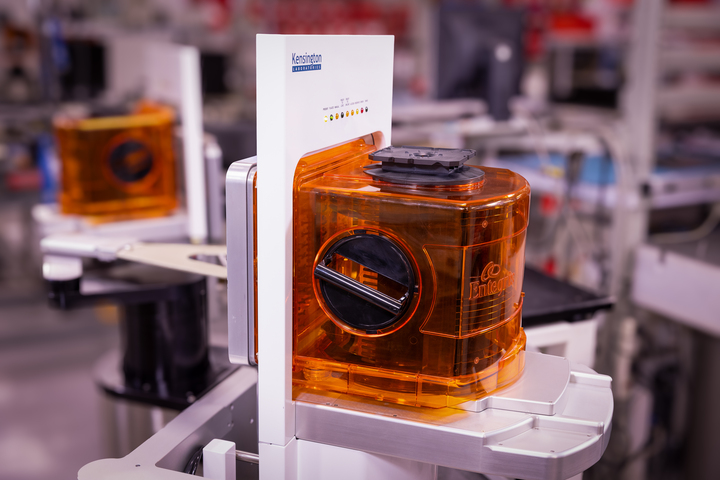
As semiconductor fabs are servicing both old and current nodes, the ability to properly deal with several wafer sizes is becoming progressively more complex. However, enterprises that have both 200mm & 300mm manufacturing lines usually face serious challenges in terms of space, pricing and process compatibility. This is where hybrid load ports for wafer handling can give a viable scalable solution.
If you have a 300mm load port, but want to add hybrid capabilities, you can efficiently process both wafer sizes without redundant equipment. Instead of separate systems, manufacturers may improve operations without compromising high precision and throughput.
What Are Hybrid Load Ports?
Hybrid load ports are next-generation load port designs that support 200mm & 300mm wafer handling. Load ports are components of semiconductor wafer handling systems, enabling seamless wafer loading, unloading, & transfer between carriers and tools.
Hybrid systems are designed with flexible mechanisms that support different cassettes, wafer sizes & transfer modes, unlike conventional systems that only support a single wafer diameter.
For facilities that use a 300mm load port, hybrid solutions ensure that existing processes are not interrupted.
How Hybrid Load Ports Work?
Hybrid load ports are designed to integrate seamlessly with wafer load port automation and other automation components. Their functionality typically includes:
-
Automatic detection of wafer size and carrier type
-
Adjustable mechanical interfaces for different cassette formats
-
Integration with EFEM wafer handling systems
-
Coordination with automated wafer handling robots for precise transfer
These systems are integrated into larger wafer transfer systems, allowing for efficient transport of wafers from storage to processing while ensuring that they are accurately aligned at both ends.
Key Components of Hybrid Wafer Handling Systems
To better comprehend their efficiency - it’s significant to look at the core components:
-
Load Port Interface - Handles FOUPs and cassettes for both wafer sizes
-
Robotic Transfer Systems - Ensures smooth, damage-free wafer movement
-
Pre-aligners - Maintains wafer orientation and positioning
-
Sensors & Control Systems - Enable automation and real-time monitoring
Together, these elements form a strong cleanroom wafer handling solution that assists superior semiconductor manufacturing.
The Advantages of Hybrid Load Ports
1. Operational Flexibility
Hybrid systems enable fabs to produce different wafer sizes without needing to invest in multiple systems, making it suitable for mixed production.
2. Reduced Equipment Footprint
Rather than multiple systems, hybrid load ports save space by integrating multiple functions into one.
3. Cost Efficiency
By avoiding the need for multiple sets of semiconductor manufacturing equipment, capital and operational costs can be reduced.
4. Improved Throughput
Seamless automation allows for quicker wafer handling and minimal downtime, improving throughput.
5. Cleanroom Compliance
Hybrid load ports comply with cleanroom standards, preventing contamination.
Comparison - Standard vs Hybrid Load Ports
|
Feature |
Standard Load Port |
Hybrid Load Port |
|
Wafer Size Support |
Single (200mm or 300mm) |
Both 200mm & 300mm |
|
Flexibility |
Limited |
High |
|
Space Utilization |
Requires multiple units |
Optimized footprint |
|
Cost Efficiency |
Higher (duplicate systems) |
Lower (combined system) |
|
Automation Integration |
Moderate |
Advanced |
This comparison highlights why hybrid load ports for wafer handling are becoming a preferred choice in modern fabs.
Integration with Advanced Automation
Hybrid load ports do not operate in isolation - they are a key part of semiconductor automation equipment. They integrate with:
-
EFEM wafer handling systems for controlled wafer transfer
-
Automated wafer handling robots for precision movement
-
Advanced wafer transfer systems for seamless workflow
This integration ensures consistent performance across the entire production line while supporting both legacy and advanced processes.
Cleanroom Considerations
Maintaining contamination control is critical in semiconductor manufacturing. Hybrid systems are designed as cleanroom wafer handling solutions, offering:
-
Enclosed environments to minimize particle exposure
-
Compatibility with ISO cleanroom standards
-
Reduced manual handling to prevent contamination
These features help maintain wafer integrity and improve overall yield.
When Should You Use Hybrid Load Ports?
Hybrid load ports are perfect for:
-
Fabs running both 200mm & 300mm processes
-
Facilities upgrading from legacy systems
-
Manufacturers aiming to optimize space and cost
-
Operations requiring flexible and scalable automation
If your plant currently has a 300mm load port, moving to a hybrid system can dramatically enhance operational productivity without any infrastructure improvements.
To Conclude
As the semiconductor production industry continues to expand, the need for flexible and effective handling solutions is becoming more critical. Hybrid load ports for wafer handling are a compromise of flexibility, automatable and cost effectiveness in one unit.
These technologies enable fabs to stay competitive and to optimize the utilization of their resources through the effective handling of 200mm and 300mm wafers.
To deliver innovative and reliable wafer handling solutions, collaboration with industry experts is essential. Trusted leaders in precision robotics and automation for the semiconductor sector, companies like Kensington Laboratories empower manufacturers to build efficient, scalable, and future-ready production environments.