How Automated Load Port System Improve Wafer Handling Efficiency
Posted by Kensington Laboratories
Filed in Technology 721 views
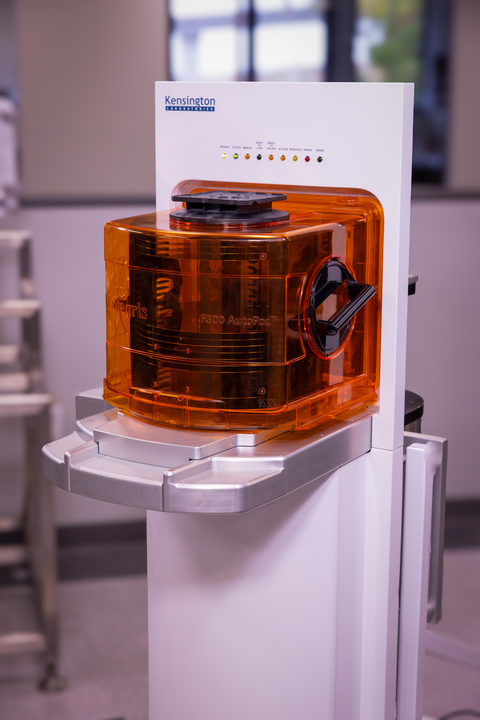
Both efficiency and accuracy are important aspects of semiconductor manufacturing. Due to increased production capacity and tighter tolerances being required, manual operations become more and more difficult to achieve. It is in such scenarios that automated load port systems are required to increase efficiency.
In modern fabs, load port systems are required to increase the efficiency of semiconductor material handling. In particular, load ports are utilized to transfer wafers while minimizing human interaction in order to increase the efficiency of the process.
With the complexity of material handling in semiconductor processing facilities increasing, there is a need to automate each step in the process. Load ports are one of the interfaces that facilitate this process.
What Are Automated Load Port Systems?
Automated load port systems are specialized components used in semiconductor fabs to load and unload wafer carriers such as FOUPs onto processing equipment. They act as a bridge between external wafer transport systems and internal processing tools.
Key Functions
-
Docking and undocking FOUPs securely
-
Aligning wafer carriers with precision
-
Enabling automated wafer transfer
-
Ensuring adherence to cleanroom protocols
This piece of equipment is highly significant for the automated processing machines in a fab since it assists in transporting the wafers from a particular stage to the following swiftly and effortlessly, especially with the integration of a 300mm load port.
Why Wafer Handling Efficiency Matters
Efficient wafer handling is essential because this process is delicate; any mistake made during the handling may result in defect production quality and operational performance.
Key Challenges in Manual Handling
-
Greater contamination risks
-
Less accurate handling
-
Higher labor dependency
-
Slower processing times
By adopting wafer handling automation, fabs can reduce these risks and maintain consistent quality across production cycles.
How Automated Load Port Systems Improve Efficiency
1. Precision and Alignment
Automated systems ensure accurate positioning of wafer carriers. This reduces misalignment issues and prevents damage during transfer.
-
High-precision sensors
-
Automated calibration
-
Consistent placement
2. Reduced Contamination Risk
Clean rooms demand high control regarding particle exposure. Automated equipment reduces human interactions, thus reducing contamination chances.
-
Sealed FOUP interfaces
-
Controlled docking mechanisms
-
Reduced manual touchpoints
3. Increased Throughput
Increased speed in transferring wafers allows fabs to process larger volumes with maintaining high-quality results.
-
Quick load & unload operations
-
Continuous processing
-
Decreased down time
4. Seamless Integration with Fab Automation
The automated wafer loading machines are created with a focus on compatibility with other systems of fab automation.
-
Compatibility with robotic arms
-
Integration with MES (Manufacturing Execution Systems)
-
Support for fully automated workflows
5. Improved Reliability and Consistency
In contrast to manual methods, automated technologies offer consistency in operational performance.
-
Reduced human error
-
Predictable outcomes
-
Enhanced process stability
Key Components of Automated Load Port Systems
Modern FOUP load port systems include several advanced components that ensure smooth operation:
-
Docking Mechanism: Secures the wafer carrier in place
-
Alignment Sensors: Ensure precise positioning
-
Communication Interface: Connects with fab systems
-
Safety Features: Stop operational errors
These components work together to support efficient semiconductor material handling across production lines.
Benefits at a Glance
|
Feature |
Impact on Efficiency |
|
Automated docking |
Faster wafer transfer |
|
Precision alignment |
Reduced errors and damage |
|
Cleanroom compatibility |
Lower contamination risk |
|
System integration |
Streamlined workflows |
|
Continuous operation |
Higher throughput |
Role in Advanced Semiconductor Manufacturing
With advancement towards smaller process technologies and bigger wafer sizes, automation becomes increasingly significant. The 300mm load port is an example of such a piece of equipment that has become standard in high-production settings.
These systems support:
-
High-density wafer production
-
Advanced process nodes
-
Scalable manufacturing operations
With the use of fab automation equipment, production efficiency remains high despite increases in production volume.
Best Practices for Implementing Automated Load Port Systems
In order to ensure that automation delivers the maximum advantages, fabs need to:
-
Select systems that can be integrated with current infrastructure
-
Calibrate and maintain equipment correctly
-
Train staff on monitoring and troubleshooting systems
-
Incorporate into automation systems
A well-organized system enhances both operational efficiency & long-term reliability.
Concluding Thoughts
The trend towards automation within semiconductor manufacturing has gone beyond a point of choice and is becoming a necessity. Automated load port systems have become mandatory for increasing efficiency of wafer handling, reducing risk factors, and achieving high volume processing.
Through precision, speed, and integration capability, such systems are essential for automation wafer handling today. The significance of such systems is expected to increase further as technology advances.
For companies seeking to improve their automation technologies, Kensington Laboratories remains a dependable provider of accurate robotic solutions and automation equipment designed for semiconductors.