Burn-In Test Equipment: Improving Reliability in Electronics Manufacturing
Posted by frankie damien
220 views
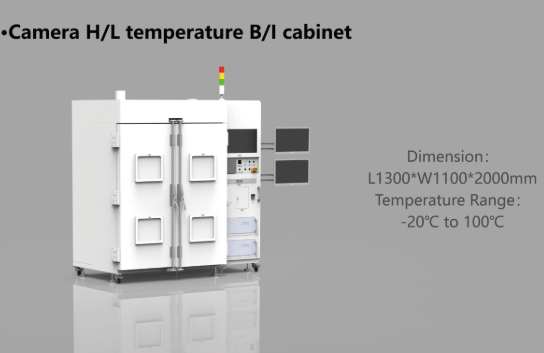
Burn-in test equipment helps manufacturers identify early failures, evaluate product stability, and improve long-term reliability by operating electronic products under controlled electrical loads, temperatures, and continuous test conditions.
What Is Burn-In Test Equipment?
Burn-in test equipment is designed to evaluate the reliability and stability of electronic products through extended operation. Unlike short functional tests, burn-in test equipment allows products to operate continuously under defined electrical and thermal conditions, helping expose weak components and early-life failures before shipment.
For manufacturers, burn-in test equipment provides an effective method for strengthening product reliability and reducing unexpected failures in the field.
How Burn-In Test Equipment Works
Modern burn-in test equipment commonly integrates programmable power supplies, electronic loads, test racks, temperature-control systems, sensors, and monitoring software. During testing, key parameters such as voltage, current, power consumption, and temperature can be monitored continuously.
By maintaining stable and repeatable test conditions, burn-in test equipment enables manufacturers to identify abnormal performance and potential component weaknesses more efficiently.
Applications of Burn-In Test Equipment
The applications of burn-in test equipment cover a wide range of industries and products, including power supplies, automotive electronics, communication devices, industrial controllers, consumer electronics, and energy-related equipment. Products that must operate reliably for long periods can particularly benefit from burn-in testing.
Integrating burn-in test equipment into production helps manufacturers verify product stability before products enter the market.
Benefits of Burn-In Test Equipment
One of the major advantages of burn-in test equipment is its ability to reduce early-life failures. By identifying defective or unstable components during manufacturing, burn-in test equipment can help reduce rework, warranty claims, product returns, and maintenance costs.
At the same time, burn-in test equipment supports consistent testing procedures, allowing manufacturers to maintain stable quality standards across large production volumes.
Automated Burn-In Test Equipment
Advanced burn-in test equipment increasingly incorporates automation, programmable control, real-time monitoring, and automatic data acquisition. Engineers can configure test parameters according to different product requirements while monitoring multiple units simultaneously.
With automated operation, burn-in test equipment reduces manual intervention, improves testing consistency, and increases overall production efficiency.
Choosing the Right Burn-In Test Equipment
When selecting burn-in test equipment, manufacturers should evaluate voltage and current ranges, load capacity, temperature requirements, test duration, monitoring accuracy, product compatibility, and production capacity. Flexible equipment can support different product specifications and testing procedures.
Choosing suitable burn-in test equipment ensures that reliability tests remain accurate, repeatable, and aligned with manufacturing requirements.
Future Trends in Burn-In Test Equipment
As electronics become increasingly compact, powerful, and complex, burn-in test equipment is evolving alongside Industry 4.0 technologies. Intelligent monitoring, cloud-based data management, predictive analytics, and automated reporting can provide deeper insights into product performance.
These innovations will make burn-in test equipment more intelligent, connected, and efficient for next-generation electronics manufacturing.
Conclusion
Burn-in test equipment plays an important role in modern quality assurance by helping manufacturers detect early failures and verify long-term product stability. Through controlled operation, continuous monitoring, and automated testing, burn-in test equipment supports reliable and consistent production.
As quality requirements continue to increase, burn-in test equipment will remain an essential solution for manufacturers seeking higher reliability, improved efficiency, and stronger product performance.